
Shaping Security and Scholarship: A Conversation with Doctor of Philosophy Candidate Gela Pochkhua
You're reading Entrepreneur Georgia, an international franchise of Entrepreneur Media.
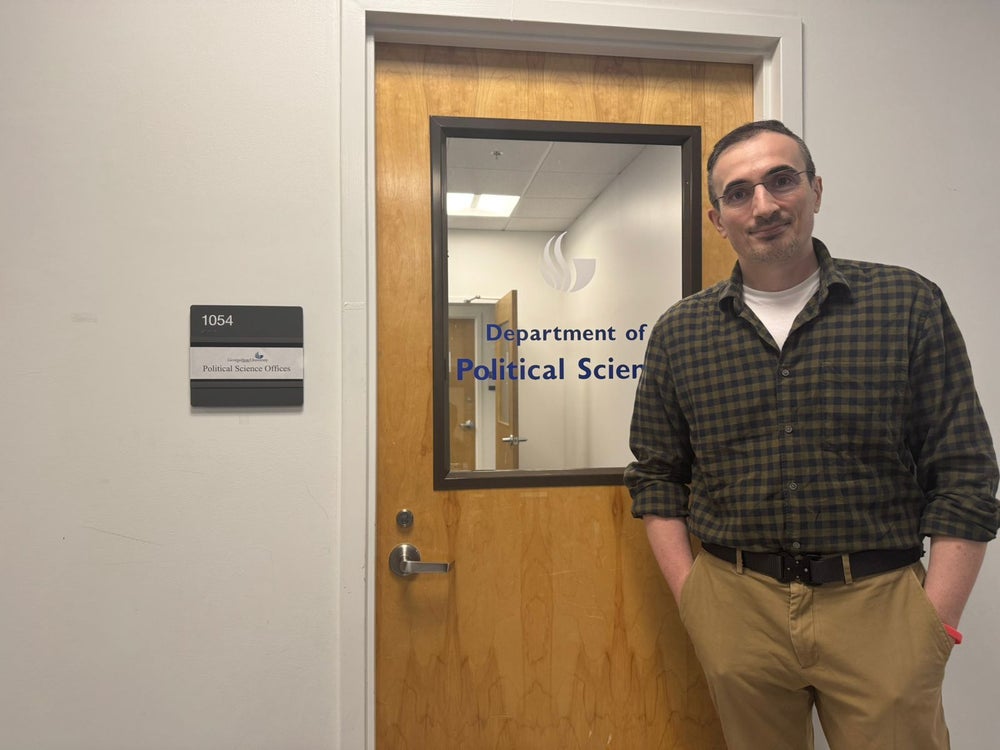 Mr. Gela Pochkhua has diverse work experience in the fields of security, defense, and education. He is skilled in Political Science, International Relations, and lecturing. At various times, he held managerial positions at the Parliament of Georgia, the Ministry of Internal Affairs, and the Ministry of Defense of Georgia.
Here's an interview with Gela Pochkhua. Entrepreneur asked him about his past and current professional and academic experiences.
Interviewer: Mr. Pochkhua, you have had an impressive career trajectory, from working in the Parliament of Georgia at a very young age to becoming a defense and security policy expert and now a PhD candidate at Georgia State University. Could you start by telling us how this journey began?
Gela Pochkhua:
Thank you. My journey began right after my legal studies at Tbilisi State University. I joined the Parliament of Georgia at the age of 23, which exposed me early to the realities of political decision-making. Over the years, I advanced to become Chief of Staff to the Deputy Chairperson, where I learned how legislation and diplomacy intersect in shaping national priorities. When I was appointed head of the Deputy Chair's office, I was only 26 years old, at that time, the youngest to hold such a senior staff role. That experience really defined my understanding of legislation, statecraft, and institutional reforms.
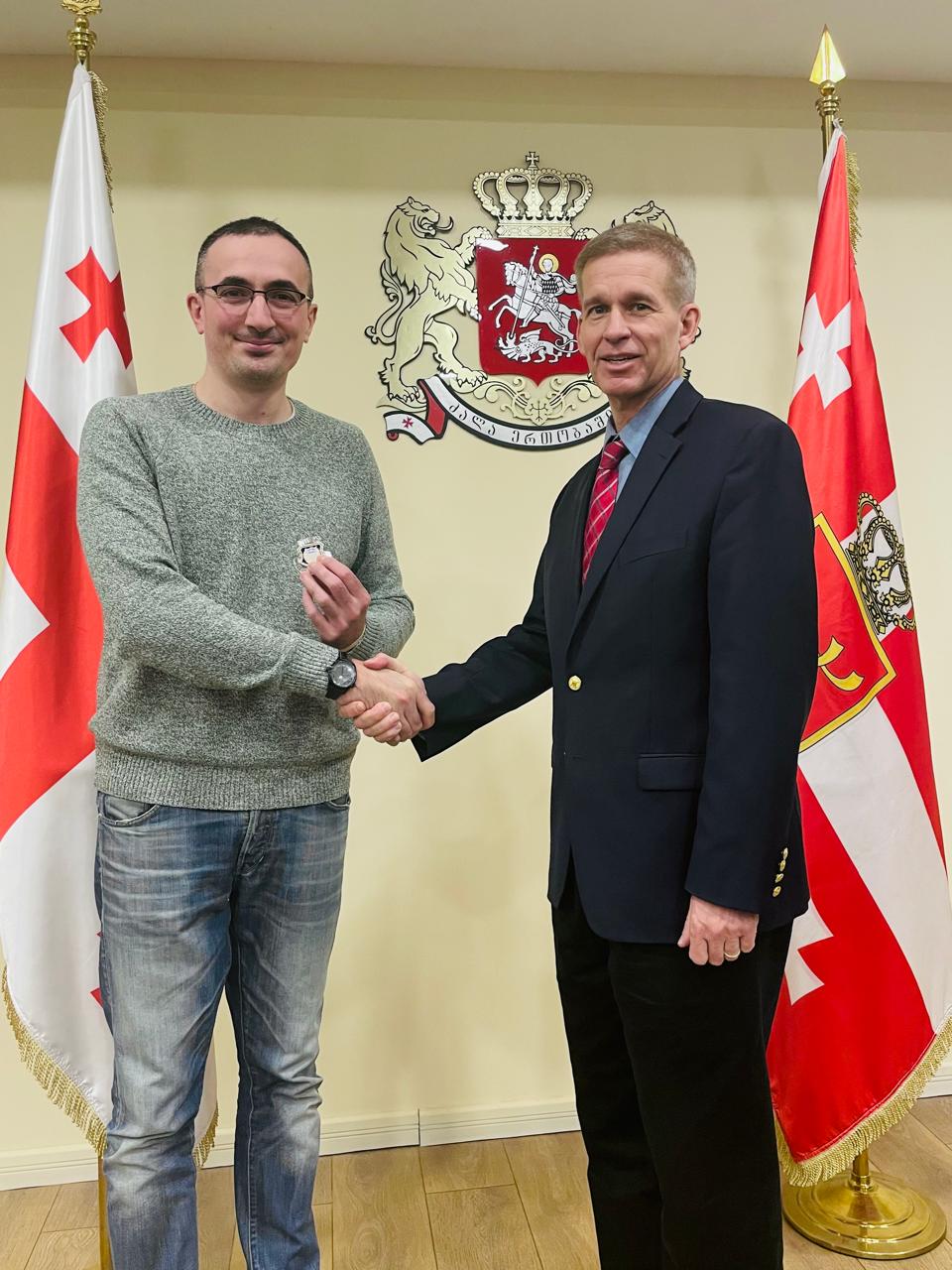 Interviewer: One of your early accomplishments was your selection for the George C. Marshall European Center for Security Studies program. That's quite an achievement, especially at only 23. How did that shape your professional outlook?
Gela Pochkhua:
Indeed, I was one of the youngest ever selected for that program, since most participants accepted are usually in their 30s or 40s with extensive military or diplomatic careers and backgrounds. That experience expanded my understanding of Euro-Atlantic security architecture and the importance of multinational cooperation. It also helped me build a professional network that later became crucial when I had to coordinate and work with representatives from our partner countries, including the U.S. Department of Defense, and European institutions focused on defense and security.
Interviewer: You're credited with leading the elaboration of Georgia's first CBRN strategy in 2013. How did that initiative come about?
Gela Pochkhua:
After transitioning to the Ministry of Internal Affairs, I was tasked with establishing a forward-looking development strategy for the Ministry. During that process, our leadership realized that CBRN (Chemical, Biological, Radiological, and Nuclear) security needed critical reevaluation and a solid conceptual base. I took the lead in drafting the first national CBRN strategy and its action plan, aligning it with European Union standards. It was a technically complex and time-consuming process, but I was privileged to have a wonderful team of professionals who helped me through. Overall, I am very happy to admit that the first national CBRN strategy became a foundational document for Georgia's long-term preparedness and international cooperation in this field. That success opened the door for my subsequent work at the Ministry of Defense, where I was invited to contribute to major strategic and legislative documents.
Interviewer: Your Ministry of Defense career spans over a decade. What were some of the key projects or reforms you led there?
Gela Pochkhua:
My focus was on institutional transparency, defense reform, and strategic planning that involved our Western partners and advisors. I helped design Georgia's first "Ministerial White Book," which comprehensively documented defense activities and spending, something that enhanced both transparency and accountability. I also played a role in strengthening U.S.-Georgia defense cooperation through the Defense and Deterrence Enhancement Initiative and worked closely with the U.S. Defense Threat Reduction Agency on material assistance programs. Matter of fact, these efforts earned me the U.S. Army Coin of Excellence, which I consider one of my most meaningful professional recognitions. My team and I were also in charge of organizing the annual Georgia Defense and Security Conference (GDSC) that brought together almost three hundred defense and security practitioners, foreign leaders, and statesmen. For instance, in 2019, right before the COVID outbreak, U.S. congressmen Adam Kinzinger and Alex Mooney participated in the GDSC, which gave our conference great value.
Interviewer: Alongside your policy work, you've been active in academia since 2019. How has teaching influenced your professional and intellectual growth?
Gela Pochkhua:
Teaching has been incredibly fulfilling. I lecture on both BA and MA levels at the University of Georgia, and now at Georgia State University in Atlanta, covering topics such as Global Issues, Transatlantic Security, Global Terrorism, and NATO-EU relations. I love to teach and help the young generations to grow intellectually. Teaching forces you to constantly engage with new literature and rethink complex ideas in a clear and compelling way. And it helps me to grow too. I've found that sometimes students' questions push me to reassess established concepts and help me think about new perspectives. That intellectual exchange directly feeds into my research.
Interviewer: Speaking of research, you are currently pursuing a PhD at Georgia State University and have been selected to present your work at the 2026 International Studies Assosiation Annual Convention. Could you tell us more about your academic focus?
Gela Pochkhua:
That is correct. I left my job in 2024 to fully dedicate myself to academia. Currently, I am in my second doctoral year at Georgia State University in Atlanta, Georgia (from Georgia to Georgia – is not that symbolic?). I am majoring in International Relations with a focus on defense and security issues, which is natural looking at my background. My current research focuses on initiation of conflicts and their termination. This is a fascinating topic to study, especially today, when global security architecture has been put under a lot of pressure. Yes, you were right about the ISA. It is one of the most competitive and prestigious forums in our field in the United States and beyond, and being selected to present there is truly an honor. We can talk more about it in 2026 after I present my paper at the ISA, should you still be interested in doing another interview with me.
 Interviewer: Your résumé shows a balance between theory and practice. How do you see the relationship between policy experience and academic research?
Gela Pochkhua:
For me, they're inseparable. Policy work gives you a sense of urgency and realism, showing how decisions are made under uncertainty, with incomplete information. Academia allows you to take a step back, conceptualize those patterns, and contribute to theory. My years in government inform my research questions, while my academic training gives me the tools to analyze them rigorously. That balance, between the practitioner's insight and the scholar's discipline, is what I always strive for in Georgia and United States.
Interviewer: What advice would you give to young professionals aspiring to careers in international security or diplomacy?
Gela Pochkhua:
Never underestimate the value of curiosity and discipline. Formal education is important, but so is openness to experiences that take you out of your comfort zone, whether that's a field posting, a cross-cultural program, or a research project that challenges your assumptions. For me, those moments, like entering the George C. Marshall Center at 23 or writing Georgia's first CBRN strategy, were where real growth happened. The field of international security is demanding, but it's also immensely rewarding if you commit to learning and contributing with integrity.
Interviewer: Finally, this is your second year in the United States pursuing your PhD, but you have been there before. What can you say about your American experience been so far? Have you been able to fulfill any part of what people often call the "American dream"?
Gela Pochkhua:
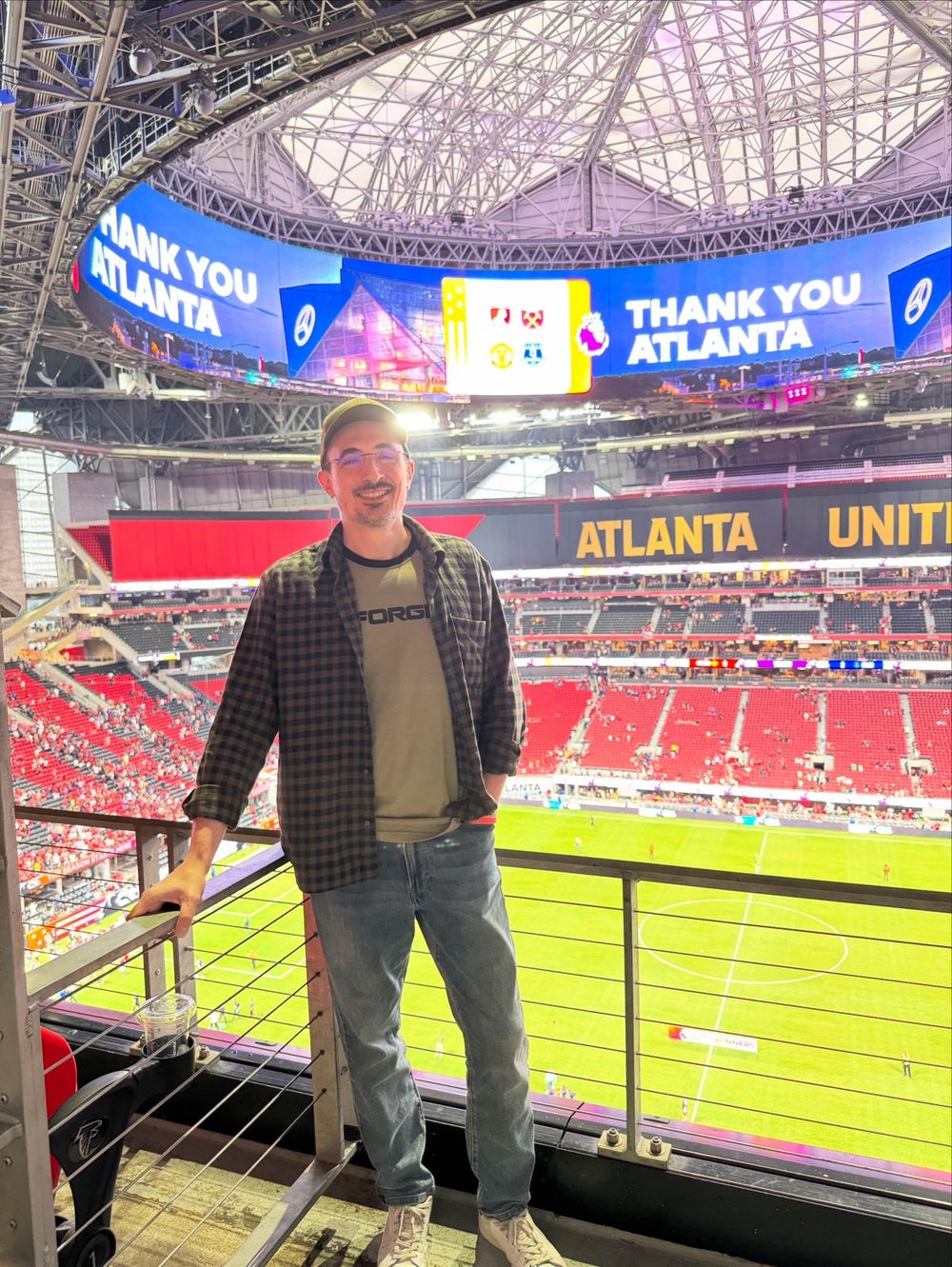
Oh, it has been great. The United States is a great country. My studies at Naval Postgraduate School in Monterey three years ago exposed me to the beautiful sites of California, and now I am exploring Atlanta here in Georgia. Unfortunately, my studies leave very little time for leisure, but when I do have a free day, I try to use it meaningfully. I've made it a point to explore cultural institutions, and I think I've visited nearly every major museum in Atlanta by now. And yes, I did manage to fulfill one long-held dream: attending a football match of my favorite team, Manchester United, right here in Atlanta. That was a moment of pure joy. As for the rest of the "dream," we'll see how things unfold, but thank you for asking.


