What 4 Hot Franchise Trends Say About How We Live Now
Why are people spending more in these franchise categories, and what does that say about consumers today and opportunities for franchisees tomorrow?
This story appears in the November 2025 issue of Entrepreneur. Subscribe »
Here’s perhaps the most common question in business: What do people want?
But there’s a bigger, better, and meatier question to ask: Why do people want what they want?
If you can answer that, you know what’s driving people’s spending — and you can understand where they might be spending next.
That’s what we at Entrepreneur endeavored to do, by looking at four of the hottest trends in franchising today. Over the past year, there’s been a boom (or a continuing boom) in franchises that focus on pets, junk removal, personal care, and Asian cuisine. So we wanted to know: What’s driving that growth? Why are people spending more in these areas? What does that say about consumers today and opportunities for franchisees tomorrow?
The answers go far beyond basic needs. For example: Yes, sure, people own a lot of pets, and their spending can sustain a lot of businesses — but it’s also a question of why they’re spending the way they are, and what business models are now most appealing. “I think the brands that are succeeding now aren’t trying to lock people in,” says Mark Van Wye, CEO of the dog-training brand Zoom Room. He thinks consumers are suffering from subscription fatigue, so they are more responsive to things that create real and sustained excitement. “It’s about making experiences so good that people are willing to opt in.”
Related: The Growth of These 4 Franchise Concepts Shows Where the Industry Is Going
Below, we look closely at today’s trending categories to explain what’s driving that growth, what’s motivating consumers, and how entrepreneurs can put those insights to good use.

Image Credit: Yurakrasil | Stock.Adobe.Com
Why Pet Franchises Are Booming
Our relationships with our pets are changing.
People have always loved pets. But they really love them now. According to the American Pet Products Association, pet owners are projected to spend $157 billion in 2025 — up from about $152 billion last year, and up from about $103 billion just five years ago. Food and treats continue to be the biggest moneymakers, followed by trips to the veterinarian, but other services such as grooming, training, and pet sitting are also raking in billions of dollars a year combined.
Why? The answer lies in consumer psychology. In a stressful world, perhaps pets offer a much-needed escape? But more importantly, consumers now have an increasingly personal relationship with their pets.
“People look at their dogs like they are part of the family,” says Mark Siebert, CEO of iFranchise Group. Case in point, Siebert points to the success of Resting Rainbow, a pet cremation franchise. “When I was a kid, it was,
‘Call up the local garbage people and have them take your dog away.’ Resting Rainbow does memorials, and they’ll cremate your dog and put him in an urn. They will do memory boxes of all the stuff you have for your dog, like the collar, the favorite toy.”
Other franchises are helping people nurture that animal-human bond. Zoom Room, which got its start in 2007 and started franchising in 2009, now has almost 70 franchised locations with indoor dog-training gyms that focus on socialization, which is different from teaching dogs obedience commands such as “sit” or “stay.” Socialization is more about helping a dog feel comfortable day to day, so the dogs’ lives and their owners’ lives are calmer and happier.
“Most people don’t want a trained dog so much as a socialized dog, because it removes the anxiety of walking around the block and getting tense when another person approaches,” says Mark Van Wye, CEO of Zoom Room. “Once you realize you can’t achieve that by watching a YouTube video or having a trainer come to your house, you see why what we’re doing is working.”
This focus on practicality, and integrating pets into daily life, is a shift from some of the luxury pet brands that flourished in previous decades. “I remember during the recession in 2008 and 2009, people had whole businesses that made cookies for their dogs,” Van Wye says. “Or diamond collars. All of those businesses closed because no one can really afford or justify that. Twenty percent of our business, on average, is retail sales — but every product is solution-oriented. The toys solve a particular issue, such as your dog chewing up the house.”
As more and more people seek out ways to spoil their fur babies, or just coexist in peace and harmony, Siebert says the Pets category doesn’t show any signs of weakening.
“There’s studies out there that 90% of pet owners will buy their dogs and cats Christmas presents,” Siebert says. “Think about it. The dogs and cats don’t know that it’s Christmas. They’re not waking up in the morning and running downstairs to unwrap their presents. But we’re treating them like part of the family. That trend has not slowed down one bit in my lifetime.”
Related: The 10 Hottest Trends in Franchising
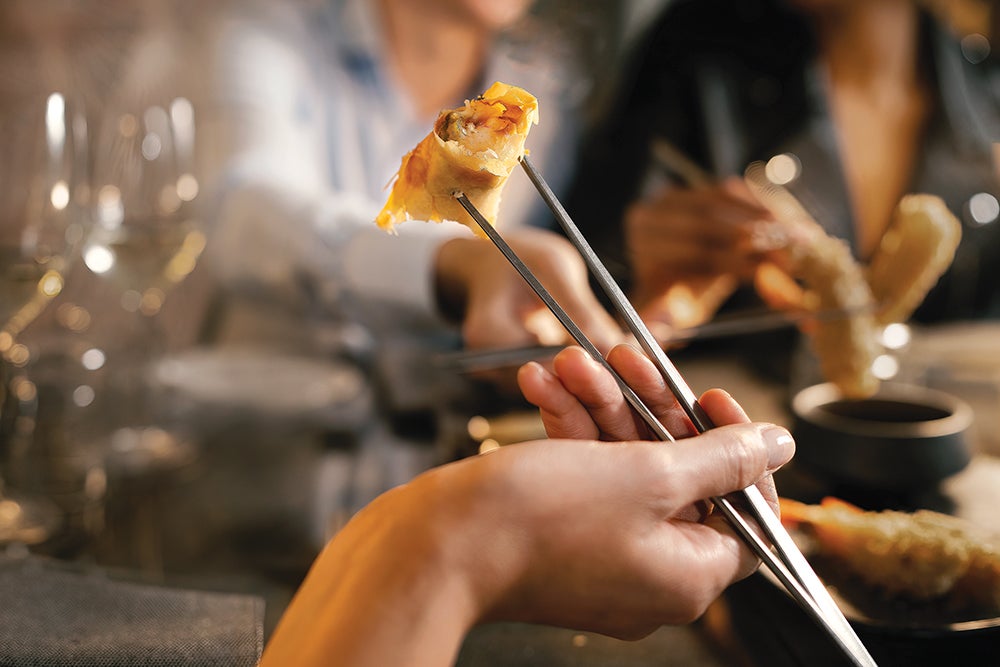
Image Credit: Lomb | Stock.Adobe.Com
Why Asian Cuisine Is Booming
Diners are becoming more sophisticated and curious.
Every year, the National Restaurant Association shares the results of its “What’s Hot” survey. In 2025, Southeast Asian foods were forecast to be all the rage. Vietnamese and Filipino cuisines were scoring big points with consumers, along with Korean and Indian (though those cuisines are technically East Asian and South Asian, respectively).
More familiar Asian foods like Chinese, Japanese, and Thai are growing in the franchise industry as well, but less-established regional flavors are especially hot.
“As the years have progressed, two important trends have occurred concurrently,” says Hudson Riehle, the National Restaurant Association’s senior vice president of research. “First, Asian cuisines and their supply chains have grown in diversity and availability. Second, diners and their global palates have become more sophisticated and knowledgeable. As a result, there is a much broader and receptive audience.”
Franchisors are taking note. “America has become more of a melting pot,” says Gregg Majewski, CEO and founder of Craveworthy Brands, which includes Dirty Dough cookies, Gregorys Coffee, and now, the Indian barbecue brand Sigri. “We took authentic Indian food and made it the way it’s supposed to be. You walk into the restaurant and you smell the curry.”
Sigri, which opened in 2015, has two New Jersey locations, and has sold 10 units since it started franchising in 2025. The concept is fast-casual Indian food, where meals are made fresh and customers walk down a line, choosing the ingredients they want to include in their meals. The fusion of authentic flavors with modern branding and presentation seems to be working. Another of Craveworthy’s successful concepts is Genghis Grill, which serves build-your-own stir-fry bowls from dozens of fresh ingredients. It has 34 franchised locations with another 30 to 40 now sold.
“Both [Southeast Asian and Indian] are growing areas, without a doubt,” Majewski says. “Americans are never going to give up their burgers or chicken sandwiches, but they are looking for other avenues. We made a conscious decision to have brands in the ethnic category going forward.”
Siebert of iFranchise says he’s seeing similar success with one of his clients, Curry Up Now, an Indian brand that also offers catering as well as food trucks. “Those guys are knocking it out of the park,” Siebert says. “I think that to some extent, it’s people liking the flavor, but it’s also a segment that has been underdeveloped from a franchise standpoint. If you think about it, what other Indian chains are out there now that are doing really well? There’s not that many.”
Korean brands are also reporting gains. Bonchon, a global leader in Korean fried chicken, recently described “explosive growth” from 150 to 500 planned U.S. locations.
Siebert says he’s seen this category’s brands do well if they have perfected their offerings in Korea and are now transplanting those dishes to the United States. “These guys have hundreds, maybe thousands of locations in Korea, and they’re coming to this market with a new take on chicken,” Siebert says. “It’s sort of what you think of as barbecue, but they put different sauces on it. The flavor profile of the wings and the chicken is very different from the traditional buffalo-style hot, hotter, or hottest. With the Korean ones, they’re more sweet-and-spicy.”
Related: We Crunched 5 Years of Franchise Industry Data. Here Are 4 Big Trends You Should Know About.

Image Credit: Om | Guruxox | Stock.Adobe.Com
Why Personal Care Is Booming
It’s on people’s minds, and good for the bottom line.
The pandemic may have started in 2020, but its economic shifts are still being felt in 2025.
It affected how we think about all kinds of things — especially our mental and physical well-being. A Pew Research Center survey found that during the pandemic, about a quarter of Americans who responded said that keeping healthy was more important, including putting more emphasis on a healthy lifestyle. The medical media company Healio reported that 80% of Americans intended to be more mindful about regular self-care after the pandemic. And McKinsey reported that the pandemic led U.S. consumers to try new brands and channels to address their care needs.
That shift is leading to all kinds of new personal care concepts in the franchise industry, while existing brands are upping their game by adding new “self-care” services.
For example, in 2024, the franchise Massage Heights announced its plan to rebrand as Heights Wellness Retreat. Massage will remain a cornerstone service, but the transformation will position the company to meet consumers’ evolving demands.
“Consumers are looking for a more complete and personalized approach to their wellness,” Massage Heights cofounder and CEO Shane Evans said. “Through our evolution to Heights Wellness Retreat, we are expanding our offerings, which will result in higher revenues and profit margins for our franchisees and the ability to reach a wider audience.”
The 111-location franchise brand is implementing several touchless therapies — such as lymphatic drainage, meditation, red light therapy, and salt therapy — which, the company says “will offer consumers a new level of convenience to achieve holistic wellness.”
Siebert of iFranchise says this approach not only taps into what customers seem to want from their personal care, but also adds revenue at the franchisee and franchisor levels.
“It’s a differentiation thing,” he says. “Franchisors are seeing that the best way to increase their profitability is to increase the revenue at the franchisee level. You can do that by adding services to boost the revenue line, which boosts the royalty payment to the franchisor, and presumably the consumer also wins with the more well-rounded experience.”
Similarly, the Colorado-based Woodhouse Spa has seen significant growth in the past five years. The brand now has 93 locations: four corporate-owned and the rest franchises. Michelle Ichazo-Vazquez, vice president of marketing, says, “The way people think about luxury, maybe they think it means diamond earrings or handbags. For us, luxury means the time to disconnect, time to step away, time for yourself and self-care.”
Woodhouse’s market positioning is modern, accessible luxury. “We’re not priced like the Four Seasons — we’re a little under that — but it’s definitely a luxury spa,” Ichazo-Vazquez says.
Some of the newer Woodhouse locations, she says, are adding self-guided customer experiences — sometimes called self-therapy — where a customer can access certain services without help from a dedicated staff member, like a masseuse. These types of services have gained popularity in the past five years. “We have some locations with a wellness wave bed, the infrared sauna, a dry-water jet massage, there’s light therapy, aromatherapy,” Ichazo-Vazquez says. “There’s a combination of things happening in the self-guided space.”
Woodhouse locations also have a quiet room — essentially an elevated waiting room where customers relax before and after treatments. It’s a place to unplug from life’s overwhelming, moment-to-moment, smartphone-fueled demands. The room is dark-lit with soothing smells, music in the background, comfy couches, blankets, natural essence waters, and snacks. All of it is intended to give customers a moment of respite and pampering, even if they’re just waiting to get their nails done.
Ichazo-Vazquez says that at Woodhouse Spa, new offerings are always in the context of the tried-and-true business model. “It’s how you treat people from the moment they come in, and make their experience feel personalized,” she says. “Those are the things that make the value of the sanctuary significant.”
Related: This Multi-Unit, Multi-Brand Owner Reveals the Secrets to Growing Franchises Fast
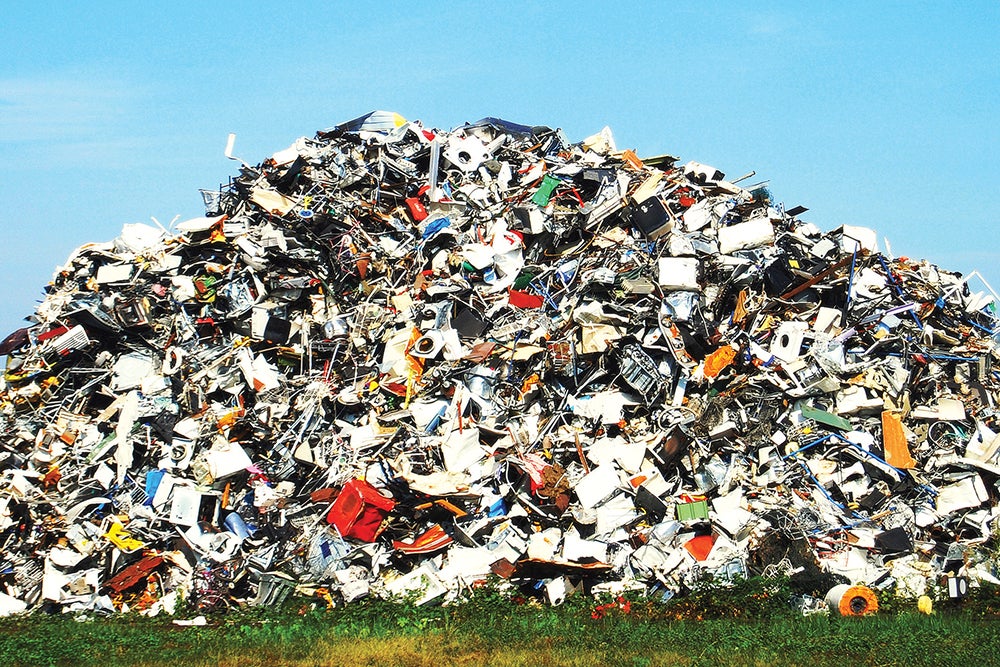
Image Credit: Ulrich Müller | Stock.Adobe.Com
Why Junk Removal Is Booming
As e-commerce grows, so do our garbage piles.
Junk removal has been around for decades. One of the largest brands in the space, 1-800-GOT-JUNK?, dates back to a single truck that started rolling in 1989. But now it has a lot of competition. By our count, there are at least 13 more brands, with names like Junk King and The Junkluggers. Premium Service Brands, which owns nine brands, even bought the franchise Rubbish Works in 2020. “It appealed to us because it has two revenue streams,” says Premium founder and CEO Paul Flick: It rents dumpsters to businesses, and hauls residential junk. So, what’s driving growth in junk removal? Simple: It’s all the junk we’re buying.
There is a confluence of reasons for this, says Flick. First, young people are spending more on experiences — and less on high-quality, long-lasting products.
“I remember my parents, living in their house, some of the furniture was passed down from their parents,” Flick says. “Right now, we live in a disposable world.” And with the rise of e-commerce, those disposable products are cheaper and easier than ever to acquire.
Flick also points to the type of furniture a lot of people are buying. Furniture Today describes millennials (born between 1981 and 1996) as the “Ikea generation,” likely to upgrade only as they got married, bought a first home, got a promotion or had a baby. About half the people in Gen Z (born between 1997 and 2012) prefer to rent apartments, according to RealPage, which provides data analytics for the real-estate industry.
Those trends aren’t conducive to the kinds of pricier, better-quality furniture you might invest in if you owned your home and planned to stay in the same place for many years. Instead, younger consumers are buying what they see as temporary furniture for their temporary living spaces.
The demand for junk removal is also pulling existing franchise brands like College Hunks into the space, Siebert of iFranchise says. “They were originally just doing moving, but they branched into junk, probably because moving tends to be more related to the housing market. It can go up and down, and they wanted to make sure they had more of a steady-state business opportunity.”
All of this junk is pretty terrible for the environment, so some franchises are capitalizing on customers’ desire to get rid of their stuff in a more responsible way.
For instance, The Junkluggers markets itself as eco-friendly junk removal. Its junk haulers sort through everything they collect to separate out any items that can be donated, recycled, or repurposed. Junk King does something similar, saying it recycles 60% of what it takes in, on average.
“The evolution that we’re seeing is that a lot of the companies are focusing on being more green,” Siebert says. “They’re focusing on recycling, repurposing discarded materials or donations — some of the things that are larger trends of being eco-friendly.”
Related: How This First-Gen College Grad Went From Franchisee to Brand President: ‘I’ve Been in the Trenches’
Here’s perhaps the most common question in business: What do people want?
But there’s a bigger, better, and meatier question to ask: Why do people want what they want?
If you can answer that, you know what’s driving people’s spending — and you can understand where they might be spending next.


