This Doctor Spent 19 Years Proving the Medical System Wrong About His Daughter’s ‘Incurable’ Condition — and Ended Up Saving Countless Lives
Dr. Aaron Hartman’s determination to save his daughter became a blueprint for disrupting broken systems.
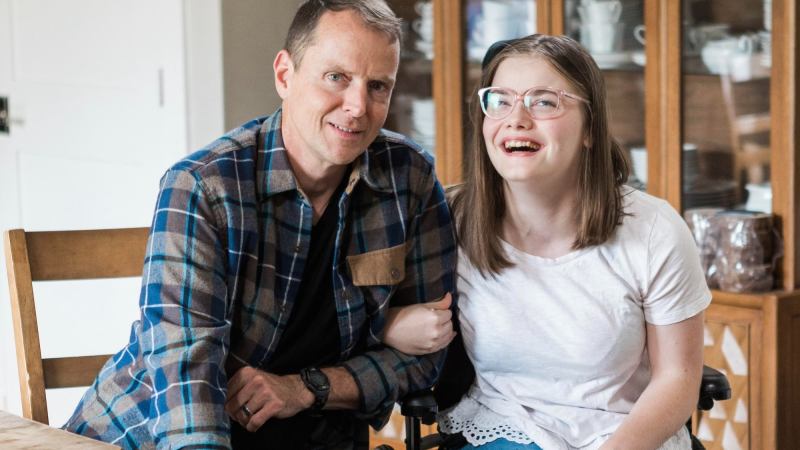
Photo courtesy of Dr. Aaron Harman
Key Takeaways
- When doctors said his daughter’s condition was incurable, Dr. Aaron Hartman refused to accept it.
- He spent nearly two decades finding answers the medical system missed.
- Along the way, he discovered lessons every entrepreneur can use to challenge convention and create real change.
When Aaron Hartman, MD, first saw Anna, she was 14 months old, her tiny body slumped forward, unable to support itself. A patch covered her right eye, and her delicate hands were curled inward to her chest—visible evidence of the brain damage she’d endured during birth from crystal meth exposure. Many doctors would have thrown up their hands at the hopelessness of it all. Dr. Hartman (along with his occupational therapist wife Becky) chose to adopt her. Still, his prognosis at the time was grim: Anna would never walk, talk, or live independently.
Today, at 19, she texts her friends, sings to her grandparents for hours, and just this spring, swam in the family pool for 30 minutes without assistance before climbing out on her own. She’s had zero surgeries—a stark contrast to the typical 13 surgeries most children with her condition undergo by her age.
Dr. Hartman, a triple board-certified medical doctor who specializes in integrative and functional medicine and clinical professor at Virginia Commonwealth University’s School of Medicine, approached his family’s medical crisis like an entrepreneur tackling a market disruption. His methodology, detailed in his new book “UnCurable: From Hopeless Diagnosis to Defying All Odds,” describes both his personal experiences and what he and his pediatric occupational therapist wife, Becky, do through their Richmond Integrative & Functional Medicine practice.
By applying the same strategic thinking and systematic problem-solving that drives successful startups, the Hartmans are able to help thousands of patients find solutions conventional medicine missed.
“If Anna can do it, you can do it too,” Hartman says. “That is the message of this book.”
While Hartman’s medical expertise enables him to help patients, it’s his entrepreneurial approach to problem-solving that created systematic strategies any business leader can apply to disrupt established industries and challenge conventional wisdom.
Question every ‘standard’ recommendation like a disruptive entrepreneur
Like any entrepreneur challenging an established industry, Hartman learned to question conventional wisdom. When specialists recommended a feeding tube for Anna because she was “too small,” Becky explained that bypassing oral feeding would impair speech development and brain function—skills Anna was supposedly never going to need anyway.
“We said no to the feeding tube. And boy, did the system not like that,” Hartman recalls. The specialist reported them to Child Protective Services for medical neglect. But six months later, Becky discovered a growth chart specifically for children with cerebral palsy—Anna was in the 50th percentile, perfectly normal for her condition.
If the top pediatric GI doctor in the area didn’t know something this basic, Hartman realized, what other crucial details must they be missing? For entrepreneurs, this translates to never accepting “industry standard” without doing your own due diligence.
Become your own R&D department
Like any successful entrepreneur, Hartman invested heavily in research and development. He spent countless early mornings researching cerebral palsy, brain development, and neuroplasticity—not just from conventional medical journals but from international approaches and practitioners working at the boundaries of healing.
“No one was going to get up at 4 a.m. to research cerebral palsy, autism, gene-based nutrition, and brain healing for Anna—except me,” he says. This research led him to discover neuromuscular stimulation devices used throughout Europe but unknown to Anna’s American specialists. A simple $500 device replaced the need for multiple invasive surgeries costing hundreds of thousands of dollars.
For business leaders, this demonstrates the power of information arbitrage—solutions often exist in other markets that haven’t crossed over to your industry yet.
Related: How I Built a Thriving Healthcare Practice by Prioritizing Prevention and People
When in doubt, do nothing
Hartman discovered that medical error is the third leading cause of death in America, with over 250,000 deaths annually according to a British Medical Journal study by Dr. Martin Makary from Johns Hopkins. Like an entrepreneur analyzing a broken market, he realized the healthcare system operates on perverse incentives.
“When I see a patient, the first thing I do is nothing,” he explains. “Doing something could actually harm or even kill the person.”
This contrarian approach saved Anna from the cascade of interventions typical for her condition. “By this age many kids with her diagnosis have had dozens of procedures,” Hartman notes, yet Anna has thrived without a single surgery. The lesson for entrepreneurs: sometimes the most profitable strategy is avoiding unnecessary costs rather than generating more revenue.
Related: This Startup is Aiming to Solve the Biggest Problem in the Fast-Growing Spinal Disc Market
Invest in root causes, not management
Rather than accepting the healthcare industry’s recurring revenue model of symptom management, Hartman pivoted to addressing underlying factors through targeted nutrition, environmental modifications, and addressing what he calls the “Triangle of Health”—gut health, stress management, and sleep optimization.
“We found out that faith and science can actually work together,” he says. “The book explains our Head-Heart-Hands way of making medical choices. It’s this approach that uses science, faith, intuition and action together.”
For business leaders, this represents classic systems thinking—solving root problems creates sustainable competitive advantages rather than temporary fixes.
Build your team like a strategic board
Instead of passively accepting referrals, Hartman assembled a team of practitioners willing to think outside conventional protocols—much like an entrepreneur building a board of advisors. This included finding specialists who would work collaboratively rather than defensively when questioned.
“You have to take ownership of your own health,” he emphasizes. “The system doesn’t always have your best interests in mind. It’s up to you to be your own advocate.”
The entrepreneurial lesson: surround yourself with people who challenge conventional thinking and aren’t threatened by questions.
Calculate the ROI of Preventing Problems
Hartman learned that investing in quality nutrition prevents the expensive cascade of chronic disease treatment—classic entrepreneurial thinking about upfront investment versus long-term costs. “One patient told me her family hadn’t been to the doctor once since changing their food. She calculated they’d saved over $3,000 in medical bills. That ‘expensive’ food was the best investment they ever made.”
For entrepreneurs managing both personal and business resources, this demonstrates how prevention strategies often deliver better returns than reactive solutions.
“Here’s what hit me: the child who doctors said would never walk was demonstrating physical independence that seemed impossible just years ago,” Hartman reflects. “If that’s possible for Anna, imagine what’s possible for you.”
Related: The Future of Preventative Health and Mindfulness Technology
Key Takeaways
- When doctors said his daughter’s condition was incurable, Dr. Aaron Hartman refused to accept it.
- He spent nearly two decades finding answers the medical system missed.
- Along the way, he discovered lessons every entrepreneur can use to challenge convention and create real change.
When Aaron Hartman, MD, first saw Anna, she was 14 months old, her tiny body slumped forward, unable to support itself. A patch covered her right eye, and her delicate hands were curled inward to her chest—visible evidence of the brain damage she’d endured during birth from crystal meth exposure. Many doctors would have thrown up their hands at the hopelessness of it all. Dr. Hartman (along with his occupational therapist wife Becky) chose to adopt her. Still, his prognosis at the time was grim: Anna would never walk, talk, or live independently.
Today, at 19, she texts her friends, sings to her grandparents for hours, and just this spring, swam in the family pool for 30 minutes without assistance before climbing out on her own. She’s had zero surgeries—a stark contrast to the typical 13 surgeries most children with her condition undergo by her age.
The rest of this article is locked.
Join Entrepreneur+ today for access.
Subscribe Now
Already have an account? Sign In