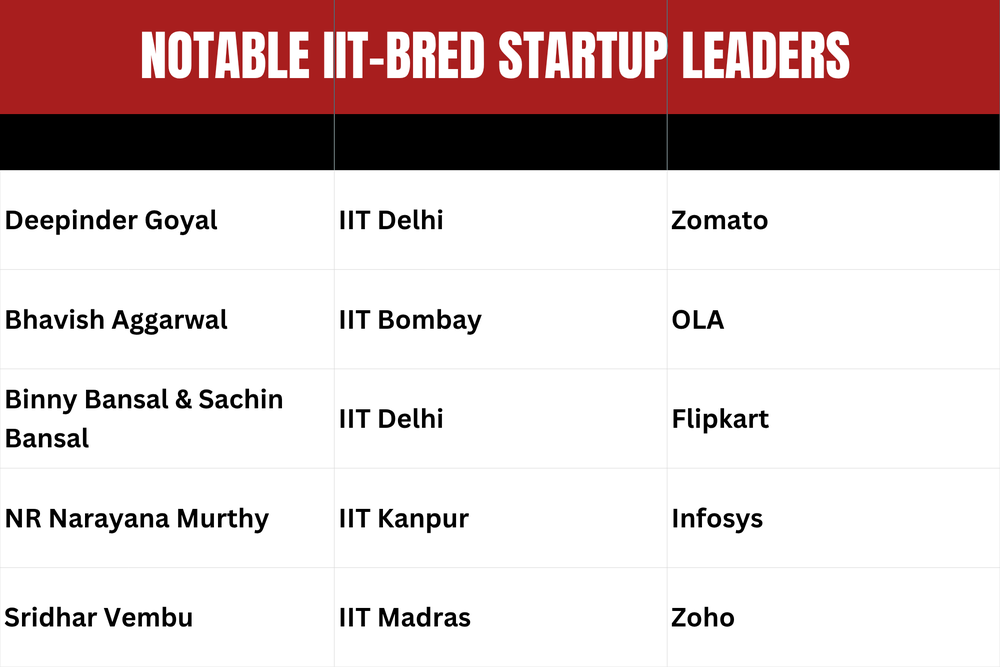
Why IITs Produce Some of India's Most Successful Startup Founders As per industry data, between 2015 and early 2025, India saw 113,360 tech startups being founded. Of these, 7,141 startups, close to 6.3 percent, came from IIT alumni
Opinions expressed by Entrepreneur contributors are their own.
You're reading Entrepreneur India, an international franchise of Entrepreneur Media.

Why do IITs, the top engineering institutes of the country, produce some of India's most successful founders, deep-tech ventures, and unicorn leaders? A closer look at their curriculum, infrastructure, incubation machinery, alumni networks, and evolving campus culture shows how these institutions have quietly transformed into one of the country's largest and most dependable startup generators.
As per industry data, between 2015 and early 2025, India saw 113,360 tech startups being founded. Of these, 7,141 startups, close to 6.3 percent, came from IIT alumni. This makes IITs not just centres of technical education but among the most productive startup factories in India's innovation ecosystem. From deep-tech and climate-tech to biotech, EVs, AI, and agritech, IIT campuses now anchor a pipeline of ventures that move from lab research to real-world markets at record speed.
In fact, according to the IDFC FIRST Private & Hurun India's 'Top 200 Self-made Entrepreneurs of the Millennia 2024', nearly one-third of the featured entrepreneurs were IIT graduates.
Also Read: How IITs are seeding next gen entrepreneurs
Closer Look at Numbers
Across the IIT system, the numbers speak for themselves. For example, IIT Madras has crossed 450 incubated startups, recording 103 in the last year alone, its second consecutive year of triple-digit output.
IIT Bombay has supported close to 300 startups, including multiple listed companies, unicorns, and deep-tech leaders.
IIT-BHU has nurtured nearly 200 innovators and 78 incubated ventures, generating over Rs 30 crore in cumulative revenue and over 400 jobs across Uttar Pradesh.
Similarly, IIT Delhi's FITT has supported 150+ faculty and alumni startups, and launched specialised programs such as a Green Tech Accelerator and a fabless semiconductor incubation track with Cadence and AIC-IIT Delhi Sonipat. Meanwhile, IIT Roorkee's TIDES has enabled the creation of 130+ startups, especially in drones, mobility, sustainability, and robotics.
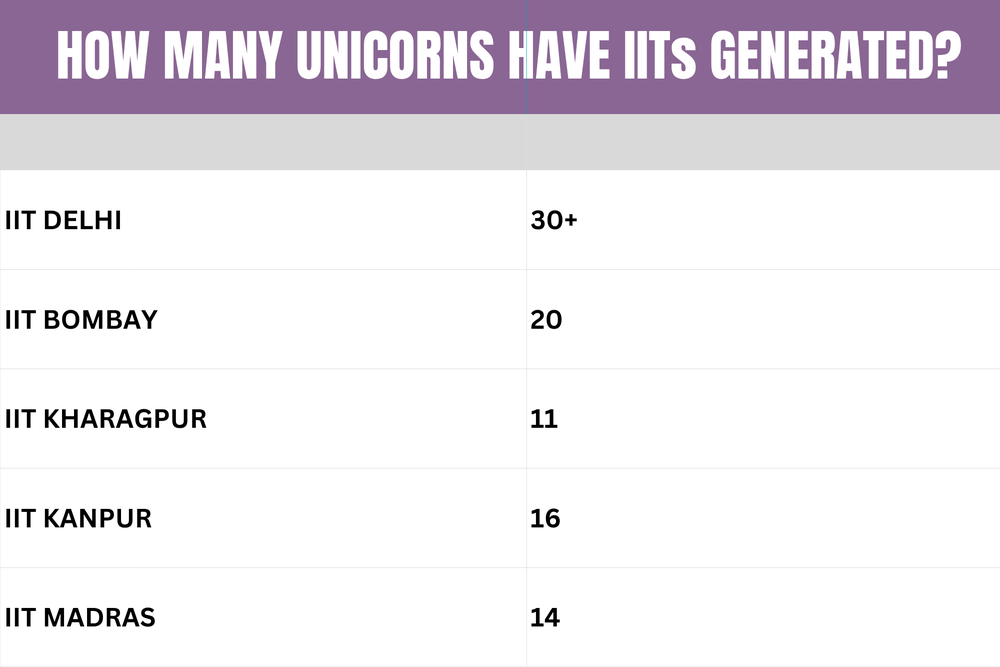
Let us look at some of these IITs and how they have built an ecosystem that deliberately supports entrepreneurship with updated curricula that give students room to experiment with ideas, incubation centres functioning like innovation parks, and a strong alumni support through mentoring and early funding.
IIT Madras: India's Deep-Tech Launchpad
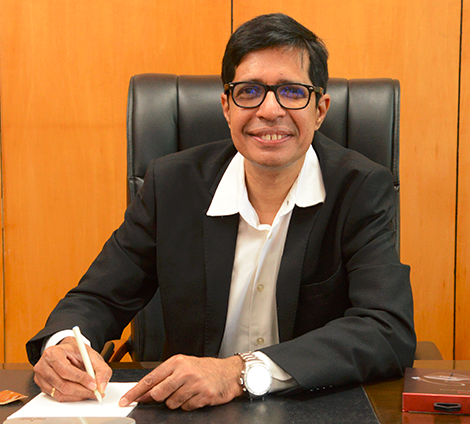
Prof. V Kamakoti, Director, IIT Madras
At IIT Madras, entrepreneurship is supported by a deliberate architecture that connects students to patents, prototypes, and market-ready ventures. The IIT-M Research Park and the IIT Madras Incubation Cell (IITMIC) operate as an integrated platform offering pre-incubation, design fabrication, deep-tech incubation, and industry engagement, explained Prof. V Kamakoti, Director, IIT Madras.
"Any student from India who comes with an idea and needs mentorship to grow, we immediately try to support. As NIRF-1 in Innovation, this is our contribution back to the country," he said.
The institute's IP-led approach stands out. IIT Madras filed 417 patents in FY 2024–25, up from 280+ the previous year, and expects to approach 500 filings this year. "We started with one patent a day. We are now making 1.2 to 1.3 patents a day," Kamakoti said. These filings form the IP backbone for student and faculty startups.
Startups move through the Entrepreneurship Cell, the Centre for Innovation, and NIRMAN, before entering domain-specific incubators such as Pravartak (cyber-physical systems), RTBI, the Bio-Incubator, and the Health Technology Innovation Centre. New incubators for sustainability and fintech incubators are also being added.
Alumni support is also extensive, funding infrastructure, mentoring founders, and investing in early rounds. "At every stage, there is alumni participation. Alumni also invest in these companies as equity partners. Most importantly, they guide these startups. They regularly mentor startups and help take them to the next level," Kamakoti said.
A strong alumni network strengthens this pipeline, but IIT Madras is now preparing to reinforce it with institutional capital of its own.
"We want to take these startups to the next stage. We are looking at setting up an alternate VC fund. We are looking at somewhere between 200 to 500 crores. On average, these startups need around 2 to 3 crores each to cross the valley of death. 2032, we want 1,000 startups incubated. If that happens, we will have one IPO every month," he added.
IIT Bombay: Risk-Ready, Startup-Ready

Prof. Milind Atrey, Deputy Director, IIT Bombay
At IIT Bombay, the institute has undergone a 20-year shift from a placement-first orientation to a climate that normalises entrepreneurial ambition.
"The system for entrepreneurship has become very vibrant," said Prof. Milind Atrey, Deputy Director for Academics, Research, and Translation, IIT Bombay, adding, "Right from the first year, students start hearing from successful entrepreneurs, sometimes their own peers. Earlier, success was measured only in terms of salary packages; now definitions are changing."
The output reflects this shift in student mindset. IIT Bombay's incubator has supported around 300 startups, including IdeaForge, Atomberg, GupShup, and ImmunoAct, spanning drones, energy-efficient appliances, advertising, and CAR-T cell cancer therapy.
"There are many success stories on campus, and students see this success. The fruits of what we sowed 25 years ago at IIT Bombay are now showing results. Families are also more open, and students can take risks," Atrey explained.
Another striking development is the rise of professor-led companies. "Almost 70 professors now have startups, most with their PhD students taking the front seat," Atrey said.
Several academic programs have been launched at IIT Bombay to support this shift in student mindset, for example, a PhD course in entrepreneurship.
"Students can study how market forces operate, how new investments work, or how deep-tech startup ventures differ from normal startup ventures. Alumni review these programs, help us on our boards, review proposals, mentor, and provide funds," he explained.
Events such as E-Summit, CSR-funded translational research, and national platforms like Bharat Innovates expose students and founders to investors, corporates, and regulators early.
IIT-BHU: New Wave of Startups
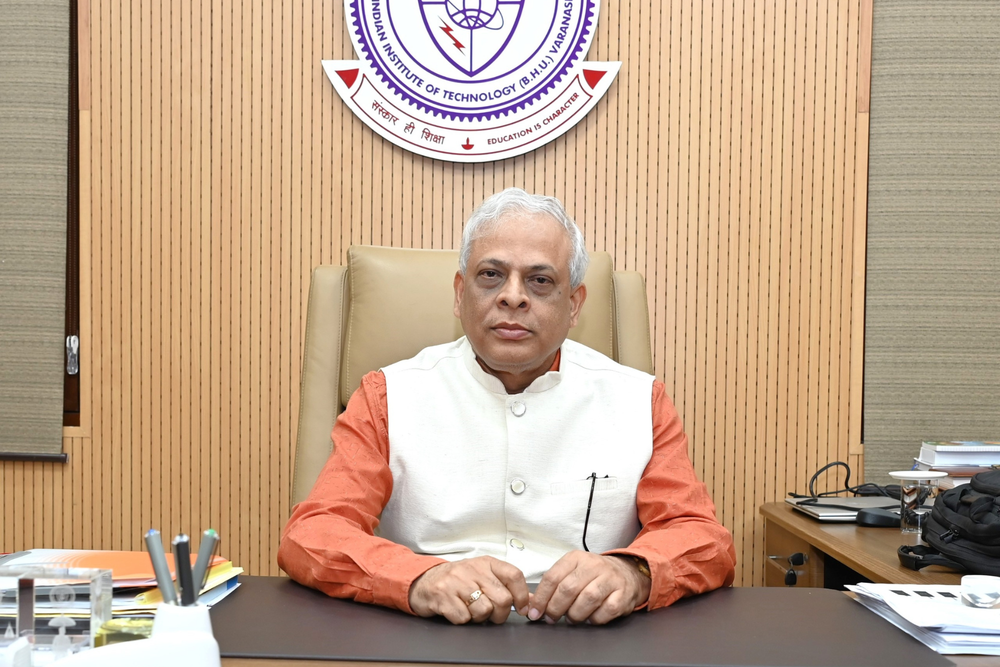
Prof. Amit Patra, Director, IIT-BHU
At IIT-BHU, the startup surge represents a newer but fast-maturing wave.
"Over the last decade, there has been a significant shift in the mindset of students. Earlier, most graduates chose higher studies or corporate placements. Now, a growing number are motivated to create impact through innovation and entrepreneurship," said Prof. Amit Patra, Director, IIT-BHU.
The institute's I-3 Foundation and RKVY-RAFTAAR Agri Business Incubator have supported nearly 200 innovators, incubated 78 startups, and facilitated over Rs 7 crore in grants and investments, generating over 400 jobs across cleantech, healthcare, agritech, and renewable energy.
A major accelerator of this shift is curriculum reform. A full semester is now dedicated to industrial or startup internships, giving students time to build prototypes, join early-stage companies, or pursue lab research. "This motivates students to experience and experiment with startups and hones their employability and entrepreneurial talent," Patra said.
As a result, 10 to 15 percent of graduates now choose entrepreneurial or early-stage roles.