Leon L. Bean
Country Slicker And Demon Merchandiser
Oct 10, 2008
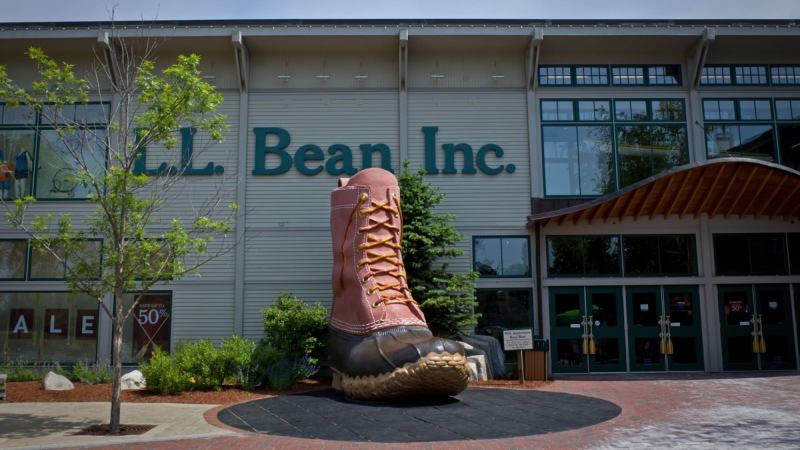
Michael G McKinne / Shutterstock.com
Leon L. Bean
Founder of L.L. Bean Inc.
Founded: 1912
“Sell good merchandise at a reasonable profit, treat your customers like human beings, and they will always come back for more.”-Leon L. Bean
Leon Leonwood Bean, known to his friends and loyal customers simply as “L.L.,” never intended to become a mail order giant. All he really wanted to do was keep his feet dry. But there were much bigger plans in his future.
Like many entrepreneurs, Bean’s early business pursuits were less than stellar. He’d achieved little success in various ventures ranging from selling soap to working in a creamery. But his unremarkable career began to change when he invented a unique product that would make him famous and become the cornerstone of one of the world’s largest international mail order companies.
According to legend, in 1911, while managing his brother Ervin’s store in Freeport, Maine, the avid outdoorsman decided he was tired of getting his feet soaked while hunting deer in the boggy hinterlands of Maine. In a flash of inspiration, he hit on the notion of sewing lightweight, comfortable leather uppers to the rubber bottoms of ordinary galoshes. Not much of a craftsman himself, Bean had a local cobbler make him a pair of boots based on his design. Testing them on his next hunting trip, the Maine Hunting Shoes (as he would later dub them) kept his feet so dry, Bean was convinced they were his ticket to financial success. He had 100 pairs made and set out to try selling them through the mail.
While the idea for the shoe was brilliant in itself, Bean’s choice of a target market was sheer genius. From his experience working retail, Bean knew that out-of-towners who came to Maine to hunt and fish were very wary about showing up with the wrong equipment. Working out of the basement of his brother’s store, Bean put together a mailing list of people who held nonresident Maine hunting licenses and sent out fliers advertising his new boots. The fliers read: “Outside of your gun, nothing is so important to your outfit as your footwear. You cannot expect success hunting deer or moose if your feet are not properly dressed. The Maine Hunting Shoe is designed by a hunter who has tramped the Maine woods for the past 18 years. They are light as a pair of moccasins with the protection of heavy hunting boots.” Bean’s distinctive, folksy prose, which gave the impression that he was an expert outdoorsman offering friendly advice to naive tenderfoots, became one of the company’s trademarks and would later influence such catalogs as Eddie Bauer, Land’s End and J. Peterman.
Unfortunately, Bean’s claims about the quality of his shoes would prove to be somewhat exaggerated. Although all 100 pairs sold, the shoes turned out to be a flop. The stitching that held the leather tops pulled out of the soft rubber soles, and almost as quickly as the shoes had sold, 90 pairs were returned. Many would have considered this a disaster and given up. But for Bean, it turned out to be a watershed event that led him to formulate the customer-service policy his company remains famous for today.
Bean promptly refunded everyone’s money. But he didn’t stop there. Undaunted by this initial failure, he convinced U.S. Rubber to mold a heavier bottom that would hold the stitching, then replaced each defective pair with the improved version, free of charge, turning 90 angry customers into 90 potential future customers impressed with Bean’s honesty.
With a new, improved product to sell, Bean sent out more fliers, and once again the orders poured in. Inspired by his success, Bean extended his product line to include other types of hunting and camping gear. A true hands-on entrepreneur, Bean personally field-tested every product he sold. (He would often sneak out of the office for an afternoon of fishing and product testing).
Bean also wrote his own advertising copy and personally replied to customer letters, giving his catalog a distinctive personality and further cultivating the image of an odd but honest Yankee merchant who truly cared about quality and customer satisfaction. When you bought from L.L. Bean, you weren’t buying from some faceless company, you were ordering from a real person who had your best interest at heart. As John Skow puts it in a 1985 Sports Illustrated article, “It’s as if Bean were family, some sort of mildly eccentric but amiable uncle who lives up in Maine and sends us packages.”
Bean’s sales figures increased at such a rapid rate that in 1917 he was able to move his operation from the basement of his brother’s store and open a retail store of own, which still stands today. By 1924, he had 25 people working for him and yearly sales of $135,000. Thirteen years and one Depression later, sales had passed the $1 million mark.
While the Maine Hunting Shoe remained the centerpiece of both the store and the catalog, Bean continually added new products ranging from Hudson Bay “point” blankets to zippered duffel bags. Bean is even credited with being the first cataloger to introduce a chamois shirt (“The shirt I personally use on all my hunting and fishing trips,” he claimed), which has since become a clothing catalog staple.
But no matter how many new products Bean added, one thing never changed-the unconditional guarantee. At any time, for any reason, customers could return any L.L. Bean product for a replacement or full refund. And it truly was (and still is) a full refund. Unlike many catalogs, which refund the product price but not shipping and handling charges, Bean never charged for shipping. He was insistent on this. He seemed to instinctively know that what he was really selling was the absolute, unqualified reliability of L.L. Bean and his 100 percent satisfaction guarantee.
As satisfied customers shared with their friends stories about L. L. Bean fixing the tips of fishing rods broken off in car doors, resoling camp shoes, or replacing compasses smashed during rafting trip¬s-all free of charge-the company gained priceless word-of-mouth advertising and a customer base whose loyalty bordered on fanaticism.
By the 1940s, L.L. Bean had firmly established a national reputation for quality and honesty, and was visited regularly by political leaders, sports figures and other celebrities as well as thousands of satisfied customers. Bean was, and still is, so popular that his rustic Freeport store, decorated with a stuffed moose and a trout pond, is Maine’s second-largest tourist attraction, drawing more than 3.5 million visitors each year.
Bean remained at the helm of the company until his death in 1967, when his grandson, Leon A. Gorman, took over as president. Today, nearly 90 years after Bean sold his first pair of Maine Hunting Shoes, L.L. Bean Inc. has grown into one of the world’s leading international mail order companies, boasting sales of more than $1 billion per year and more than 4.5 million customers worldwide.
Leon L. Bean
Founder of L.L. Bean Inc.
Founded: 1912
“Sell good merchandise at a reasonable profit, treat your customers like human beings, and they will always come back for more.”-Leon L. Bean
Leon Leonwood Bean, known to his friends and loyal customers simply as “L.L.,” never intended to become a mail order giant. All he really wanted to do was keep his feet dry. But there were much bigger plans in his future.
The rest of this article is locked.
Join Entrepreneur+ today for access.
Subscribe Now
Already have an account? Sign In