
From Misdiagnosis to Mission: How One Man's Ordeal Became a Blueprint for Perseverance What followed was not just a lapse in judgment; it was a decades-long system failure. Dean became the unseen patient. The ignored anomaly. No one had time to read the story. But like any great founder building something against the odds, he—and his tenacious family—refused to give up.
Opinions expressed by Entrepreneur contributors are their own.
You're reading Entrepreneur India, an international franchise of Entrepreneur Media.

When Dean Gregorie first developed a small hump below his neck at age sixteen, few paid it any mind. His mother, though, saw more. Weight gain. The round face. The bone-deep fatigue. To her, it spelled something far more complex: Cushing's disease. But when she voiced her concerns, doctors smiled politely and waved them off.
"Teenagers gain weight," they said.
What followed was not just a lapse in judgment; it was a decades-long system failure. Dean became the unseen patient. The ignored anomaly. No one had time to read the story. But like any great founder building something against the odds, he—and his tenacious family—refused to give up.
Seeing What Others Miss
The early symptoms were dismissed with lazy diagnoses: poor diet, lack of exercise, and normal adolescence. But Helen Gregorie was relentless. She scoured medical journals. Dug through case studies. Her instincts shouted, "Cushing's." But doctors, operating within conventional playbooks, refused to explore a rare diagnosis. In startup parlance, they ignored the outlier data, clinging to averages instead of curiosity.
Dean was a patient who was overlooked not because of ambiguity, but because of predictability. If he had been a product, he would've been shut down in beta without anyone reading the specs.
The Burn Cost of Delay
Over the next two decades, Dean cycled through over fifty medical professionals. His symptoms worsened: purple striations, skyrocketing blood pressure, relentless fatigue. And yet the narrative never changed. "Lifestyle," they told him.
Imagine pitching the same idea to dozens of venture capitalists, each one dismissing it for a reason you know isn't true. Dean wasn't lazy or noncompliant. He was fighting a disease no one bothered to look for.
Still, he climbed the corporate ladder in the automotive coatings industry. He earned promotions. He delivered results. But his body was breaking. And behind every workday win, there was a night spent battling exhaustion, shame, and the creeping belief that maybe it really was his fault.
A Systemic Breakdown
By 2013, his body sent a blunt memo: collapse. Dean landed in the ICU with diabetic ketoacidosis. An endocrinologist was consulted, but not to solve the underlying mystery—just the emergency. Despite glaring signs—signs his family had documented in detail—no one ordered a test for Cushing's. Even after introducing a second endocrinologist, even after infections ravaged his system, even as his skin tore in a workplace fall, nothing changed.
It wasn't until 2019 that a single primary care physician broke the inertia. He reviewed his whole history, acknowledged the pattern, and ordered the cortisol tests that would finally unveil the truth: Cushing's disease. Twenty-three years after it all began.
Recovery Is Not Linear
The tumor was removed in 2020. But there was no triumphant return, no swift rebound. Recovery was glacial. Dean's body, once flooded with cortisol, was suddenly starved of it. Cortisol had to be administered by medication. Energy flatlined. Nights stretched long and restless. Then came the back pain, unrelenting and tied to years of untreated structural damage.
"There wasn't a morning I woke up feeling better," Dean says. "There were just mornings I woke up and decided to try again."
Sound familiar? Founders know this rhythm. Recovery isn't always exponential growth; it's the grind. The grit. The decision to show up despite the metrics still being red.
Turning Pain into Platform
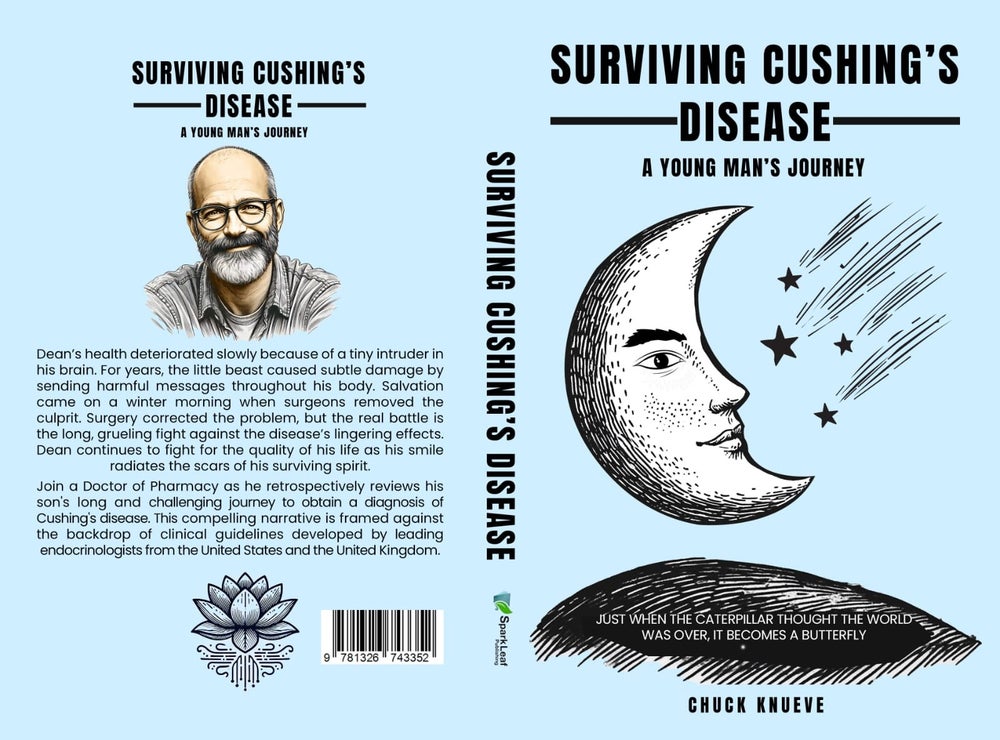
This book, Surviving Cushing's Disease: A Young Man's Journey, is Dean's first act of advocacy. Not a TED Talk. Not a foundation. Just this: a deeply personal, unapologetic account of what it means to be invisible in a system designed to treat averages, not anomalies.
In its pages, the symptoms of Cushing's—unexplained weight gain, thinning skin, recurrent infections—are given shape and language. Not to diagnose, but to awaken awareness. Dean's story is not a callout. It's a call forward.
Startups, Survivors, and Second Opinions
Entrepreneurs can draw from Dean's journey as much as patients can:
- Follow the fringe data: When something feels off—even if others don't see it—pursue it.
- Pressure test the system: Experts are invaluable. But they are not infallible.
- Leverage the pain: Your hardest chapters may become your most powerful pages.
Because sometimes, the most resilient visionaries don't wear lanyards or give keynotes. They survive in silence for years. Then one day, they write.
And someone else learns how to speak up.
Website: https://tales2btold.com/


