Why Google Co-Founder Sergey Brin Says His Early Retirement Was ‘the Worst Decision’
Google co-founder Sergey Brin tried to retire in 2019, but quickly decided that it was the wrong move.
Key Takeaways
- Google co-founder Sergey Brin tried to retire from the company in 2019.
- In a new talk released by Stanford University, Brin says retiring was “the worst decision” he could have made because it was isolating and cut him off from intellectual stimulation.
- Within months, he started going back into the office and spending more time on what became Gemini, Google’s flagship AI model.
Google co-founder Sergey Brin, 52, says walking away from the tech giant in 2019 and “trying retirement” quickly proved to be the wrong move for him.
In a talk released recently by the Stanford University School of Engineering, Brin called his choice to retire “the worst decision.” He initially imagined a low-key life, picturing long days spent sitting in cafes and studying physics. Instead, the timing could not have been worse: The Covid-19 pandemic shut down public life, including the cafes he had intended to use for his new routine.
Instead of a rich intellectual sabbatical, Brin found himself isolated and cut off from the stimulation he was used to. He told Stanford University students that without intellectually demanding work, he was “just kind of stewing” and felt himself “spiraling” and “not being sharp.” He felt a pressing need to return to the office, which was closed at the time.
“After a number of months, we started to have some folks going to the office, and I started to do that occasionally,” Brin said at the talk. “[I] then started spending more and more time on what later became Gemini, which is super exciting.”
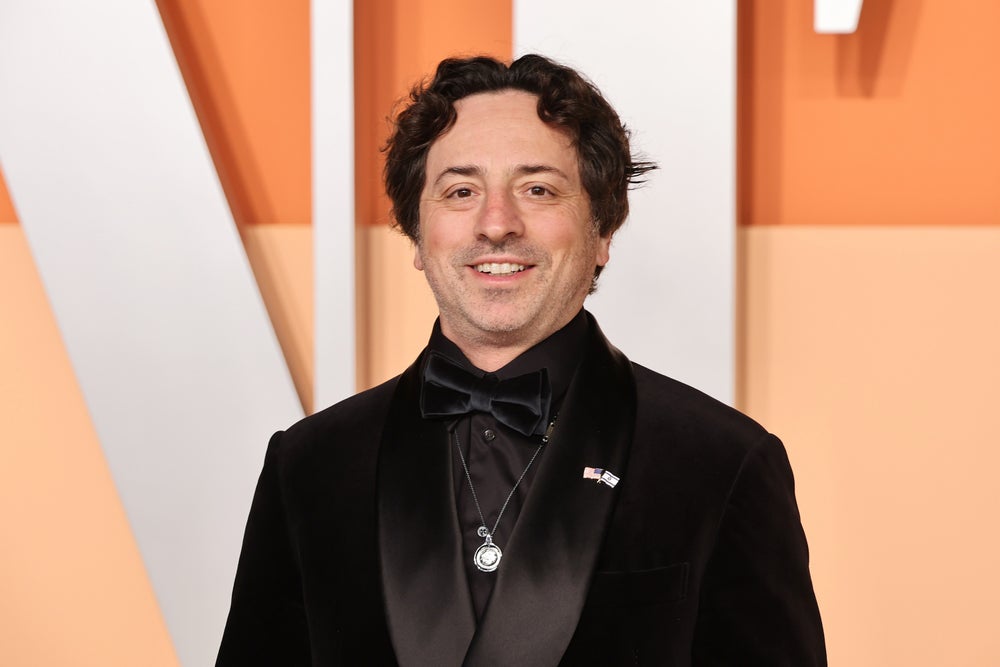
The work developing Gemini, Google’s flagship AI model, gave Brin a crucial technical and creative outlet. Today, Brin is back working full-time at Google, focusing on AI initiatives.
“I think that’s very rewarding,” he said. “If I’d stayed retired, I think that would’ve been a big mistake.”
Brin tied his retirement regret to a wider theme: Founders, including himself, often misjudge timing and readiness. He gave the $1,500 Google Glass smart glasses as an example, claiming he rushed a product that was not affordable or ready for the general public to market. He wanted to push an innovative product, but didn’t think through the technical details.
Related: Google Is Making AI ‘Intelligent Eyewear’ With Warby Parker After Eyeing Meta’s Ray-Ban Success
He has also urged members of his team to work more than the standard 40 hours per week — and all of it in the office. In a memo released earlier this year, he recommended that Google staff working on Gemini AI should work in the office “at least every weekday” and pushed 60-hour workweeks as the “sweet spot of productivity.”
Brin is the third-richest person in the world at the time of writing, with a net worth of $246 billion, according to the Bloomberg Billionaires Index. He follows Elon Musk and fellow Google co-founder Larry Page, who hold the first and second spots, respectively.
Sign up for How Success Happens and get inside the journeys of well-known business leaders and celebrities, uncovering the shifts, strategies and lessons that powered their rise — and how to apply those lessons to your work. Get it in your inbox.
Key Takeaways
- Google co-founder Sergey Brin tried to retire from the company in 2019.
- In a new talk released by Stanford University, Brin says retiring was “the worst decision” he could have made because it was isolating and cut him off from intellectual stimulation.
- Within months, he started going back into the office and spending more time on what became Gemini, Google’s flagship AI model.
Google co-founder Sergey Brin, 52, says walking away from the tech giant in 2019 and “trying retirement” quickly proved to be the wrong move for him.
In a talk released recently by the Stanford University School of Engineering, Brin called his choice to retire “the worst decision.” He initially imagined a low-key life, picturing long days spent sitting in cafes and studying physics. Instead, the timing could not have been worse: The Covid-19 pandemic shut down public life, including the cafes he had intended to use for his new routine.