These Twin Brothers Turned One Beach-Themed Trailer Into a $250M Brand With Over 80 Stores: ‘It’s a Beast’
Mike and Alex Faherty combined complementary skillsets to launch their company.
Key Takeaways
- Mike and Alex Faherty founded their surf-influenced clothing brand, Faherty, in 2013.
- Faherty opened 13 stores across the U.S., with hubs in LA and New York, by 2020.
- During the pandemic, the brothers doubled down on physical retail, signing 30 new leases.
From a young age, Mike Faherty was “obsessed” with clothing. He loved back-to-school shopping and often commented on his father’s shirt-tie combinations. His family lived on the central coast of New Jersey in the 1990s, in a beach town, which meant lots of surfing, and frequenting surf-apparel shops packed with big-name brands like Quicksilver.
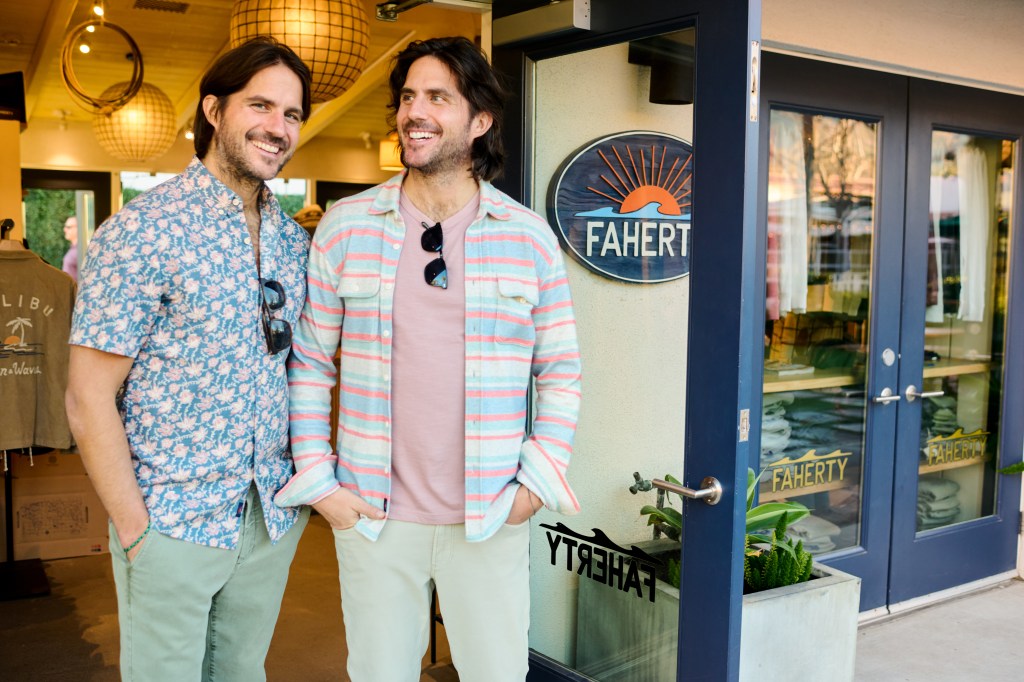
But that changed when Faherty was 12 years old and the family moved to Manhattan. “ I remember going shopping with my dad,” Mike tells Entrepreneur. “He took me to Bergdorf, and I felt a cashmere sweater for the first time. I was like, Oh my God, I want my clothes to feel like this.”
Mike started to learn more about clothing quality and materials. In high school, he mixed and matched the Jersey Shore-inspired surfwear of his childhood with more elevated pieces to form his hybrid personal style. It would even inspire him to write his college essay about a business idea for a clothing line with that aesthetic: Coast to Curb. “It was clothing designed with the spirit of the coast, but that could work in the city,” he explains.
Starting a surf-inspired apparel business in 2013
Mike’s early apparel experimentation would lay the foundation for the brand he’d launch in 2013 with his twin brother Alex Faherty, and Alex’s wife Kerry Docherty. Initially a small, family-run business with that distinctive surf-inspired spirit, over the last decade-plus, Faherty has grown into a $250 million, B Corp-certified lifestyle brand with more than 80 stores and 700 wholesale locations.
The Faherty twins’ complementary skillsets helped the business get off to a strong start. Mike had studied fashion design in college and then launched his career at Ralph Lauren. Meanwhile, Alex had worked in private equity, and brought his financial expertise to the table.
Friends and family helped fund the business for the first couple of years, before the company turned to outside investors. Additionally, in those early days, a network connection of Mike’s invested in the brothers’ venture, and also helped manufacture the product at the factory he owned in India — a significant advantage considering how many factories require large order placements.
For several years, most of Faherty’s business came from wholesale. Heading into 2017, though, the brand had raised enough capital to spend money on direct marketing and start opening stores. That brick-and-mortar retail strategy would become the brand’s cornerstone, even as other apparel brands scaled their in-person footprints back, particularly amid the pandemic.
Here’s how the Faherty brothers made it happen.
The decision to lean into a brick-and-mortar retail strategy
Faherty’s first foray into physical retail, during the brand’s inaugural summer, started with a mobile store. When Mike first began concepting the brand in a 200 square-foot artist’s loft near Union Square, he noticed the increasing popularity of food trucks. People would line up down the block. There’s something to this moving retail, he thought.
With the help of his mom and a New Hampshire-based builder, Mike designed Faherty’s first retail experience: “We basically put rustic wood and cool interiors onto a hydraulic side door trailer and built what we call the ‘Beach House on Wheels.’”
The mobile storefront traveled across the country, selling at various events, pop-up shops, wholesalers or just on the side of the road.
Opening Faherty’s first small storefront on Thompson Street
A few years later, as the co-founders searched for office space, they wanted another flexible retail concept. So they set out to find a location that could support an attached pop-up shop. That’s when they stumbled upon a small space on Thompson Street in Soho, being used as an “apartment slash jewelry studio showroom” — the perfect spot for their first store.
We saw the magic of people seeing the product and touching it in person.
“ We put the big photograph of the wave,” Mike recalls, “the big vintage surfboard and pine wood on the wall. We had the Noguchi lamp [with] cane detailing around it. So it had all of the original elements of our retail vibes [from the mobile store], indigo textiles, in this tiny room.”
At the time, it was unusual for apparel with a casual aesthetic to be framed as a premium product, with the higher price point to match, so having an in-person storefront helped Faherty demonstrate its clothing quality and value, Mike says.
“We saw the magic of people seeing the product and touching it in person to be like, Wow, this is really good stuff,” the co-founder recalls.
Signing a serendipitous lease for a Malibu, California store
Given Faherty’s in-store traction, as the brothers considered how to grow the business, leaning into brick and mortar just made sense. The first standalone store opened in Malibu, California at the Malibu Country Mart, right off the Pacific Coast Highway, in 2016.
As kids who’d grown up surfing in New Jersey, the twins’ first visit to Malibu as teenagers left an “amazing” impression; as adults, they recognized the location’s strong retail potential for their brand. Then, in a serendipitous twist, an encounter at their Thompson Street storefront brought the vision to life.
“ Randomly, the guy who does the leasing for the [Malibu Country Mart] shopping center walked in,” Alex says, “and we met him, and then six months later, he emailed me and was like, I just had this lease that fell through. Would you be interested? And we’re like, Yes, how amazing.”
Faherty’s Malibu store opened just before the summer with a launch event, and the response was great. Not only did they have a winning product, but one that people gravitated to in-store — proving the value of a physical retail approach.
Faherty opened 13 stores across the U.S., in New York, Los Angeles and other coastal cities, before the pandemic hit.
Doubling down on physical retail despite the pandemic
Many companies shuttered brick-and-mortar stores or shied away from expanding their retail presence in the months that followed March of 2020, but the Faherty brothers stayed the course. In fact, the time was a “major inflection point” for the business. Although in-person shopping had ground to a halt, the co-founders looked for opportunity in the crisis.
Alex recalls listening to a podcast featuring Panera Bread’s founder Ron Shaich, who said that the Great Recession was the best time to expand the restaurant chain because rent and construction costs were low.
Faherty’s 13-store fleet presented challenges that would be alleviated by a larger physical retail presence.
That number didn’t make enough money to hire employees to manage the whole operation — which meant the co-founders still had to be very hands-on with the stores. A 30 to 40 store footprint would do enough volume and generate enough revenue to support a larger team.
Signing 30 leases to open stores within the next three years
When Faherty’s beach-adjacent stores, like those in the Hamptons and Nantucket, reopened in June, the demand “was insane,” with business up 100%. What’s more, while wholesale business plummeted during the pandemic, online sales boomed. The business saw its most profitable months in June and July of 2020.
“We started aggressively looking at all the locations we wanted to be in,” Alex says. In 2020 and 2021, the company signed 30 leases to open up stores within the next three years.
Faherty currently boasts 82 stores, primarily in the U.S. with a few in Canada, as it eyes global expansion.
Despite the success, looking back, the co-founders say they might not have signed 30 leases in such a short period of time.
Twenty might have been the sweet spot. “That extra 10 is just so hard,” Alex notes, sometimes making it difficult to keep up with the volume and putting pressure on the supply chain.
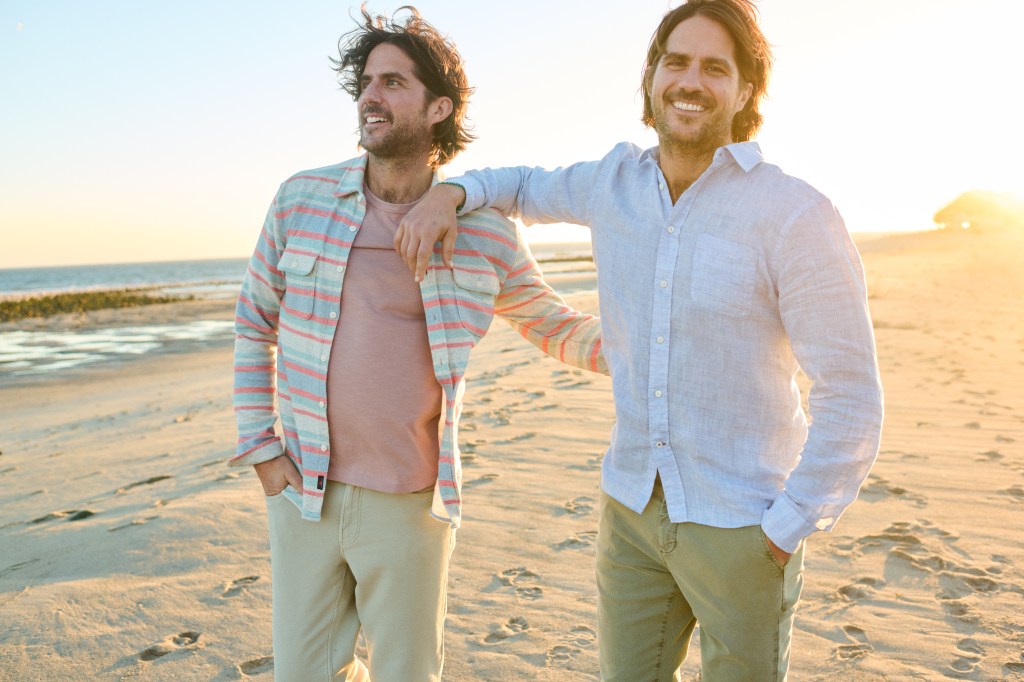
Cultivating a strong company culture across stores
Building a strong company culture with employees across 80-plus stores also requires an intentional approach.
Understanding how important each hire is, and how he or she fits into the brand’s culture, which spreads across stores, is key, Alex notes.
Businesses with a significant brick-and-mortar presence shouldn’t underestimate the need for extensive training either, Mike adds: “The best brands in retail and hospitality are amazing trainers, and we’re learning the importance of that over this growth period.”
The co-founders prioritize connecting with their store managers and developing those critical relationships.
“I think they see the passion that we have for the business and how much we want them to succeed,” Alex says. “They’re not just a statistic. They’re really important to us.”
To that end, the co-founders hope that Faherty’s store managers “can really feel like entrepreneurs” themselves, noting that many of them become key people in the community with the autonomy to make decisions.
“It’s a beast to run stores,” Alex says. “You need a lot of empathy; you need a lot of love. You need a lot of direction. But I think with our brand, and the way we run the business, we’ve tried to really create a retail concept where it’s not so corporate and big box and formulaic.”
The Faherty twins think the love they have for each other and the company they’ve built will take them a long way.
“It’s very rare to have business partners who share the exact same DNA, figuratively and literally,” Mike adds. “We share the same DNA, but we also share the same love of the brand.”
Key Takeaways
- Mike and Alex Faherty founded their surf-influenced clothing brand, Faherty, in 2013.
- Faherty opened 13 stores across the U.S., with hubs in LA and New York, by 2020.
- During the pandemic, the brothers doubled down on physical retail, signing 30 new leases.
From a young age, Mike Faherty was “obsessed” with clothing. He loved back-to-school shopping and often commented on his father’s shirt-tie combinations. His family lived on the central coast of New Jersey in the 1990s, in a beach town, which meant lots of surfing, and frequenting surf-apparel shops packed with big-name brands like Quicksilver.
But that changed when Faherty was 12 years old and the family moved to Manhattan. “ I remember going shopping with my dad,” Mike tells Entrepreneur. “He took me to Bergdorf, and I felt a cashmere sweater for the first time. I was like, Oh my God, I want my clothes to feel like this.”