
The Culture of Progress AI-powered cell culture and robotics are taking biomanufacturing to new heights - faster, smarter, and more sustainable than ever before.
Opinions expressed by Entrepreneur contributors are their own.
You're reading Entrepreneur United Kingdom, an international franchise of Entrepreneur Media.

Across industries - from life-saving therapies to sustainable food and materials - biomanufacturing is hitting a wall. The culprit? A reliance on outdated, one-size-fits-all cell culture media. These generic formulas are slow to develop, expensive to produce, and often fall short in performance, stalling scalability and driving up costs. As a result, biomanufacturers are struggling to fast-track innovation and bring vital, breakthrough products to market. It's a bottleneck holding back a future of faster, smarter, and more sustainable solutions.
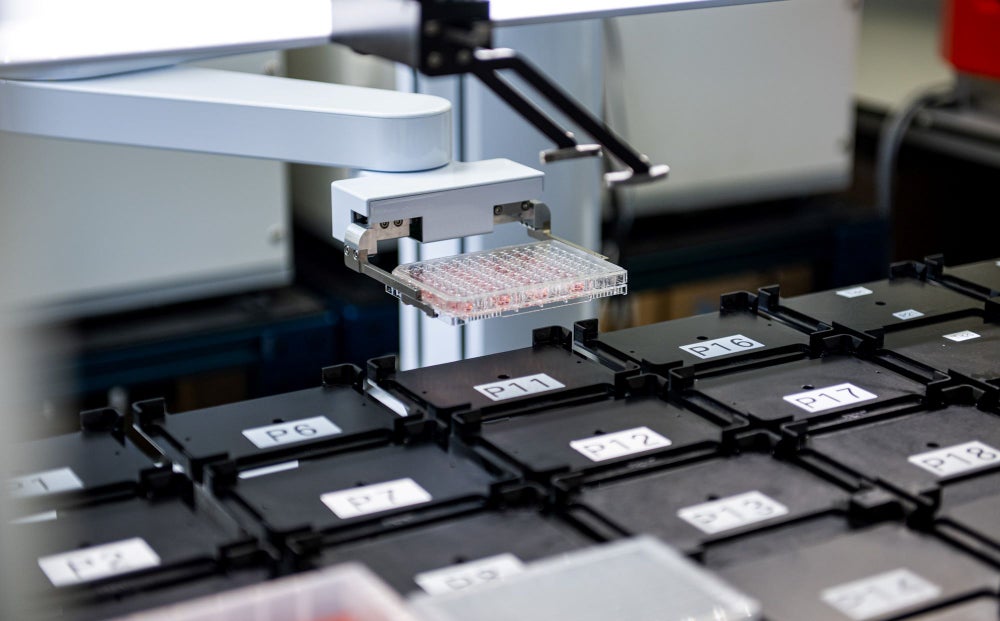
Multus Biotechnology, founded in 2020 by a team from Imperial College London, is on a mission to solve this challenge. The company is a global leader in AI-driven cell culture media development, helping biomanufacturing companies reduce time to market while improving supply chain security and unit economics. By combining high-throughput robotic automation with artificial intelligence, Multus Biotechnology delivers optimal media formulations with unparalleled speed and efficiency.
At the heart of this work is Cai Linton, co-founder and CEO of Multus Biotechnology, who believes that biology holds tremendous potential to create essential products in a more sustainable way. "We started Multus Biotechnology to build technology that would make these kinds of products accessible across the world," Linton explains. "We have a mission to design better cell culture media for the industrial bioeconomy, so that we can accelerate and scale the translation of scientific breakthroughs into real-world impact."
From Food to Biopharma and Beyond
When Multus Biotechnology first began, the focus was squarely on the food industry, specifically addressing the unsustainable environmental impact of producing animal-derived products. "The ways that we produce, in particular, animal-derived products today, has a tremendous burden on the planet," Linton notes. Biomanufacturing, he believes, offers a better alternative, one that could produce products in a way that's "better for people and the planet."
While the initial focus was on food, Multus Biotechnology's mission quickly expanded to tackle the biopharma industry. Linton and his team realised the potential for AI-driven cell culture media design to accelerate and scale the impact of the sector. "We started looking at the food industry… and now we're expanding the scope beyond food into the biopharma industry, and then in the future into advanced materials as well," he shares.
In the biopharma industry, the biggest hurdle to bringing breakthrough therapies to market isn't that they don't work - it's the production challenges. "74% of new biologics that were rejected by the FDA were on the grounds of manufacturing failures," Linton says. This staggering statistic highlights a critical issue - "these therapies work tremendously well in the lab but the manufacturing has issues." Linton explains that one of the biggest drivers of product quality, yield, and consistency is cell culture media, the nutrient-rich environment in which cells grow. Yet, many biopharma companies continue using "decades-old generic solutions that aren't fit for purpose for these new modalities." As a result, "breakthrough science never reaches, never impacts the market."
Multus Biotechnology's Solution: AI-Driven Innovation
Multus Biotechnology is addressing these challenges by developing customised cell culture media designed to improve the biomanufacturing process. But what really sets Multus Biotechnology apart is the integration of AI and robotics. "What we do differently is use high-throughput robotics so that we can run experiments at hyperspeed and hyperscale," says Linton. This approach drastically accelerates the media development process, allowing the company to optimise media formulations far more efficiently than traditional, artisanal methods.
In the conventional model, scientists manually try to figure out what a particular cell needs to grow effectively. "The challenge is there are dozens of ingredients that all interact and need to be carefully balanced for each different cell type and application," Linton explains. This complexity makes it nearly impossible to accurately predict the right media formulations. The result? Years of trial and error and costly mistakes. Instead of relying on manual trial and error experimentation, Multus Biotechnology uses high-throughput robotics to quickly run thousands of experiments. The data from these experiments is then processed by machine learning algorithms to "guide our experimentation and optimisation." As Linton puts it, this allows the team to "develop dozens of formulations that meet all of the objectives across cost, functionality, growth, and supply chain security - in just a few weeks instead of years."
Winning the Venture Café Pitch Competition
Multus Biotechnology's innovative approach has earned the company recognition, including a recent win at the Venture Café pitch competition. The win was a reflection of the company's innovative approach and the compelling market need for change. Linton credits the company's success to several key factors, particularly the vast market potential and the urgent need for change within it. "The cell culture industry, in particular, biomanufacturing, is extremely ripe for disruption with AI because of how complex the biology is," he notes. "What Multus Biotechnology has built is a holistic solution. It's not just a model. It's a model plus the capabilities to gather the necessary data." This holistic approach has helped build traction with customers and secure "repeat product sales, products on the market, and commercial contracts." As Linton explains, this momentum is what will enable the company to continue growing and expanding. "That's allowed us to build real traction with customers and demonstrate our value," he says.
Growing Global Impact
Looking forward, Linton is excited about the future and the impact Multus Biotechnology will have on the world. "What's really exciting for us is being able to enable and unlock large-scale, cost-effective, and productive biomanufacturing for these kinds of new products that are going to transform society in a positive way," Linton shares. The company is currently raising funds to grow. "We're raising to expand into the biopharma market, working with the largest CDMOs and cell culture media suppliers to bring breakthrough therapies to market faster," Linton says. These efforts will increase Multus Biotechnology's capacity for new product development and help the company scale its operations.
Having navigated the challenges of founding and growing a biotechnology company, Linton offers valuable advice to aspiring entrepreneurs. He encourages them to think beyond their local market and adopt a global mindset. "Don't stick within the UK bubble necessarily. Use the advantage that the UK has, particularly around talent and the ecosystems that are built here," Linton advises. But he also cautions against getting too attached to a single solution without input from potential customers. "There could be a tendency to fixate on a solution and then spend many years trying to build the perfect solution without speaking to customers," Linton says. His advice is simple: engage with customers early and often to ensure your solution meets real market needs.
A Future of Impact
Multus Biotechnology is at the forefront of biomanufacturing innovation, harnessing AI, robotics, and customised cell culture media to tackle some of the most pressing challenges across global industries. From advancing biopharma therapies and producing sustainable food to creating next-gen materials, the company is primed to lead the industrial bioeconomy for years to come.
Linton and his team are redefining how essential products are made, driven by an unwavering commitment to both human and planetary health. Their pioneering approach is accelerating the availability of life-saving therapies, sustainable food, and advanced materials. With each new breakthrough, Multus Biotechnology is not only reshaping industries but also creating a lasting, global impact.


