
How Noto Is Modernizing Music Schools and Tutoring Centers
Edited by Entrepreneur UK
You're reading Entrepreneur United Kingdom, an international franchise of Entrepreneur Media.

Lesson-based businesses (like music schools, tutoring centers, and after-school programs) thrive on personal instruction but often struggle behind the scenes. Many still depend on spreadsheets, phone calls, and manual scheduling, which slows them down instead of supporting them.
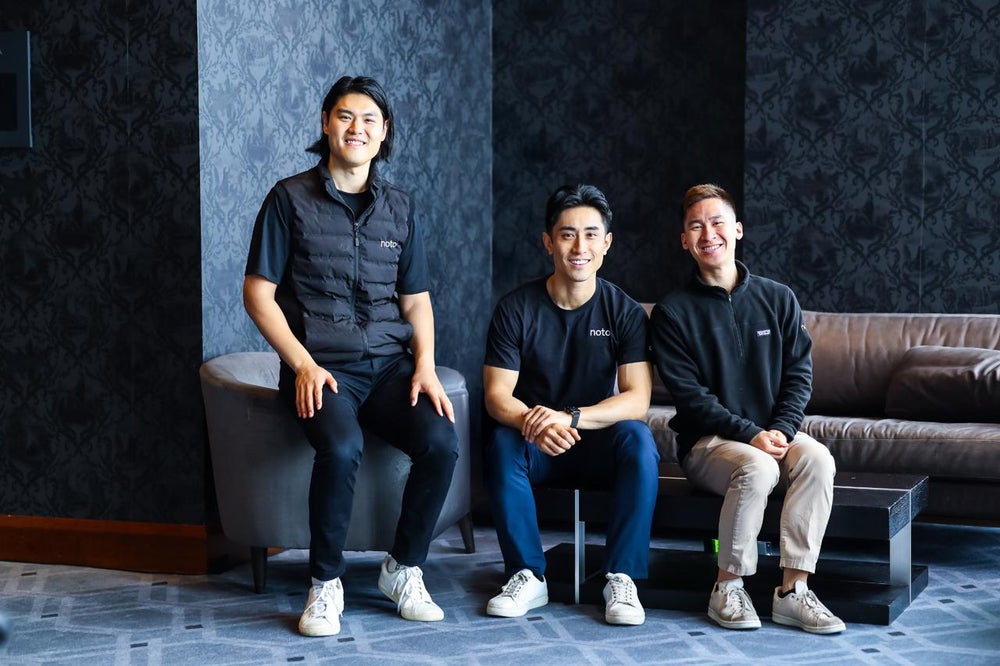
Enter AJ Ding and Steve Wang, whose startup Noto streamlines scheduling, billing, and communication for lesson-based businesses, giving educators more time to teach.
How Noto Streamlines Lesson-Based Workflows
Across the United States, many small education and lesson-based businesses still rely on outdated software to manage scheduling and billing. For owners of music schools and tutoring centers, that means hours spent juggling emails, calendars, and manual invoices — time that could be used teaching or growing their business. The administrative load has quietly become one of the biggest reasons after-school programs struggle to grow.
As AJ Ding, co-founder of Noto, explained, "This is a pretty big market that's been ignored because the product needs are just more complicated than most software companies want to deal with."
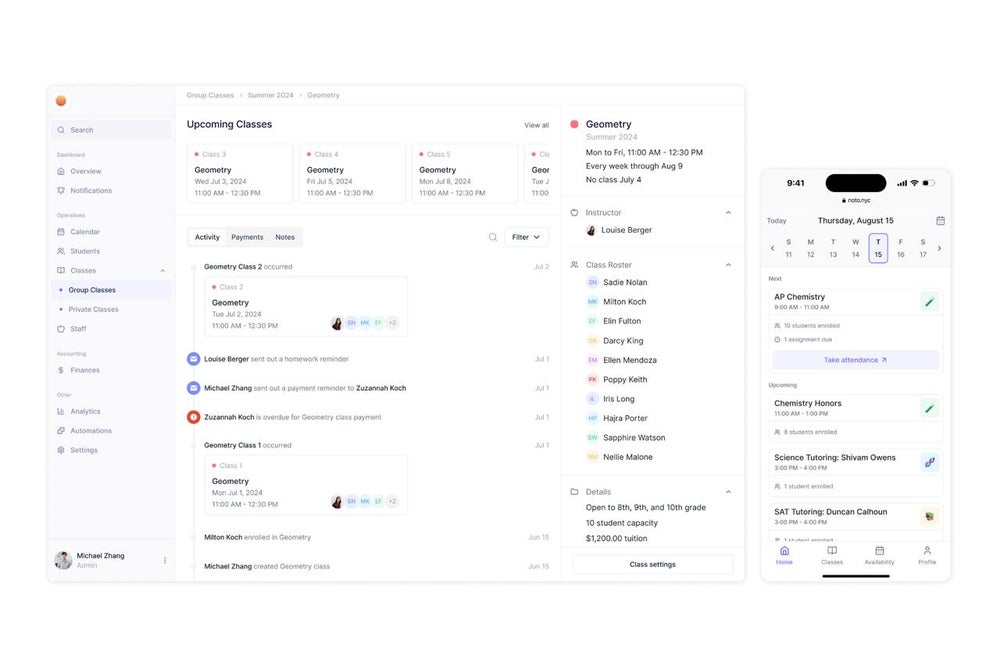
Noto was created to change that. Built as an all-in-one software, it replaces the patchwork of spreadsheets, calendars, and messaging threads that dominate day-to-day operations. Its system connects every part of a school's workflow (lesson scheduling, payroll, billing, instructor coordination, student and staff management, and communication), giving owners a single source of truth for everything they run.
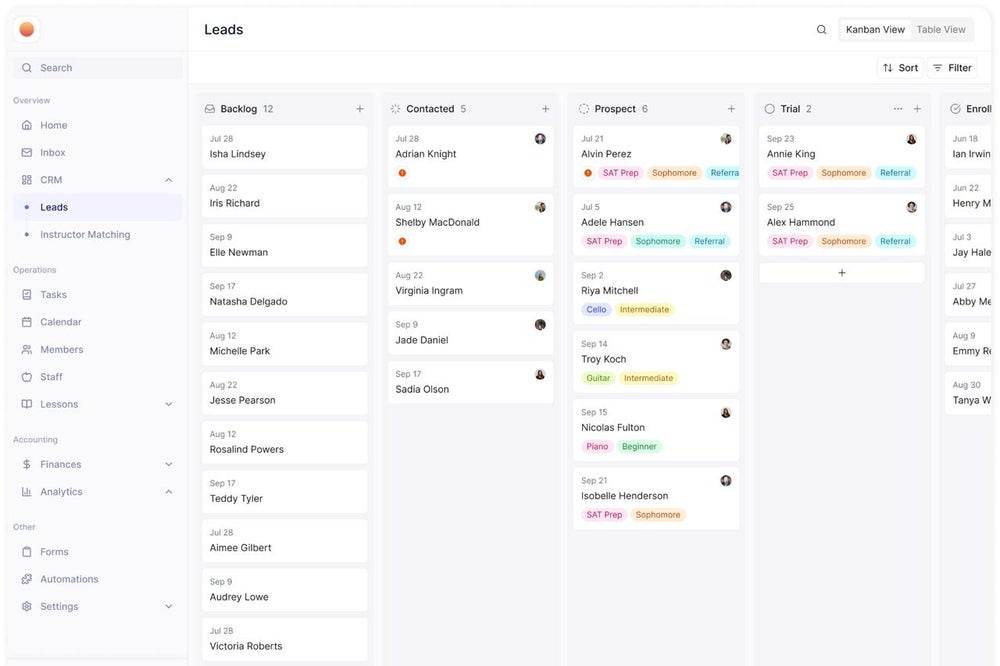
Where older tools felt pieced together, Noto is meant to be intuitive and easy to use. Its clean interface and integrated CRM simplify daily tasks like sending reminders, onboarding students, confirming reschedules, and keeping parents informed of school updates. By unifying these actions, the platform reduces friction across teams and helps educators stay organized without having to re-enter data across multiple systems. As AJ explains, "We wanted Noto to feel effortless — something that actually helps you run your program instead of getting in the way."
 Rejecting The One-Size-Fits-All Approach
Noto not only gives educators more time — it's built to adapt to the unique routines and challenges of their work. Most tools available to them were built for specific places like gyms, yoga studios, or general appointment booking, not for programs that manage recurring lessons with children and multi-teacher coordination. A tutoring center using, for example, a fitness app can't track varied lesson lengths or flexible payments, or a music school relying on standard scheduling tools can't handle make-up sessions or semester-based payment plans.
The result is a patchwork of rigid systems that forces owners to adapt their workflow around the software instead of the other way around.
Noto aims to flip that dynamic. Its customizable design lets owners shape the platform around their daily operations so that the system effectively supports their workflow instead of setting it for them. This way, a music teacher can manage private and group lessons side by side, a tutoring center can bill families automatically based on attendance, and a school owner can see who's teaching, who's out, and who needs to be rescheduled — all from one place.
That same flexibility extends to how businesses get paid. Noto supports eight different billing models (from pay-as-you-go and monthly tuition to credits and packages) that adapt to whatever system a program already uses. It also enables direct bank payments through ACH, allowing owners to bypass standard credit card processors and avoid the typical 3% transaction fee. For small establishments, those savings can add up to tens of thousands of dollars a year, money that can go back into new programs, staff, or instruments.
As co-founder Steve Wang explains, "All of these businesses run very differently. With this model in place, we can effectively provide them with a single system that can empower all of them."
 How Noto's Founders Identified A Mass Problem
Before Noto took shape, AJ and Steve had already spent years in Silicon Valley, building products for different large tech companies. But when they teamed up, looking to start something of their own, they were drawn back to the kinds of communities they grew up around: small, family-run businesses that keep local neighborhoods running. They wanted to take the kind of thoughtful, efficient tools they'd built for big tech and make them useful to the people running everyday businesses.
When they began exploring potential use cases for Noto, their approach was simple: walk into local businesses. Over the span of a month, they visited more than a hundred storefronts across Brooklyn and Queens — laundromats, gyms, tutoring centers, and music schools among them.
While many of these operations had modern tools to manage their work, the founders found one category stood out for how far behind it was. Music schools and tutoring centers were still relying on previous-generation software that hadn't evolved since the early 2000s. What they realized was an industry running on outdated systems: clunky interfaces that buried important information behind layers of menus, rigid systems that didn't suit their workflows, and slow, error-prone processes that made routine updates a chore for educators and administrative staff alike.
As AJ recalled, "We went door to door just talking to school owners, and we found those running after-school businesses were all saying the same thing — there was no good software for them."
Through those conversations, AJ and Steve recognized a quiet but powerful truth: what these small, relationship-driven businesses valued most was having the proper time to focus on students, families, and the work that gave their jobs meaning. "We started to see how much they cared about the people they served," AJ said. "They didn't want another system to manage, they wanted something that would give them back the hours they were losing."
That realization became the foundation of Noto's mission: to build software that works the way people already do.
Keeping The Human Touch Intact
For AJ and Steve, technology should be a tool to deepen human connection. From the start, they wanted automation to feel invisible, a quiet support system that enhances relationships rather than replaces them. In their view, the heart of every lesson-based business lies in the bond between teachers, students, and their families. The challenge was creating software smart enough to manage complexity to allow people to spend more time connecting with one another.
As Steve put it, "When you work with families, it's really relationship-based. The product has to focus on maintaining those relationships."
That belief shapes every decision behind Noto's design. The platform serves as a full CRM built specifically for after-school programs — one that organizes key information while keeping every interaction personal. As AJ Ding and Steve Wang see it, Noto's value isn't just in saving time, but in giving educators the tools to sustain and scale the programs that shape their communities, helping a traditionally overlooked sector operate with the efficiency of larger institutions.


