Wisdom in Action: From Television Pioneer to Wellness Entrepreneur, Here's How Uma Ghosh Has Led with Authenticity "My goal is to share knowledge so people can make choices that suit them—not to influence them blindly. That's the spirit behind all my content. If someone spends 30 seconds, a few minutes, or even longer with me on YouTube, I want them to learn something about themselves, not just get influenced by me."
Opinions expressed by Entrepreneur contributors are their own.
You're reading Entrepreneur Middle East, an international franchise of Entrepreneur Media.

Uma Ghosh has also has also been featured on Anchored Echoes, a new video series on Entrepreneur Middle East- watch the full episode HERE.
Uma Ghosh had been a television show host on one of the most popular South Asian channels in the UAE, Sony Entertainment Television (SET), and had been running her own production company, Queen Bee Production, for 15 years when she decided —at the peak of her media career— that she didn't want to continue that path anymore. As it so often happens with such pivotal decisions, a severe burnout was at the root of it all. "Being in front of the camera came very easily to me, but what did not come easy to me was always looking perfect, in whatever way that was defined when I was doing television—always having the perfect hair, always having the perfect makeup, always having to dress in a certain way," Ghosh recalls. "I think that was one of the reasons why I hit burnout, because you're constantly being performative in front of the camera and not so authentic, you know? So being in front of the camera, in and of itself, felt very authentic to me, but always being dressed up and looking a certain way did not."
Ghosh's sentiments make more sense when the scale of her work is brought into the picture. It was in 2005 that the pilot episode of her lifestyle TV show High Life Dubai aired on SET. "Initially they only wanted me to do 13 episodes," Ghosh reveals. "But it really became quite big, and then the rest is history. I ran it for eight years, hosted 40+ episodes a year…I don't even remember how many episodes I did in total by the end! After doing Season 1, I launched my own production company, Queen Bee Production. That, I believe, was a true pioneering endeavor—firstly, as a woman-led television production company in the region, and secondly, as a local production company for South Asian television production. It was something I always wanted to do. Under Queen Bee Production, I eventually went on to launch eight successful shows across various channels in the Middle East which included High Life Dubai itself but also the likes of Top Guns, love4food, ZEE Connect, TOTT, PropertyScape. Meanwhile, through hosting High Life Dubai, I myself was living the high life—hobnobbing with celebrities, walking the red carpets, getting dressed by designers— I really was living the Dubai dream."
 Ghosh launched High Life Dubai in 2005, running it for eight years with her own production house, Queen Bee Production. She was among the first women in the region to lead a TV production company. Image courtesy SET/YouTube
Having grown up watching Ghosh's High Life Dubai in the early 2000s, I can certainly recall her exuberant presence on screen and interviews with top global celebrities. But with such glitz and glamor came intense and fast paced work that eventually began to wear her down, Ghosh tells me. "Basically, after doing television for 15 years, I started to see a lot of changes in me at every level," she says. "Physically, I was always bloated, my hair was not doing well, my skin had a lot of pigmentation, I was always fatigued, and I had a lot of mood swings. Emotionally, I was not doing so well. I was getting so many awards and accolades, but I was not really fulfilled or superbly happy. I would get an award and be like, 'Okay, what's the next one?' I was running after something. I was already in my late 30s by then, and I knew something had to change because that's not a way to live."
That epiphany was what ultimately led Ghosh towards launching her own wellness brands: first with The Uma Show, an online lifestyle and wellness channel; and later with Pro-Age Aesthetics Academy, a training and education platform that focuses on beauty and wellness which she co-founded. But the decision to let go of her television career was anything but drastic, Ghosh notes. "It was a very slow organic process; not a one night decision," she continues. "But that realization [that something needed to change] was how it all started. So I began to take control of what I could. I started with slow and small things. I started to do breath work and meditation. I started to eat cleaner and properly observe what was going into my system—not just in terms of food, but also what I was listening to, whom I was interacting with, what kind of media I was consuming—all of those things. And slowly I started to see a huge difference. I was more in control of myself. I was responding to things, not reacting to things. My health got better, and I was full of energy."
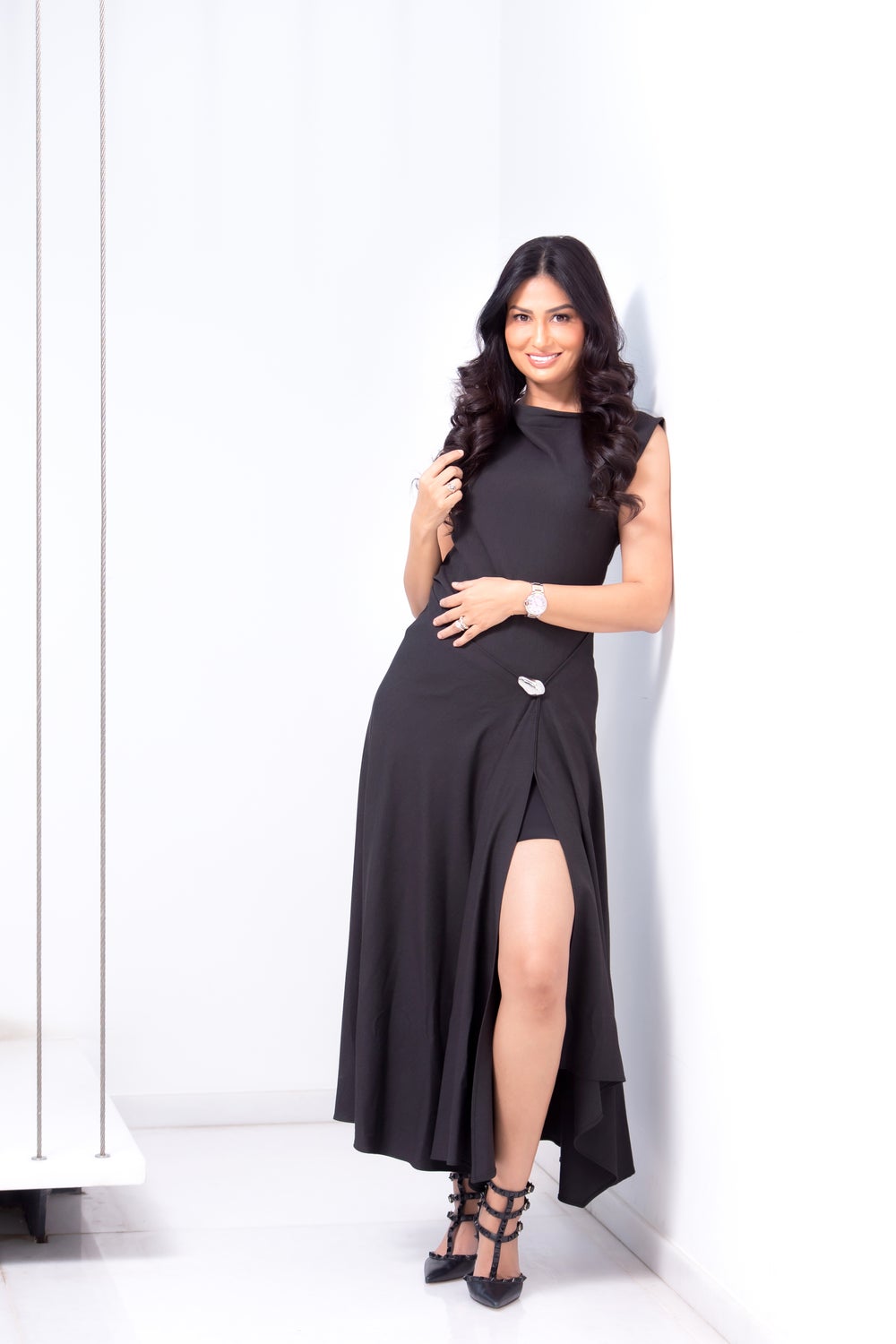 Image courtesy Uma Ghosh
It was after this experience, while she was still continuing her career as a television producer and anchor, that Ghosh thus decided to get an Integrative Nutrition Health Coach certification from the New York-based Institute for Integrative Nutrition (IIN), one of the most recognized schools for health coaching worldwide. "I realized that there were so many women —either in senior corporate roles, entrepreneurs, or very, very busy mums—who were also in my position and didn't know what was really happening with them and their health," Ghosh recalls. "So I wanted to share that knowledge with them. I went ahead and became a certified health coach, and I started coaching women one-on-one while I was still doing television. But I did not think of giving up television at the time. I just really got interested in coaching because it was not just about health, but also about mindset. It was about having a dream, fulfilling your dream, being confident and comfortable in your skin. So that's when I decided—when I was really on top of the game in television—to get into something that wasn't even an industry yet [i.e. personal health and wellness]. I'm talking about the early 2010s– that was when I decided to really focus my business and channel my energy into this new direction."
It was in 2017 that the first culmination of this decision came to fruition when Ghosh launched The UMA Show on YouTube and social media platforms. Designed to be a digital wellness and lifestyle platform, the content focused on nutrition, fitness, beauty, mindset, and aging gracefully. "When I closed Queen Bee Production, I had already begun Uma Ghosh Lifestyle Coaching. What started as one-on-one sessions soon expanded into online programs that reached women globally—even before 2020. At the same time, I was deepening my knowledge in holistic beauty and skin health. I wanted to empower women to redefine beauty for themselves, beyond the narrow standards we're given. That led me to train in holistic practices such as face yoga, facial massage, and gua sha. By combining nutrition, movement, mindset, and holistic beauty, I offered women a complete approach to wellness. And then [the pandemic in] 2020 happened— and with everything shifting online, my online coaching too went really big. I was coaching, at one point, 200 women at a time and all of that. And that's how The UMA Show took off."
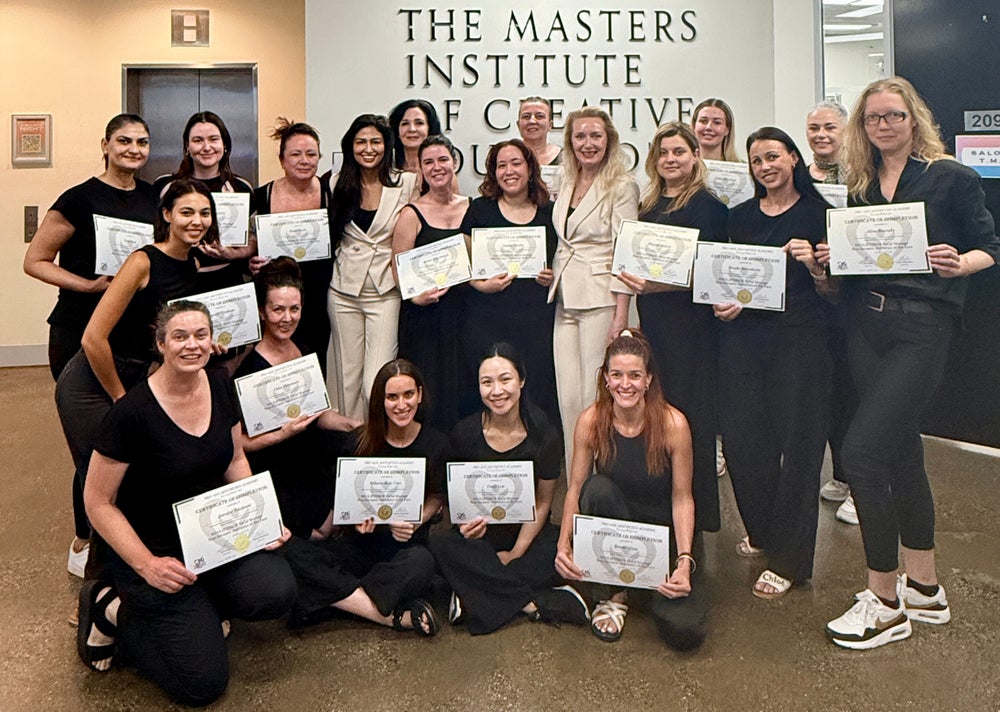
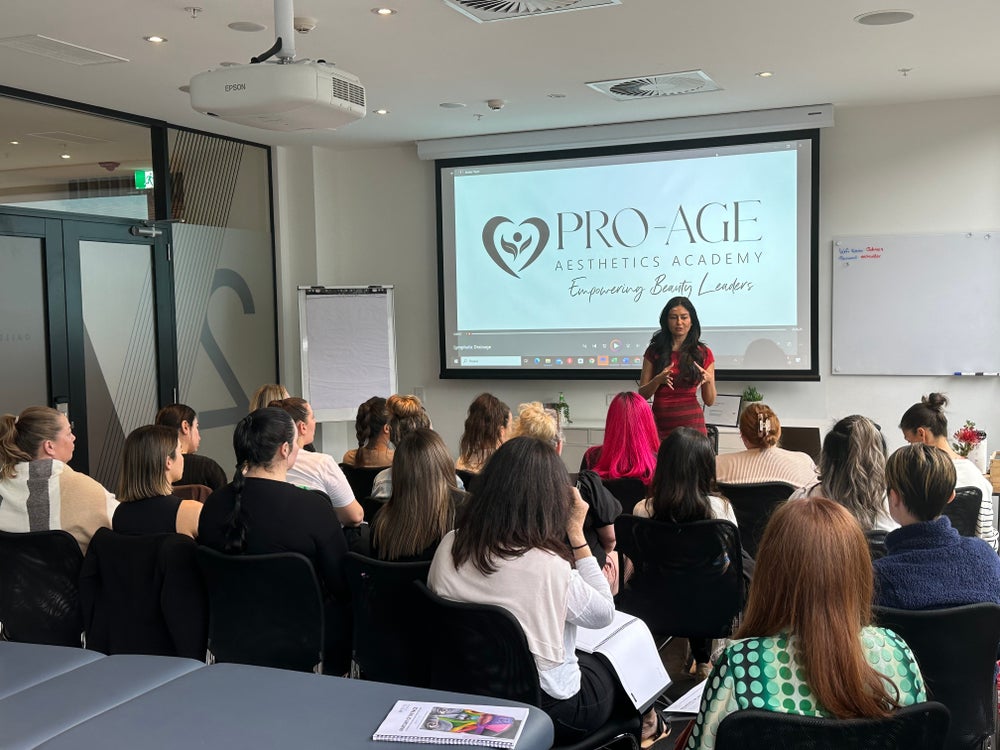 The Pro-Age Aesthetics Academy, based in London, offers professional training in holistic beauty for a global audience. Image courtesy Uma Ghosh
But the initial period between making the decision to pivot from her television to starting The UMA Show was a particularly turbulent one, Ghosh shares. "At that time, I was also moving on from my first marriage," she says "It was a very hard period in my life. Going through a divorce while also transitioning from one career to another was one of the toughest things I've ever done. But it had to be done, because I knew I didn't just want to remain an entrepreneur—I wanted to create an impact. Everything I do comes from a place of creating impact, making a difference in someone's life, educating, and mentoring. That gives me a lot of fulfillment."
Indeed, it was that sense of purpose that led Ghosh to co-found Pro-Age Aesthetics Academy in 2021.. "I was already working in B2C with The UMA Show, but I wanted to reach into B2B and that's how we launched the Pro-Age Aesthetics Academy, based in London, which quickly went global," Ghosh says. "The training format is designed to be international and is especially in demand in markets like Australia, the US, and beyond. My main B2C revenue streams are the coaching programs on my website—covering inside-out wellness along with the beauty modalities I teach women—plus my online courses. I also developed my own tools, like gua sha, because I couldn't find what I wanted, and now I'm preparing to launch my own organic skincare line after so many requests for products like massage balms and oils. On the B2B side, revenue comes from the Pro-Age Aesthetics Academy. These are high-ticket trainings for professionals only, offered both in-person—where we travel worldwide—and online, across multiple programs."
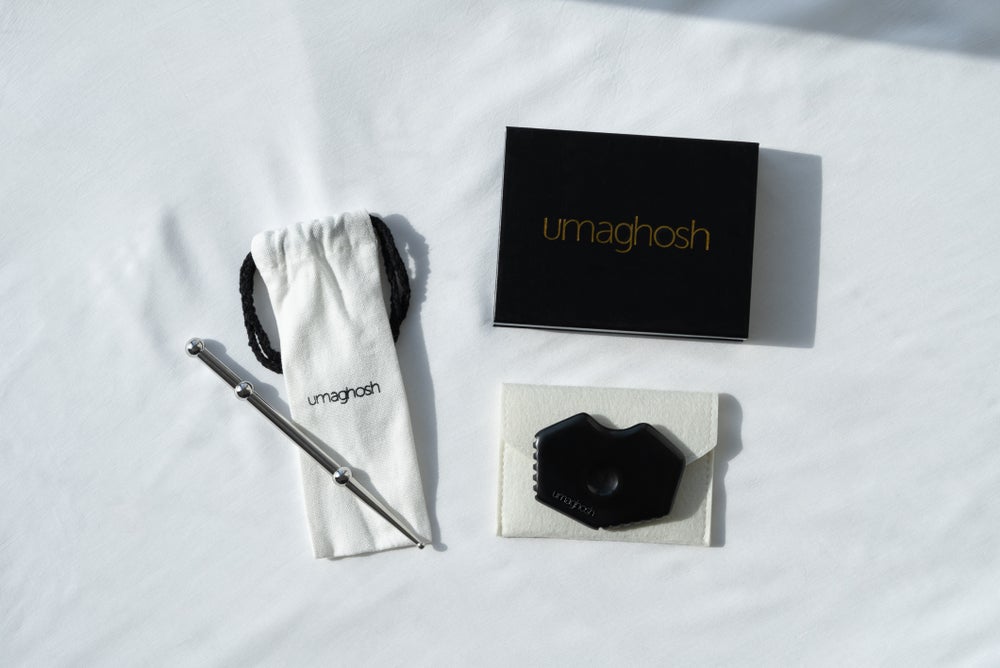 Pro-Age's product line is built around holistic beauty tools like gua sha, facial cupping, and face massage rollers. Image courtesy Uma Ghosh
With both of her wellness ventures, Ghosh still gets to spend much of her time in front of the camera. But in this second innings, she made concerted efforts to not repeat what he faced in her television career. "When I was redefining my business structure, I realized that, as women, we cannot truly have work-life balance—it's very difficult," she says. "Instead, you have to incorporate your work into your life and your life into your work. That's how it works for us. Earlier, when I was an entrepreneur in television, I tried to segregate and compartmentalize everything. Then I went through a separation, got married again, and I knew this time I wanted to do it differently. I wanted to keep working, but at the same time, find a way to blend both life into my work and work into my life. That redefinition was important for me. That's why I now work from home and try to experience every aspect of my life fully. I travel a lot, which means things aren't always perfectly balanced, but whenever I'm present, I'm completely in it—100%. Even right now, talking to you, I'm fully here. That approach defines how I do everything."
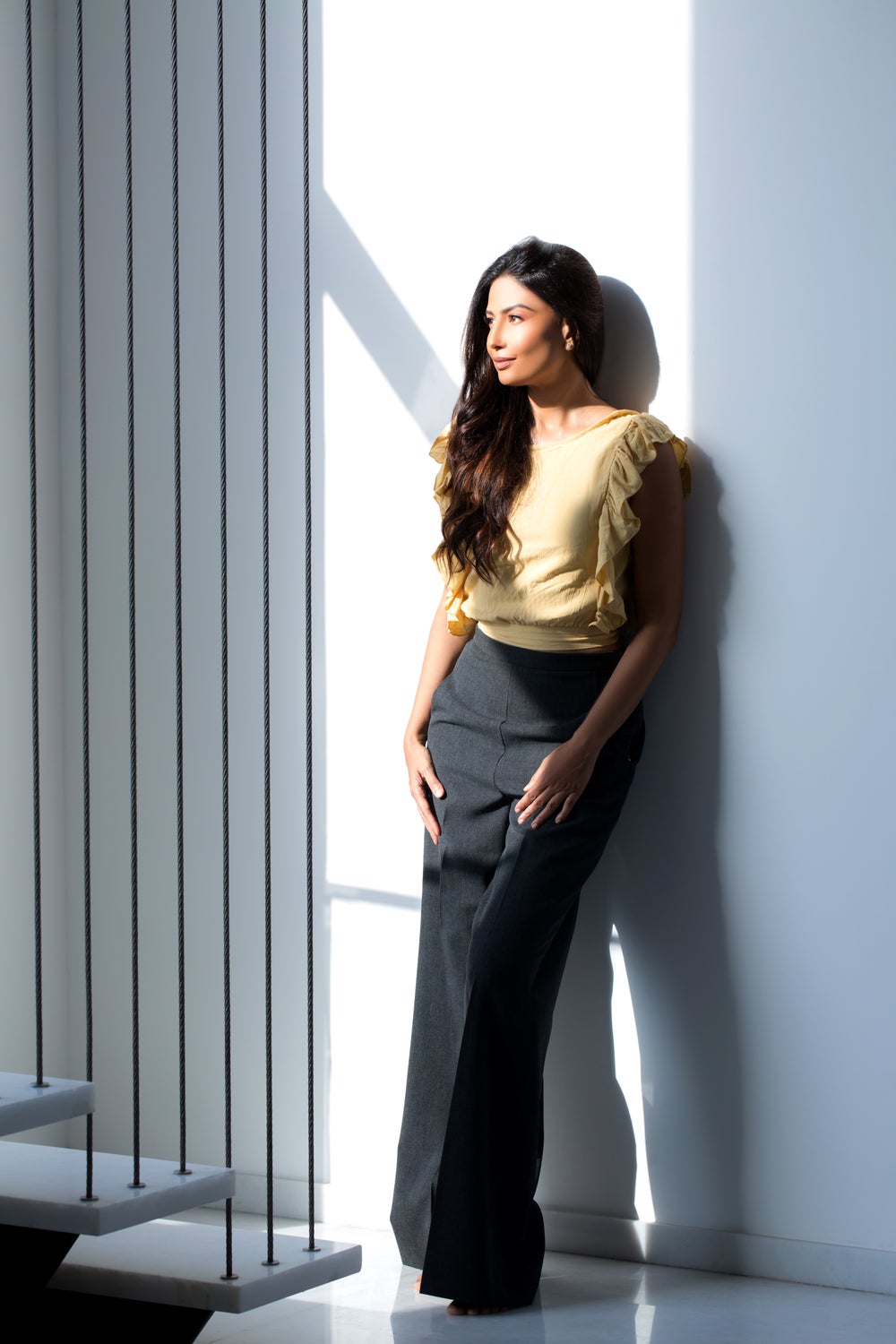 Image courtesy Uma Ghosh
It is this mindset that is evident in all of Ghosh's videos– whether it is on YouTube where she currently has 693,000+ subscribers, or in the bite-sized versions she uploads on Instagram, where she has racked up a following of 514,000+ [at the time this feature was written]. "I feel that if you're not balanced in your body, mind, and emotions, there can't be balance at work. If you're overwhelmed and unable to manage, you have to come back to yourself—connect with yourself and see what your body, emotions, and mind really need," she shares. "Create that environment for yourself, because until you do, you'll always struggle. It may take time. You might need to slow down at work, delay a promotion, or step back for a while. But once you come back to yourself, there's no looking back—you can truly thrive. At that point, you're not struggling to balance anymore; you know yourself so well that you can clearly decide where to say 'no' and where to say 'yes'. And learning to say 'no' is a big skill. Entrepreneurial journeys in particular can feel lonely at times, but when you're connected to yourself, you know you're always there for you. Keep the people who are cheerleaders close—those who support you but also tell you when you're going wrong."
 The Uma Ghosh Lifestyle Coaching helps women transform their health, beauty, and mindset through holistic practices. Image courtesy Uma Ghosh
But despite operating in the social media space, and in an ever-growing wellness industry, Ghosh has strictly been against labelling herself as an "influencer." "I feel it's very transient—here today, gone tomorrow, and I also don't think it's taken very seriously by most people," she says. "Social media is full of people giving wellness advice without research or basis, which makes it very confusing for anyone starting their journey. I stay authentic by only sharing what I've personally experienced—like recovering from burnout caused by nervous system dysregulation. I don't want to tell people, "I'm using this, so you should too." Instead, I want to say, "I use this because it works for me, but you need to check what's right for you." Maybe what works for me won't work for you. My goal is to share knowledge so people can make choices that suit them—not to influence them blindly. That's the spirit behind all my content. If someone spends 30 seconds, a few minutes, or even longer with me on YouTube, I want them to learn something about themselves, not just get influenced by me. That's also why I don't endorse many brands, and why I've never made content creation my revenue stream. I don't want to be pressured into promoting brands I don't believe in. My true purpose is that I want every woman to be more connected with herself because everything starts to fall apart when you get disconnected with yourself."
Indeed, it is that core value that Ghosh wants to stay true to as she continues her health and wellness businesses. Her latest launch, which was announced when she celebrated her 52nd birthday last month, is called The Alchemy Ritual Atrium (TARA)- an online community for women to learn and practice holistic beauty modalities as well as overall wellbeing with like-minded individuals. "I definitely want to create more tangible products that can help build daily rituals, giving women small pockets of time to feel grounded and centered," she declares. "In the coming years, I want to expand my impact globally, growing both my B2C and B2B businesses, and I see the online space as a powerful way to do that. At the same time, I want to be mindful of the kind of growth I pursue. As an entrepreneur, I get new ideas every day. But then I ask myself, "will my lifestyle and nervous system support that?" For me, growth has to align with my values and keep me authentic, not just follow what the world defines as success. At 51, I want to live as authentically as possible. That means taking care of myself and ensuring that business growth never comes at the cost of my health, because I don't want to go through burnout again."
Watch Uma Ghosh's Anchored Echoes interview by clicking the link below: