Turning Vision Into Visibility: Inside Reim El Houni's Mission to Elevate Business Leaders Through Visual Storytelling "The point of creating any video content is to raise awareness and attract people. You attract them first, and then they can go to your website, call you, and find all the information they want."
Opinions expressed by Entrepreneur contributors are their own.
You're reading Entrepreneur Middle East, an international franchise of Entrepreneur Media.

Reim El Houni has also been featured on Anchored Echoes, a new video series on Entrepreneur Middle East- watch the full episode HERE.
Enthralled by the world of media and entertainment from a very young age, Reim El Houni soon realized that her true calling lay in the same space as well, when, at just 16, she became a store manager at a video rental shop in the UK. "I loved that job because I could watch as many films as I wanted and, off the back of that experience, I tried to find opportunities in the industry," she recalls. "My first internship was that same year at the Middle East Broadcasting Center (MBC), when they were still based in London. That experience for me was what made me realize that as much as I love watching content and consuming it, I could actually now create it too. That was also the first time I stepped into a TV studio and I saw the behind the scenes and…I was obsessed! From that moment on it was like a switch—I knew this is what I wanted to be doing for the rest of my life."
A couple of decades since then, El Houni today has two UAE-homegrown media production companies that she has built from the ground up: Ti22 Films, a Dubai-based production studio delivering high-impact corporate films, branded content, and storytelling; and Dubai ON Demand, a content-creation platform and media network empowering entrepreneurs and industry leaders to build their personal brand through strategic video storytelling.
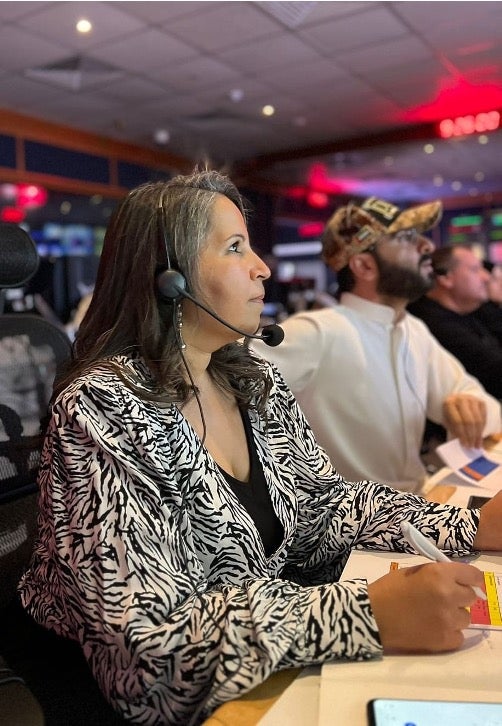 Image courtesy Ti22 Films and Dubai on Demand
But allow me to turn back the clock back to when El Houni was still a teenager in the United Kingdom. Her perseverance following that initial epiphany landed her a job at the British Broadcasting Corporation (BBC) —more specifically BBC Education— while she was still a university student. "I was at university two days a week and at the BBC studios three days a week, which was amazing because within a year my name was in the credits," El Houni recalls. "That was a great launch pad for this industry and I learned so much about working at a TV station and what it takes to put a show together. However, it's very difficult to get full-time work in the world of television because it's very contract-based. So I ultimately ended up joining a corporate video production company and I grew that in the UK for a while."
After six years of working in the UK's media industry, El Houni, upon the request of a friend, made a casual trip to the UAE for a break. "I came to Dubai on a holiday 18 and a half years ago and my first reaction was 'Oh my god it's sunny!"; my second was 'Oh there's a whole media city here!'" she tells me. "So I went straight to Dubai Media City, and bought a guidebook. And I remember sitting in a coffee shop with that guidebook and contacting all the companies in it. In my one week holiday, I had five interviews, three job offers, and had signed a contract– that's what moved me to Dubai. I was very fortunate. I was a second employee at Dubai One, so I produced and directed their first English language TV show which was called Out and About."
"Do you remember it by any chance?" El Houni asks me when her narration about Dubai One elicits a fervent nod from me. Indeed, I –like many others who'd been in the UAE at the time– remember how the channel replaced the long-running cable station Channel 33. Since that shift in 2004, Dubai One has remained a pivotal English-speaking media platform in the nation– and El Houni has been a key figure in its growth journey, having been a producer and presenter for the channel. At the time that this interview took place, at the Ti22 Films headquarters in Dubai, El Houni was also on the brink of launching the ninth season of DXB Today, a daily English-language lifestyle and culture show that airs on Dubai One, of which she has been the Executive Producer. "But thinking back to that time, in 2007, that show [Out and About] was an amazing project because I was new to the city, but I was also producing a show that showed people what to do in Dubai– so I was literally being introduced to the city through that show," she recalls. "I was with the station for almost four years. I became an executive producer and managed a whole bunch of other shows ahead of major events. For example, I covered the film festival at the time, the opening of Burj Khalifa, the air show– all of these big events!"
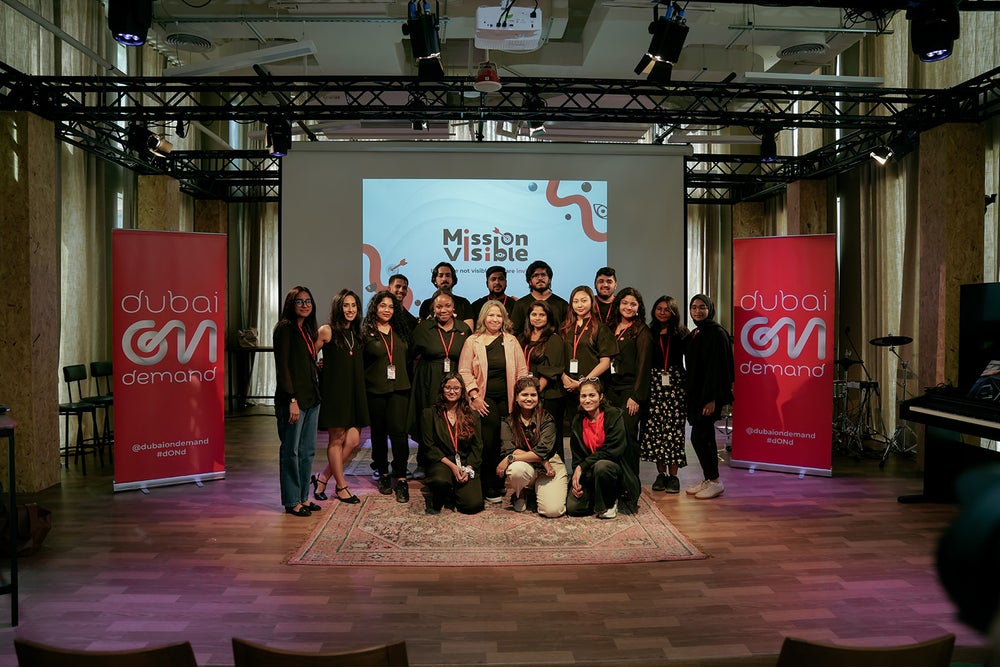 Image courtesy Ti22 Films and Dubai on Demand
Quite nonchalantly, El Houni adds, "Oh, I also ended up working on Mission Impossible: Ghost Protocol during that time period…that's a whole other long story which I'll skip, but working on that gave me added confidence. Because, you know, I had been working in TV up until that point where you get used to a crew of 40-50 people, and now I was on a Hollywood movie set with 400-500 people. But I realized that, actually, it's exactly the same; it's just a matter of scale. So I came out of that experience feeling really confident and feeling like I could do this too, you know? At the same time, I'd also worked on a couple of side projects for breast cancer awareness and I entered them to the New York Film Festival where they won two golds and two silvers. So that was another boost."
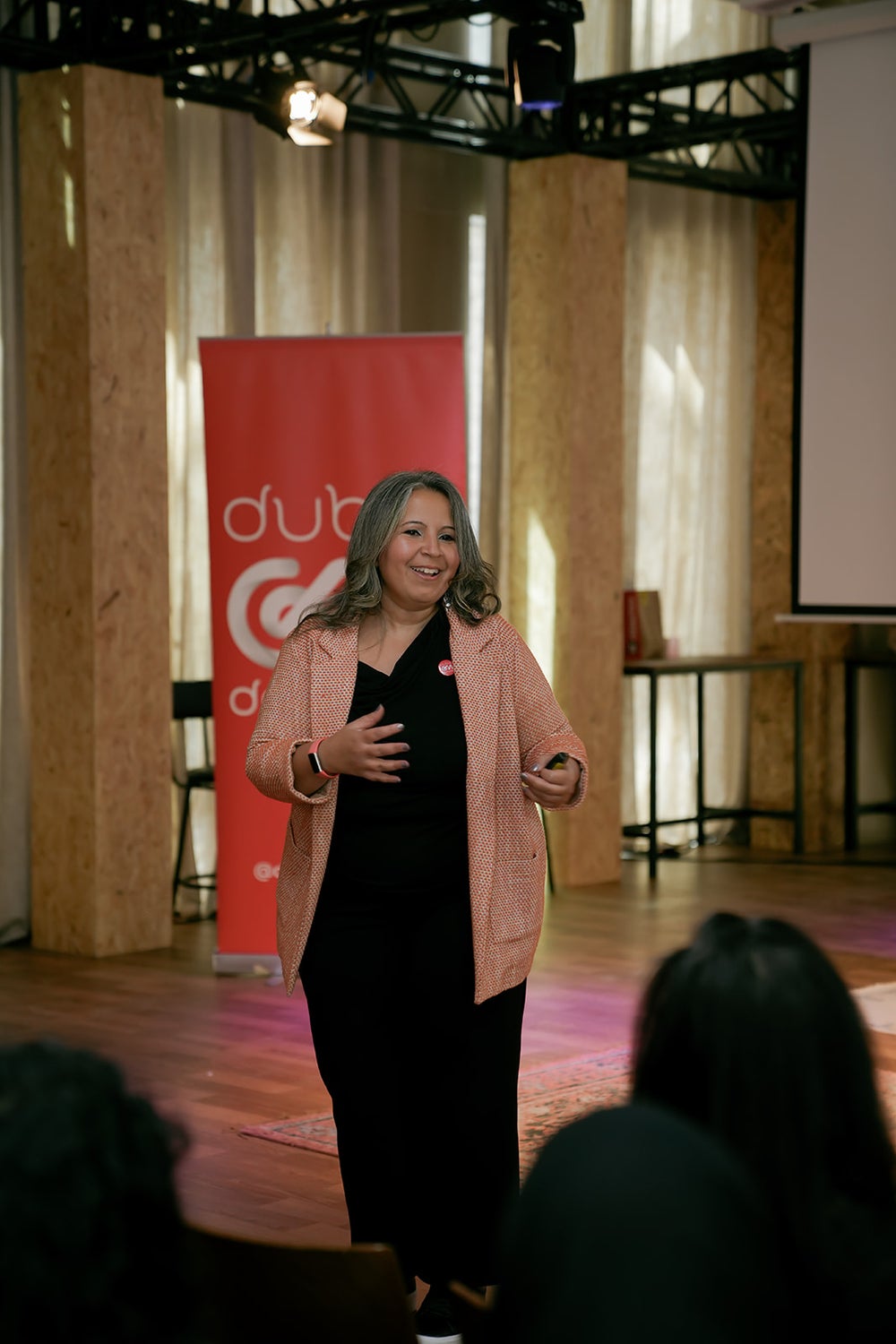 Image courtesy Ti22 Films and Dubai on Demand
With this context in place, it becomes easier to see how El Houni has been instrumental in shaping the UAE's media landscape. But as it often happens with entrepreneurs and pioneers, El Houni began to feel the effects of doing too much all at once. "It just got to a point where I was tired because in our industry you do work crazy hours –through the night and early mornings– and I just felt like I needed to stop," she says. "Everyone under the sun told me not to, but that decision ultimately led me to launching Ti22 Films in January 2011."
Ti22 Films was thus launched as a platform that allowed corporate brands to become more accessible to their current and potential clients through visually appealing corporate videos, commercials and video marketing content. "My first client was ENOC [the Emirates National Oil Company, a global oil and gas player established wholly owned by the Government of Dubai], which was amazing," El Houni shares. "So within a very short period of time, we were building a proper government portfolio, and then only three years later, Dubai On Demand was born in 2014. Now that happened mainly because I love learning, and I used to travel (and still travel) to conferences and conventions all over the world. And I kept hearing about the growth of digital content, YouTube, and everything else, and I would come back here and not see that growth yet. It was very different from Ti22 Films, where we do high-end projects and big TV shows. Dubai On Demand was more about tapping into YouTube, the personal-branding space, and niche content — and it was more accessible and B2C-driven."
 Image courtesy Ti22 Films and Dubai on Demand
But while Ti22 Films had a good start, Dubai On Demand "in all honesty, failed initially," reveals El Houni. "We spent two years really pushing it and promoting it; but I don't think the market here was ready at that time," she says. "Which is fascinating now, because everywhere you go everyone's talking about YouTube series, and I'm like, I was saying this 10 years ago! But I kept revisiting the idea. Then in 2018, when influencer licenses were introduced, I thought, 'maybe now's the right time to start again.' Eventually it was in 2020 that we kicked it off properly, and that's how Dubai ON Demand has evolved into what it is today, where we work with a lot of thought leaders and individuals to help them grow their visibility. Sometimes it's through a YouTube series, sometimes it's a podcast — different mediums. That led to us launching a community last year called Mission Visible, because I'm very passionate about everyone getting in front of a camera and claiming their visibility. I truly believe anyone can do this."
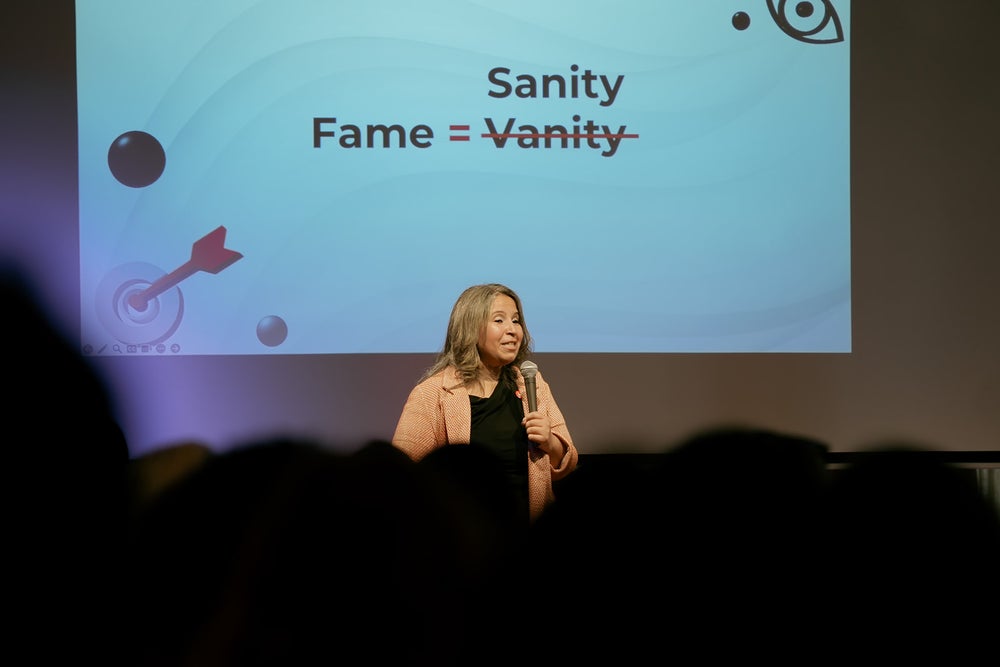 Image courtesy Ti22 Films and Dubai on Demand
Indeed, with the bombastic growth of social media, and the influencer culture that has come with it, the concept of a "personal brand" has evolved into a value-driven ideology– and according to El Houni, tapping into this space could unlock hidden potential for business leaders and executives (and, in turn, their brands). "I think we're definitely in a world where it's no longer a nice-to-have but a must-have– but this isn't just my opinion; there are so many studies and statistics that support this notion," El Houni explains. "Recently I read that around 66% of people are more likely to do business with a company if they've watched a video of the CEO, and I think it's 73% who are more likely to do business with a company if they follow the CEO on social media. To me, those are very high numbers. So even when I'm working with someone and they say, "Oh, do I really need to be in the video?" — no, you don't need to be in the video, but there's a 66% higher chance someone's going to work with you if you are. Sometimes it's just logic. These are odds you can't ignore. This is the market right now."
But all of this isn't to say that El Houni isn't empathetic towards individuals who are camera-shy or simply do not wish to be in the public eye. After all, the idea that "if you're not visible, you're invisible" —the tagline that underscores Dubai On Demand's aforementioned show Mission Visible— was something that took El Houni herself a long time to accept. "Ten years ago, I wouldn't have put myself out anywhere," she says. "I grew up an Arab, female, Muslim, with my mom telling me it's inappropriate to put yourself out there; that anyone in entertainment is inappropriate. That's what I grew up with. So I've had to overcome those cultural limiting beliefs to put myself out there. And because I've been able to do it, when I talk to other CEOs who have cultural objections, I'm able to say, "Times have changed. Look at how many Arab, female, religious women are out there now." So I think part of it is logic, and part of it is seeing examples of people in similar spaces. I have a lot of case studies of people where I can show them: look at how this person did it, look at how that person did it — and usually they're names they respect, who have succeeded in the business space. When they can relate to it, that helps."
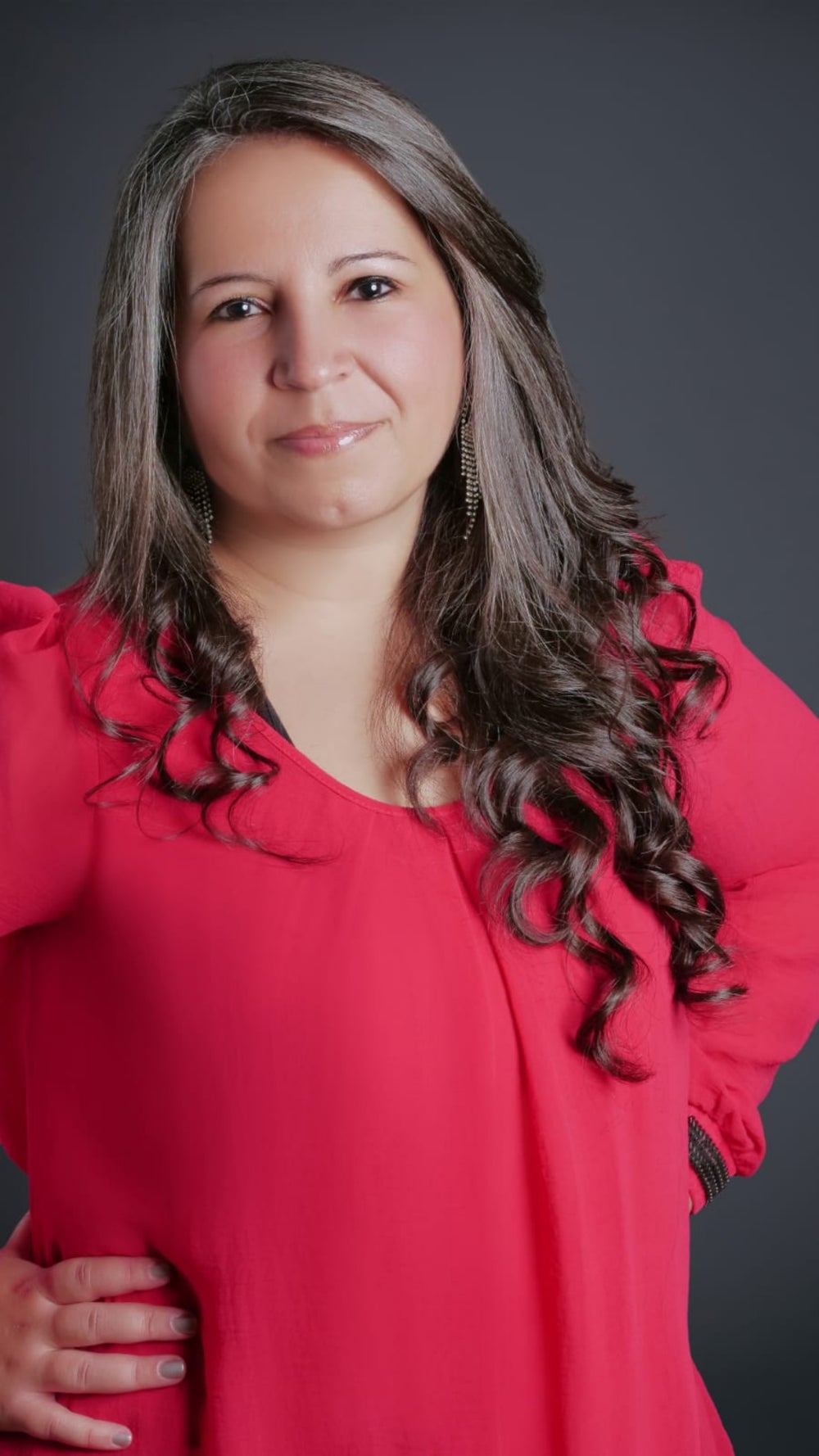 Image courtesy Ti22 Films and Dubai on Demand
To help ease businesspeople into becoming more comfortable with being in front of the camera, Dubai ON Demand also runs plenty of bootcamps, El Houni reveals. "I truly believe in immersion," she says. "I feel you need to push people out of their comfort zone, and then they realize, "Oh, it's not that bad after all." You need to get them to show up and film all day long so they reach that point of, 'That wasn't so bad, I can do this again.' So a bit of "bullying" [laughs] works — along with logic and case studies, of course!"
Concurrently, El Houni continues helping brands and businesses reach wider audiences through the work done at Ti22 Films. "These brands have spent a lot of time refining their key messaging and their objectives but often they don't connect that to an audience," El Houni explains. "The issue is that they don't tap into the storytelling side, the emotional side, or ask: 'why does this matter to the average person?' And I think that's the gap. I see it time and time again. For example, when we're doing a corporate video, the organization will want to fit every key message known to man into that video. But I'm like, this is not a shopping list! The point of creating any video content is to raise awareness and attract people. You attract them first, and then they can go to your website, call you, and find all the information they want. So when it comes to working with brands, what we've done successfully is extract: why should an audience care about this? How do we tap into that emotionally? How do we tell a story they will relate to? And because we've worked with so many industrial brands in particular, we've gotten very good at it."
In a real-time demonstration of her craft, El Houni offers me an example. "If I'm talking to you about a steel company or an oil company or a pipe manufacturer, that's not something the average person necessarily gets excited about," she says. "But when you start telling the story that steel is in everything — your laptop, your watch, the wheels on your car — suddenly you're thinking about steel differently. You realize it's not just about factories and pipes; it's enabling your life. And if you can find that connection between the brand and the end customer, that's when you have a winning formula."
Part of El Houni's mission to help business leaders become more visible, and brands feel more accessible, is incorporated into the many large-scale events she and her team cover. Perhaps the biggest such opportunity came her way on October 1, 2020, when Ti22 Films was roped in to do a daily show at the Expo 2020 Dubai– an experience that resulted in 182 consecutive live shows and, as per a recent Instagram post by El Houni, "a project that changed the meaning of a date forever." But before she answers what that experience meant to her, El Houni offers an anecdote from her early media days in Dubai— January 2010 during the Burj Khalifa's launch event, to be more precise.
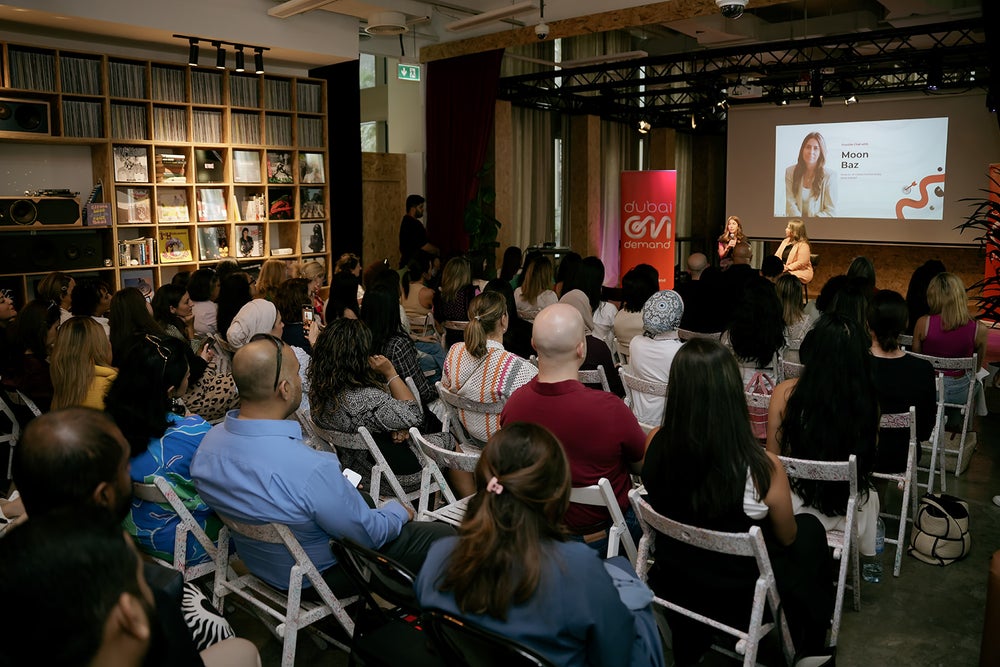 Image courtesy Ti22 Films and Dubai on Demand
"I often talk about this in a keynote, because in my perspective everything changed then. I did two live shows that day for the opening of the Burj Khalifa: a four-hour show in the morning and a four-hour show in the evening. It was global, and it was a big deal for everyone. The morning show went fine. The evening show, absolutely everything I could have planned went wrong. And it's amusing to me now, because I've done a lot of live TV in my career, but I couldn't believe how much went wrong…everything we planned fell apart. After that show, I felt devastated. I thought it was the worst show I had ever produced. The minute the show went off air, my mum called me. I braced for the worst, and the first thing she said was, 'Mabrook, that was the best show I've ever seen.' That was such an important lesson. I kept thinking, how is it possible that my worst show was my mum's best? That was the day I realized it didn't matter what I had planned; what mattered was what the viewer experienced at home."
El Houni says that getting through that ordeal, along with the wealth of television and media experience she's amassed since then, was what held her in good stead for the Expo 2020 Dubai project. "We were live globally every day, simultaneously on Dubai One TV and Expo TV; we had world leaders, presidents, high-profile celebrities; and we dealt with 191 countries," she recalls. "There were daily challenges. But because of the Burj Khalifa experience, I walked into Expo expecting everything to go wrong. And so even when they did, I just thought, 'Right, I've got this. It's fine.' You develop backups, and backups for the backups. You get good at quick decision-making, staying calm, and navigating situations. You focus on what's in front of the camera, not behind it. Expo felt, quite honestly, like a boot camp on top of a boot camp. But after Expo, I feel solid. I knew that everything under the sun could go wrong and I would be able to navigate it. I don't want to sound big-headed, but I've gone through it enough times that I'm ready for anything. Expo gave me that added confidence — so, world leaders? Bring them on!"
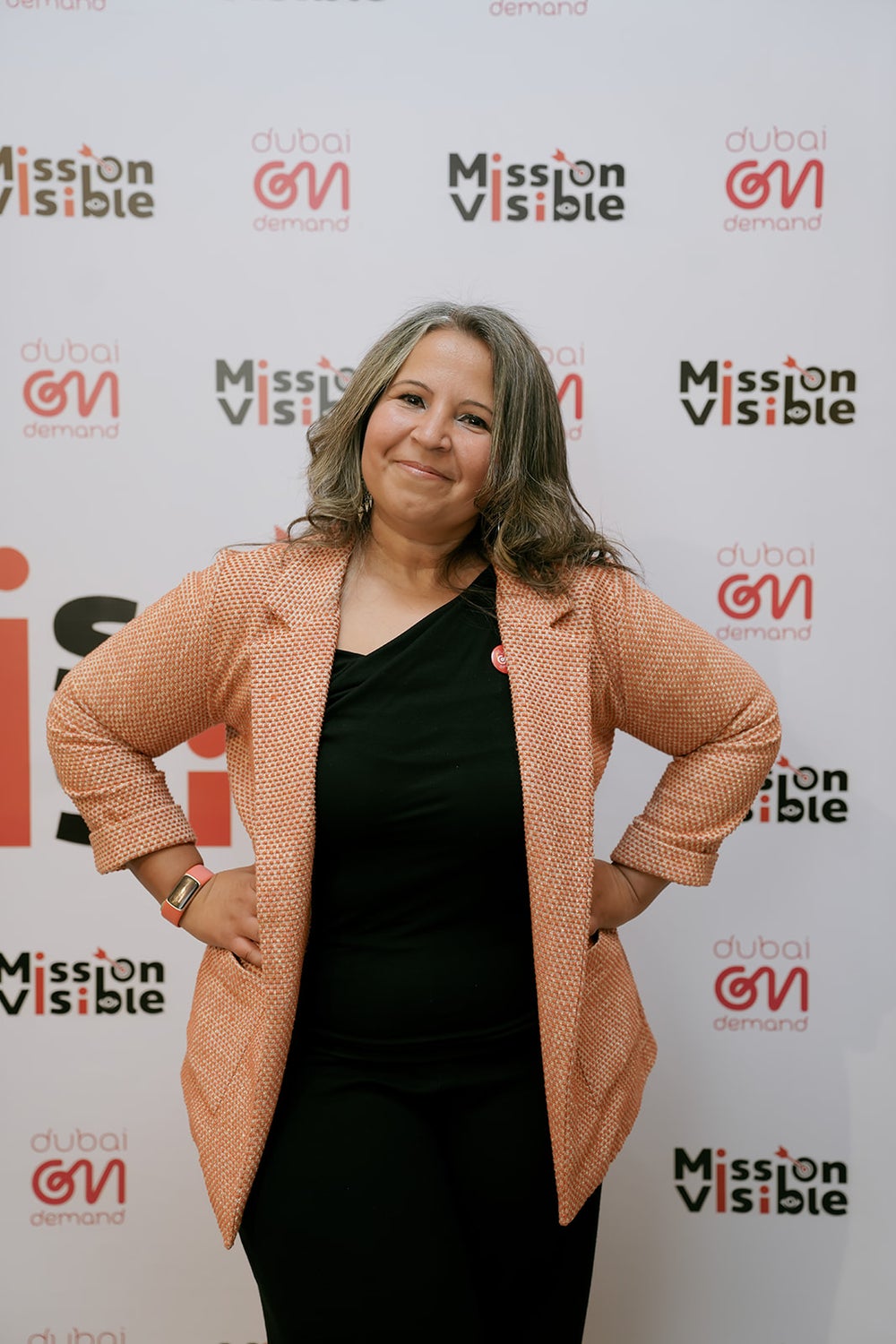 Image courtesy Ti22 Films and Dubai on Demand
All of El Houni's personal wins, however, inadvertently lead back to her core passion: to help business leaders find their unique voice and become more "visible." One such success story that El Houni is palpably very proud of (having mentioned it a couple of times during our conversation) is that of Arva Ahmed, co-founder of Dubai's first food tour company Frying Pan Adventures. "I'm very passionate about the boot camps that we run because I really believe everyone can do this," she says. "Arva came to one of our boot camps just over a year ago, and got a taste for what her life in front of a camera could be. Soon after, we launched her weekly YouTube show, Ditch the Silver. The success of that attracted some sponsors, and now that show is about to launch on OSN and OSN plus as a 10-part docu-series!"
It is the thrill of creating such winning tales that now spurs on El Houni for 2026 and beyond. "When you ask what plans I have for 2026, it's quite simple: I want to create more Arvas!" she declares. "I want to have a whole pool of people who've had that same journey — they're talented, they're excited about a niche, but maybe they just don't know how to take that idea from concept to screen. I want Dubai On Demand and Ti22 Films to be the vehicle that supports them on that journey and finally gets them out there. And to cement all of this, we have a community called Mission Visible which I want to keep building."
But El Houni has one more card up her sleeve, which she reveals right at the end of the interview. "I'm also planning a big conference on April 2, 2026 called VisCon, which nobody knows about yet, so you may be the first to hear it," she says. "The idea is to take all of this to the next level, because I think we're looking at a boom in the creator economy — but usually when people talk about the creator economy, they're talking to creators and influencers; not business owners and thought leaders. The purpose of this convention is to help people realize that no matter who you are in the business ecosystem, this is your time to be visible. And I want us to be synonymous with helping people get out of their comfort zone and step in front of a camera, or onto a stage, or into a podcast seat — whatever that looks like for them — to attract the opportunities they deserve."