Roots and Realms: How UAE-Based Serial Entrepreneur Kanessa Muluneh Launched the First African-Inspired Battle Royale Game, Rise Of Fearless "My biggest vision for Rise of Fearless is huge: I don't just want it to be one of the biggest play-to-earn games out there; I want it to be the biggest, period."
Opinions expressed by Entrepreneur contributors are their own.
You're reading Entrepreneur Middle East, an international franchise of Entrepreneur Media.

At the heart of a virtual quest that takes players through lush forests, quaint villages and scenic savannas –all inspired by the unique terrains of Ethiopia and the wider African continent– Dubai-born mobile gaming platform Rise of Fearless incorporates elements of a significant battle that took place in the year 1896: the Battle of Adwa. What ended as a rampant victory of the Ethiopian army over the invading Italian forces not only later led to the rise of anti-colonial movements across Africa, it is also what Rise of Fearless founder Kanessa Muluneh today believes is one of many lesser known facts that can turn around the prejudiced connotations attached to Africa and its culture. "Africa's global image has been damaged for decades," Muluneh laments. "If you Google anything about Africa, it's mostly negative. War. Poverty. Corruption. That's the narrative people are used to. So when I created this game, I wanted to flip the script. Rise of Fearless is African. But more than that, it's something positive that comes from Africa, and represents Africa in a way we can actually be proud of. It's organized. It's beautifully built. And, it's rooted in powerful history. That's why we chose the Battle of Adwa as the core of our Battle Royale storyline. This wasn't just any moment in history; it was the moment Ethiopia fought off colonization and won. The only African country that was never colonized. So for me, this battle isn't just a story, it's THE story. It's the reason we're not just building a game, we're building a movement. I want African youth to see themselves as heroes. I want them to feel proud when they play. And I want non-Africans to align with that energy too, to join in and feel what it's like to win on the side of Africa, for once. The inspiration came partly from Black Panther, finally seeing a powerful, African hero on screen. No suffering, no stereotypes. Just power, pride, and purpose. That's what we're bringing."
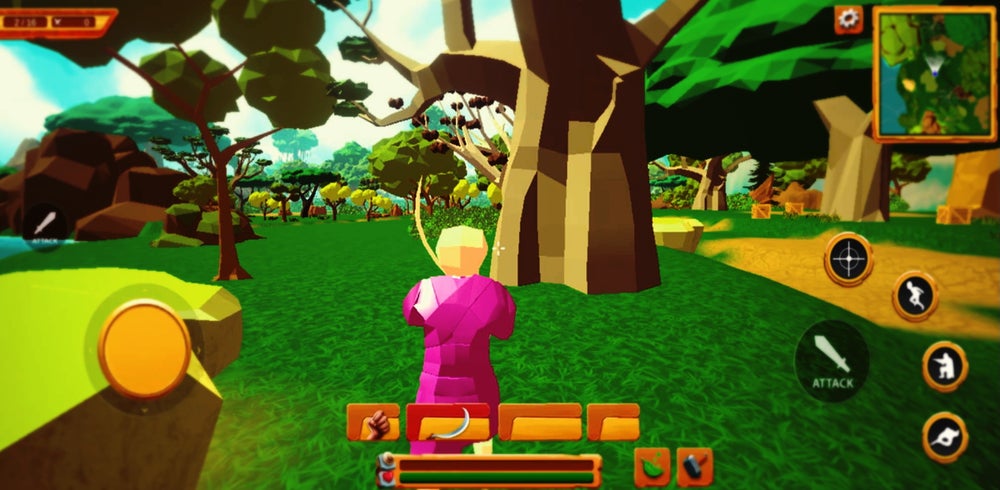
Indeed, through its offering of an intense, skill-based battle royale combat that is deeply rooted in Africa's heritage and history, the game was launched officially in the UAE in April 2025 as a free-to-play mobile experience to ensure accessibility to a broad audience. Within the first two months of going to market, the game had been downloaded by 3,000 unique users. And already, the brand has a next plan of action for growth: to integrate Web3 technology and allow players to own in-game assets, earn rewards, and participate in a secure digital economy. "My biggest vision for Rise of Fearless is huge: I don't just want it to be one of the biggest play-to-earn games out there; I want it to be the biggest, period," Muluneh declares. "It's built on blockchain because I believe that's where the future lies, especially for emerging markets like Africa. And when it comes to embracing Web3 and everything crypto-related, no place does it like the UAE. That's what makes it the perfect hub. It bridges the gap between innovation and accessibility, two things we absolutely need to build a successful play-to-earn ecosystem. My focus is on emerging markets, Africa first, but Asia is next. And again, the UAE connects it all. It's a melting pot of nationalities, cultures, and ambition. Diasporas come here to build a better life, to hustle, to win, and I want Rise of Fearless to support that. This game is not just for entertainment; it's meant to add real value. It can become a real income stream for players. It can build community, both here in the UAE and across the world. And that community is for everyone."
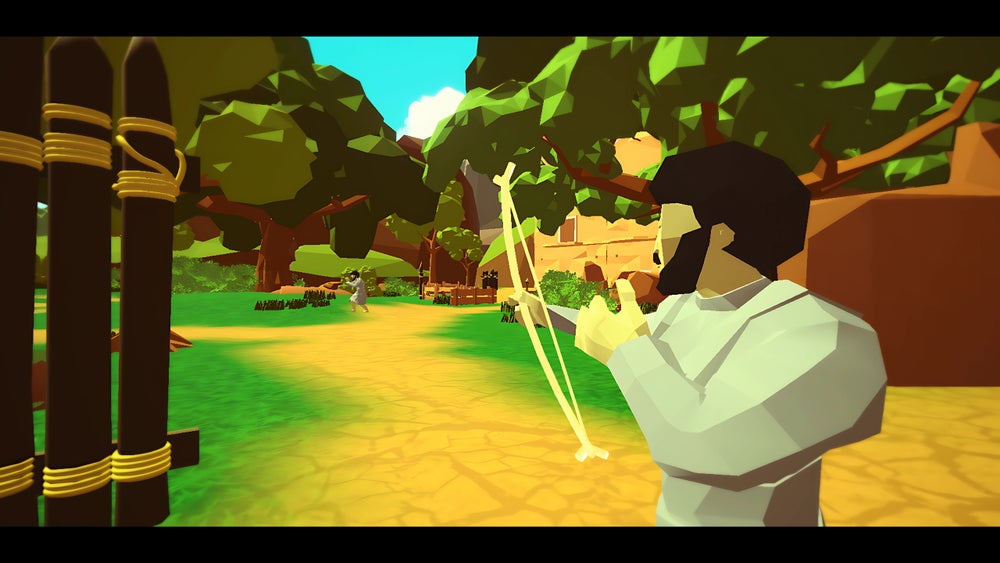 Image courtesy Rise Of Fearless
Beyond the technological strides, Muluneh points out another aesthetic feature about the game that seals its Africa-centered storytelling. "Our characters are non-Western," she says. "They're based on African history. We made sure the game represents people who are usually left out, people who never see themselves in these kinds of stories. We fixed that…finally."
 Image courtesy Rise Of Fearless
Muluneh's efforts in fixing the narrative surrounding Ethiopia and other African countries, however, stem from her own experiences of growing up as an immigrant in Europe– after escaping the civil war in her country. "I was born in Ethiopia and raised in the Netherlands where we moved when I was three," she says. "So I grew up in the West, but inside our home, it was a completely different world. Like most kids in immigrant families, there was always this tension between life at home and life outside. The cultures couldn't be more different. I just wanted to fit in. I wanted to be like my friends. But at the same time, I wanted to make my parents proud. That shows up in everything, not just the way we lived, but also in the choices I made for my future. I went to medical school, even though I never wanted to be a doctor, lawyer, or anything they had in mind for me. I had my own dreams, but back then, there wasn't much room for creative paths. And then outside the house, I faced a whole different kind of pressure. "Why does your food smell like that?" "Why is your hair braided like that?" Those questions came up all the time. My friends had long, blonde hair. Mine wasn't like that. My mom braided it to keep it neat; that's how we manage our hair in our culture. I didn't get it back then. It felt like I was caught between two worlds. I struggled a lot with identity, especially during my teenage years. It was hard. But I don't share this to play the victim – because all of that made me who I am today. It made me stronger. Stronger than most of the people I grew up with."
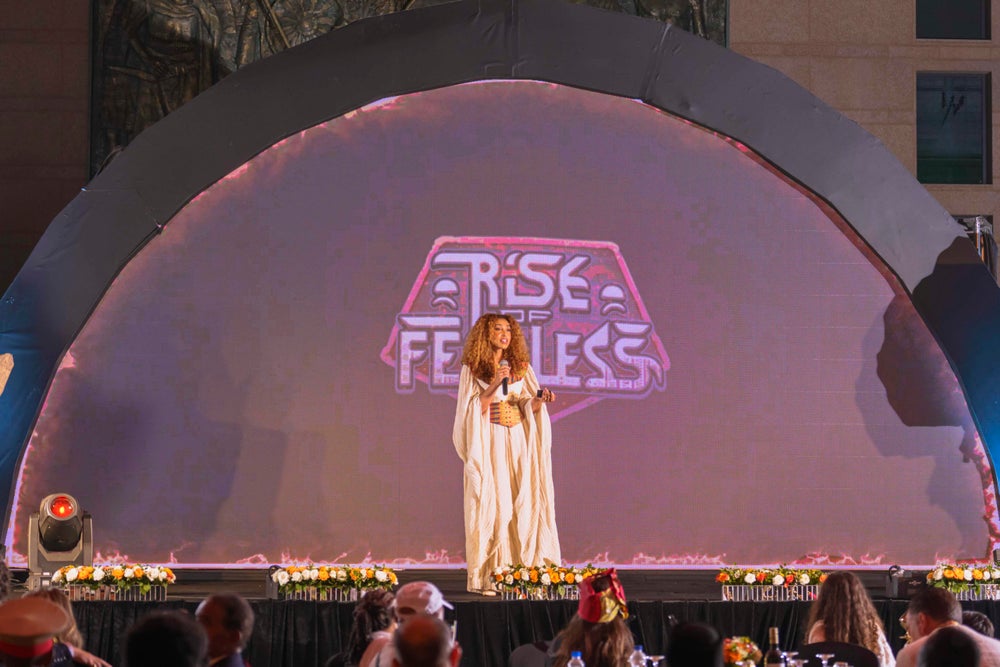 Image courtesy Rise Of Fearless
A major turning point in Muluneh's relationship with her homeland came courtesy her move to the UAE three years ago. "When I moved to Dubai, it was the first time I truly reconnected with my African roots," she says. "There's a strong African and Ethiopian community here, and for the first time, I felt seen. I started relearning my language, now I speak it fluently, and I keep flying back to Ethiopia every few weeks. It's so close to Dubai, and it suddenly felt like home wasn't so far anymore. That connection answered a lot of internal questions I carried for years. Growing up as an immigrant, you live with two identities, and I finally let go of the one that wasn't mine. I fully embraced the original one. And of course, as a business-minded woman, I started exploring what that meant for my work too. I noticed something powerful: Emiratis and Arabs, in general, are some of the biggest investors in Africa. That lit a fire in me. I thought, if they see the value in Africa, why shouldn't I? So I decided to follow that path too."
Indeed, it was that moment of realization that first led Muluneh to invest her efforts in creating and growing Rise of Fearless. "From there, I launched Nyle, an investment firm for the African diaspora," she adds. "The goal is to help other diasporas do the same, invest back home. We have 54 countries in Africa, and every single one has potential. As I always say: Africa's time isn't coming.. it's already here. Dubai connected the dots. The game is just one example of how fast things can move when you lean into your roots and take action."
 Image courtesy Rise Of Fearless
Rise of Fearless, however, isn't Muluneh's first rodeo in the world of entrepreneurship. At the age of 22, when she was still in medical college (a path that she argues was "was never my thing"), Muluneh developed a medical services platform that she later sold for US$500,000. After that she went on to successfully launch and sell four other ventures, including The Queen's League, the first women's football league in The Netherlands, and Sporthy, a social media platform for fitness. "In today's world, people love to box themselves into industries –like you have to pick one and stick to it– but I never did that," she says. "I never specialized in any industry. For me, it was always about one thing every business actually needs: marketing. From a young age, I understood one hard truth: if you want something, you've got to convince, position, and sell. That's how the world works. So I focused on mastering that. While I was in medical school, I became obsessed with psychology. I wanted to understand how people think, what they do, and why they buy. I took that knowledge and translated it into marketing. I don't care what the product is or what industry it's in. I care about the problem it solves. I study the people who have that problem, and I either make them aware of it or I create the urgency they didn't know they had. That's it. I don't do categories. I do solutions. I find the problem, build the solution, and market it. Over and over again. If I can do those three things, spot the problem, build the solution, and sell it, it always works. Always."
Such keen attention to detail has helped Muluneh adopt the right next steps of action for Rise of Fearless too, particularly in terms of funding. "Having raised and invested capital across different sectors, I understand what investors look for - that's why we built a strong brand presence before we launched the product," she explains. "We've successfully secured our initial $700,000 in funding through a private investor as a loan structure, which gives us the runway to execute our vision. What's strategic about our approach is that we haven't deployed these funds yet - we're being intentional about timing. When we do, 25% will go toward game development and the remaining 75% toward marketing. That might sound marketing-heavy, but that's our edge and where our competitive advantage lies. The early traction we're seeing —over 3,000 downloads in under two months— proves this brand-first strategy. Based on how our upcoming marketing campaigns perform, we're planning to raise $5-10 million later this year to scale across Africa and into Asian markets."
To bring these goals to fruition, Muluneh has found the near perfect launchpad in Dubai. But the founder also, very honestly, notes that not all that glitters is gold. "Being a founder or business owner in Dubai or anywhere in the UAE is not for the weak," she says. "Yes, some things are easier here, but the pace is intense. The opportunities are non-stop, and while that's a blessing, it can also be overwhelming. For someone as ambitious as I am, it's hard to stay still. Focus becomes a daily discipline, because every five minutes there's a new door opening, a new venture calling. But I stay grounded by reminding myself how rare this level of access is. There are parts of the world where opportunities like this don't even exist. What I love about building Rise of Fearless here is how natural the connection feels. Africa isn't foreign in this region. Africans know the Middle East, and Middle Easterners know Africa. Our histories are deeply intertwined. There's mutual respect. No judgment. No pity. None of the negative PR or outdated stereotypes you often face in the West. That changes everything. Being a founder of a game that represents Africa feels powerful here. What stands out the most is that I can run it as a business. Not a charity. Not some "impact" side project."
Empowered by a landscape that focuses primarily on intent and ideas, Muluneh is now gearing up for the next phase of growth for Rise of Fearless. "The Web3 integration is being built as we speak," she ays. "We plan to launch it by the end of this year or early next year at the latest. We're also adding upgrades to the game itself. Not because the first version was not meant to be perfect, but because we prioritized visibility first. My team and I focused on getting the name out there. Build a community. Prove that people would show up. And they have, with over 3,000 downloads already. Now it's time to level up."
 Image courtesy Rise Of Fearless
"The bigger vision? Within the next 12 to 24 months, Web3 will be fully rolled out," Muluneh continues. "But adoption is about more than tech; it's about education. So we'll be focusing on that too, making sure people understand what they're stepping into. Web3 has the potential to change everything, especially for Africa. Right now, the continent isn't financially connected; there's no Stripe, no PayPal. Crypto can bridge that. It can create true economic inclusion and bring Africa into the global digital economy. Big things are coming, and we're working toward some exciting milestones. I'm grateful for the support and expectations people have - it motivates us to keep pushing forward, though I know there's still so much to learn."
And underscoring all of these ambitions is the clear-cut vision Muluneh alluded to earlier. "I want Rise of Fearless to go head-to-head with the biggest names in gaming," she declares. "I want it to dominate the region. And I gave myself five years to get there. And knowing how I move… We'll probably get there sooner."