Inside FII9: Noematrix Intelligence The FII9 Innovators Pitch 2025, hosted by the Future Investment Initiative (FII) Institute, spotlighted five startups that presented breakthrough AI-powered solutions transforming healthcare, sustainable materials, and next-generation computing. In this series, we explore how each of these innovators is shaping the future with technologies designed to deliver real-world impact.
By Tamara Pupic
You're reading Entrepreneur Middle East, an international franchise of Entrepreneur Media.

Noematrix Intelligence
Creating proprietary embodied AI systems with human-like learning and decision-making capabilities.
When Cewu Lu founded Noematrix Intelligence in November 2023, his goal was clear: to build the foundational intelligence layer that would finally allow robots to adapt, operate, and learn in the messy, unpredictable environments of everyday human life.
Today, Noematrix is emerging as one of the most technologically ambitious players in the global embodied AI race—developing what Lu calls "a universal robot brain," powered by proprietary models, force-centric learning, and an infrastructure built to scale.
"We are a cutting-edge technology firm dedicated to developing and applying embodied intelligence technologies," says Lu. "Our core focus is on researching and developing force-centric embodied intelligence large models and the supporting infrastructure around them."
Noematrix's product line spans intelligent robot solutions, foundational AI brains, data-collection systems, and training platform tools. Across all of them, the team is tackling what Luo identifies as three critical bottlenecks in embodied AI: enhancing the generalization ability of embodied intelligence across diverse scenarios, improving robotic operational capability, stability, and robustness, and increasing high-quality data-collection efficiency and accelerating training.
Source: FII9
To address these challenges, Noematrix has independently developed embodied-intelligence foundation models, including its Physical World Model and Force-Trajectory Model.
"Our upper-layer world model creates diverse structured representations of the physical environment and objects," Lu explains. "This allows robots to understand physical rules more effectively and achieve a higher level of generalization—with a reduced model scale."
A defining breakthrough for Noematrix lies in its unique integration of trajectory-space and force-space parameters. "As the world's only robotics company with proprietary force generalization capabilities, our AI brain allows robots to mimic human execution of complex, contact-rich tasks—such as cucumber peeling or ice cream scooping—at the cognitive level," says Lu.
Unlike many robotics companies driven primarily by simulation, Noematrix trains its models largely on real-robot operational data, supplemented by in-the-wild collection, force-feedback inputs, and haptics.
"Crucially, our field data acquisition solution operates at just 1% of the cost of traditional teleoperation systems," Lu notes. "It is algorithmically adaptable to train with any robotic arm through fast pairing. This gives us a highly economical, scalable pathway for data acquisition—solving one of the biggest inefficiencies in robotics."
Source: FII9
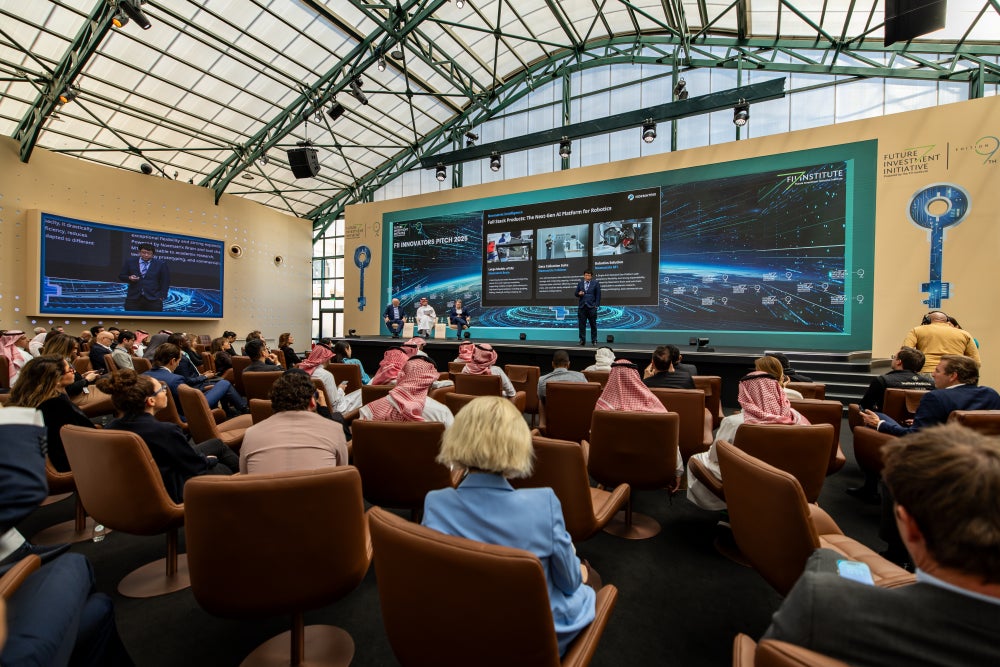
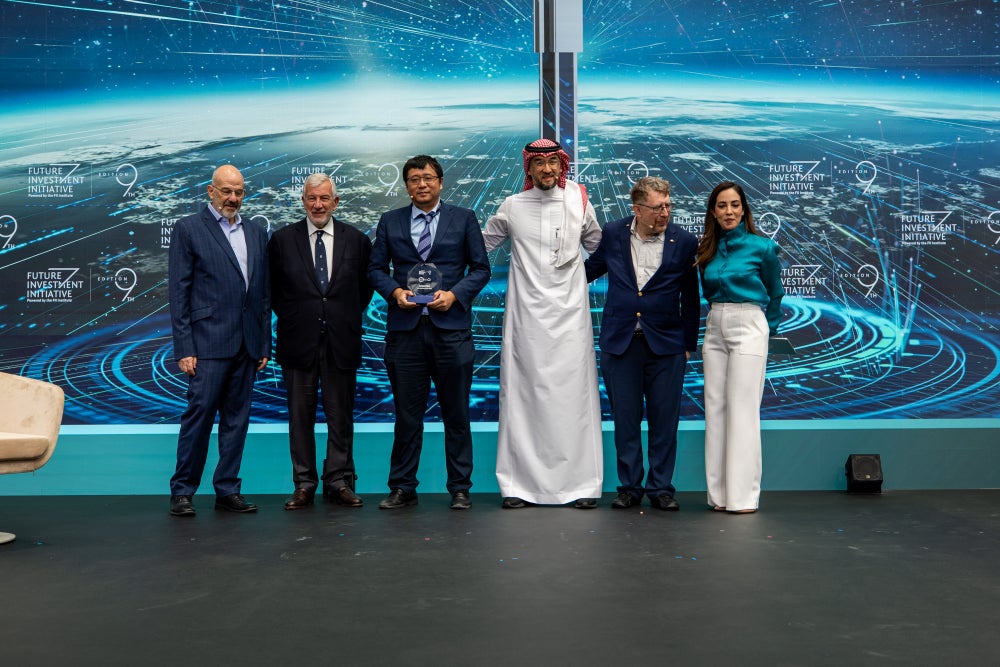
The company recently took the global stage at the FII9 Innovators Pitch 2025 in Riyadh, where Noematrix was recognized as one of five global innovators advancing the future of AI and robotics. "It was an inspiring experience to present at FII9 among global innovators," says Lu. "Our key message was simple: embodied AI is not just a technological leap—it is the foundation for redefining how robots interact with and adapt to the human world."
Noematrix demonstrated how its foundation model converts visual signals into structured, actionable knowledge—enabling robots to handle unseen scenarios with minimal data input.
"The exposure at FII9 has already attracted interest from international investors and strategic partners," Lu adds. "This recognition validates our persistence in tackling one of AI's hardest challenges: bridging perception and action in unstructured environments."
Looking ahead, Lu sees Noematrix becoming an industry-defining force. "In the next two years, we aim to establish Noematrix Intelligence as the standard for embodied intelligence in robotic operations," he says. "Our technology will power a new generation of adaptive robots across industries." A major milestone is also on the horizon, "We plan to launch our first lightweight, low-cost robotic manipulation platform," Lu reveals. "This will enable any enterprise to deploy and customize robots that learn efficiently with minimal data."
'TREP TALK: Noematrix Intelligence founder Cewu Lu Shares Advice for Founders
"My advice is to stay focused on solving a real, hard problem—not just what's trending. For us, that meant years spent working on fundamental technologies like structured representations and force-aware interaction. Build solutions that create practical, measurable value. And let your vision be driven by long-term impact, not short-term validation."