Tech Innovation Forum 2025: MENA Entrepreneurs and Investors Redefining Business and Society Insights from The Tech Innovation Forum 2025 by Entrepreneur Middle East on the tangible impact of bold ideas and innovations.
You're reading Entrepreneur Middle East, an international franchise of Entrepreneur Media.
The Tech Innovation Forum 2025, staged by BNC Publishing with the support of in5 Dubai and Virtuzone, gathered trailblazing entrepreneurs and innovators to showcase how they transformed business, society, and everyday life in the MENA region and beyond.
The event held at Al Habtoor Palace Dubai on September 25, 2025, opened with a welcome address by Wissam Younane, Founder and CEO of BNC Publishing. Over the past 12 years, Younane has steered the company through trials and tribulations, building it into a leading regional voice for entrepreneurship and innovation. His remarks set the tone for the day, highlighting both the resilience required to navigate challenges and the vision needed to propel ideas to new heights.
"Entrepreneurs in the UAE stand at the crossroads of innovation and opportunity," Younane said. "This country—and the nation it represents—has shown the world how vision, courage, and long-term planning can transform even the boldest ambitions into reality. My message to every founder here today is to take inspiration from the UAE's own story: do not shy away from challenges, but use them as stepping stones to growth. If you align your dreams with the forward momentum of this country, you will not only thrive personally but also help shape the next chapter of our region's legacy."
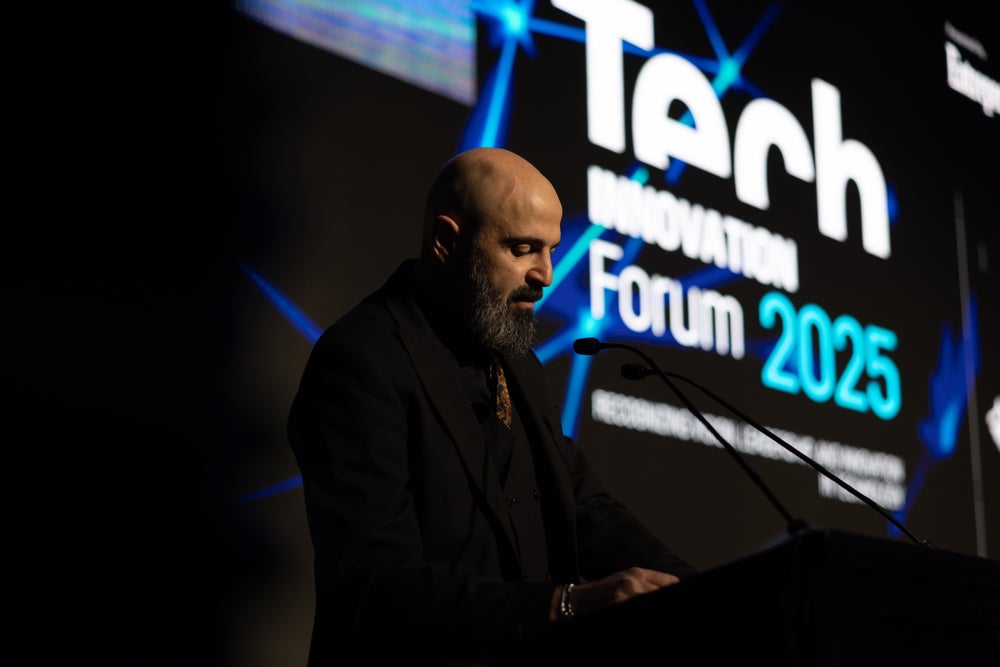
Wissam Younane, CEO, BNC Publishing. Source: BNC Publishing
Panel 1: AI at the Center of Regional Transformation
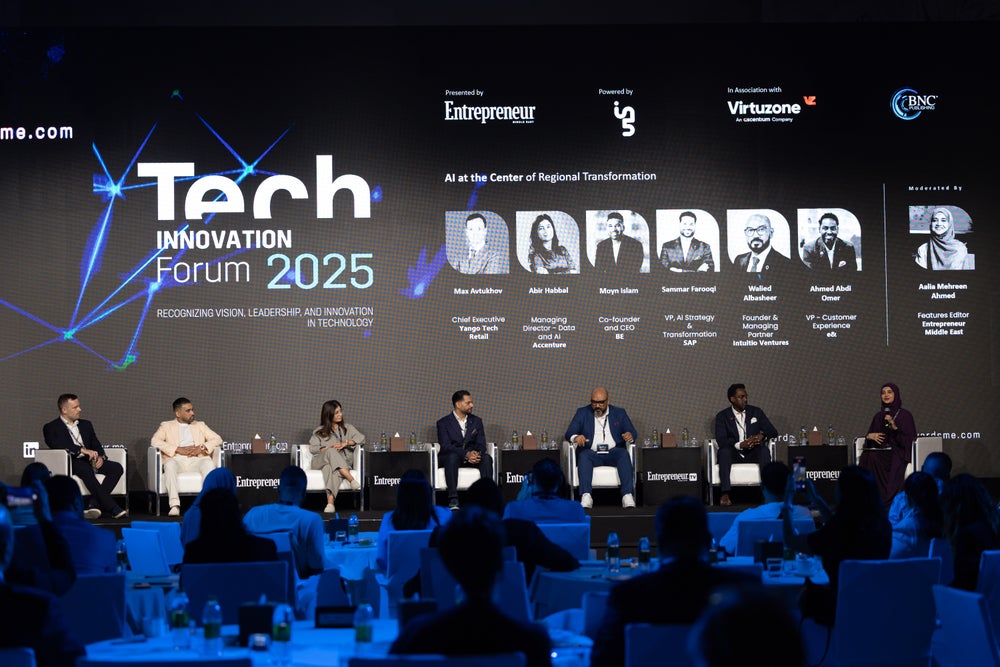
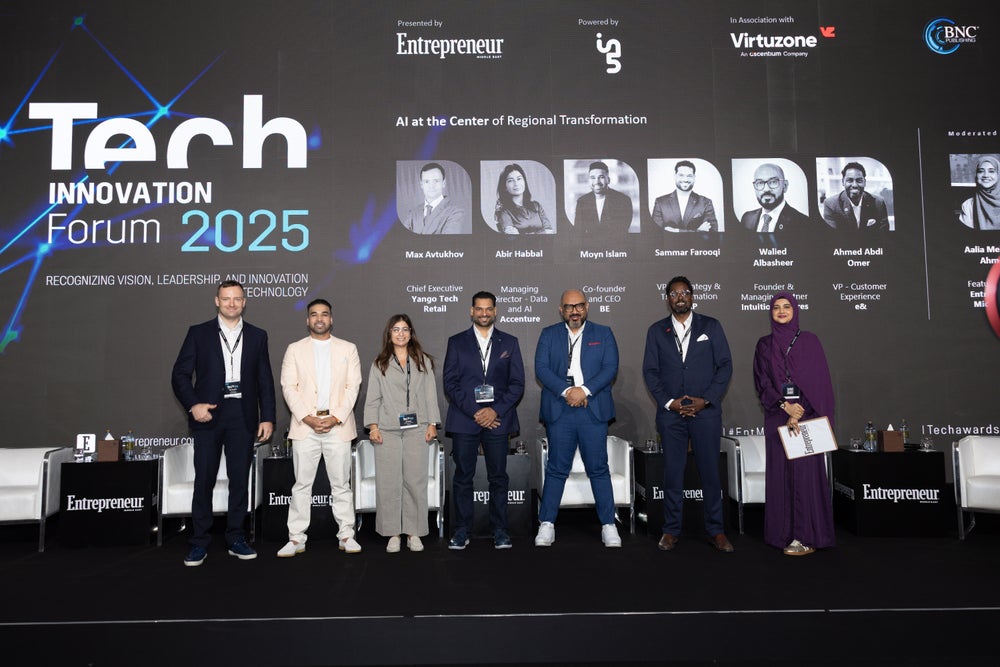
Featuring Max Avtukhov, Chief Executive, Yango Tech Retail; Abir Habbal, Managing Director - Data and AI, Accenture; Moyn Islam, co-founder and CEO, BE; Sammar Farooqi, VP, AI Strategy & Transformation, SAP; Walied Albasheer, founder and Managing Partner, Intuitio Ventures, and Ahmed Abdi Omer, VP - Customer Experience, e& Enterprise.
Moderated by Entrepreneur Middle East Features Editor Aalia Mehreen Ahmed, the opening panel of the Tech Innovation Forum examined the transformative role of AI in businesses across the UAE and the wider Middle East region. The discussion centered largely on AI's potential, adoption, and pace of change, highlighting real-world applications, challenges, and opportunities from multiple industries.
Speakers agreed that AI's most visible impact over the past 12–18 months has been in customer experience and hyper-personalisation. "I think the most important evolution we've seen is the shift from untailored mass communication to personalized consumer experiences across the entire journey," said e& Enterprise's Omer. "From the moment a brand announces its products and places them in the awareness stage of the consumer journey, you begin to notice differences in how each customer discovers and engages with them. I think the most important evolution we've seen is the shift from untailored mass communication to personalized consumer experiences across the entire journey. From the moment a brand announces its products and places them in the awareness stage of the consumer journey, you begin to notice differences in how each customer discovers and engages with them."
SAP's Farooqi then went on to make an important revelation about the oft-quoted claim that "95% of AI projects fail." His argument was that this statistic is misleading when taken at face value. "In my view, that definition is far too narrow," he said, "Business value is not just about profit and loss—it also includes metrics like time to market, data utilization, customer satisfaction, and efficiency gains within processes. These outcomes may not always be immediately quantifiable, but they are real and significant. For example, if you implement a generative AI tool or chatbot to handle customer queries or accounts payable, you can reduce service time by 70%. That doesn't just improve efficiency—it enhances customer satisfaction and frees employees to focus on more strategic tasks. Those benefits matter just as much as direct financial results.The key is that AI projects should be auditable end to end. Beyond accuracy, we need to ask: is it being used effectively? Is it delivering value? Adoption, customer experience, and the acceptance of new processes are all critical success factors."
On her part, Accenture's Habbal emphasized that adopting AI is not about a single function or department, but about rethinking the entire organization's approach to transformation. "In the long term, the challenge is making sure everyone becomes part of the transformation," she said. "AI is not confined to an "AI team"; it should be embedded across the organization. That means building a strong enterprise knowledge framework and giving employees access to AI agents that understand the business, empowering them to create their own use cases. Success isn't just about launching accurate pilots—it's about driving adoption so employees and customers genuinely benefit."
From the enterprise perspective, the panelists stressed measurable business value. Success, they argued, should not be judged by profit alone but also by adoption, customer satisfaction, employee productivity, and long-term cultural shifts. The panel also emphasized ethical use and governance."Over my 30-year career in data science, I've come to view AI as infrastructure and data as an asset class," Intuitio Ventures' Albasheer noted. "Everything else in between simply serves or fuels these two pillars. But there's a challenge ahead: by 2027, most publicly available data will be exhausted. At that point, meeting the growing appetite for data may force us into a cycle of generating and relying heavily on synthetic data—and that raises serious questions. This is why urgency and responsibility are so important…We need to look beyond "chat models" and focus on deeper, more sustainable applications of AI."
Albasheer added that with adoption accelerating, transparency, security, and accountability are crucial—especially in sensitive areas like healthcare. "Today, concerns like data sovereignty, national security, and critical applications in transport or defense demand strict internal safeguards," he said. "Most AI models are still statistical in nature, which makes biased or incorrect outputs a real risk. Leadership must therefore establish clear guardrails, checkpoints, and validation mechanisms—ensuring that outputs are tested and corrected before being used. These are technical challenges, but they have very real implications. Leaders must understand them fully if AI is to be applied responsibly."
Finally, workforce readiness emerged as a pressing issue, with shortages of skilled practitioners and generational gaps slowing adoption."With DeepSage, we use our own platform to provide more comprehensive services to existing customers and to help them build trading strategies. At the same time, we use it internally to train AI agents for our employees, instead of relying on third-party providers," said BE's Islam. "Many AI companies can offer solutions to improve customer service, and while those may work for now, they don't train teams to keep making improvements. By contrast, if you invest in companies that build a strong foundation and give employees the tools to innovate, you're making the right long-term choice. On top of that, you tap into innovation from within your workforce, because employees are empowered to be more creative with how they use AI."
On his part, Yango Tech Retail's Avtukhov added that he believed in "both carrot and stick" in this regard. "On the carrot side, you need to change hiring procedures," he noted. "For example, in the product department, don't just hire someone who isn't adaptable—bring in younger talent. They might lack certain specific skills, but they are more AI-native. And start with yourself: if you automate something with AI, then encourage the people around you to do the same. On the stick side, introduce positive constraints. For instance, in the marketing department, stop hiring for a year—this will push the team to innovate faster and find new ways to work."
Keynote Address: AI, Humanity, and Building the Platform for the People
One of the highlights of the Tech Innovation Forum 2025 was the keynote by Farah Zafar, co-founder and CEO of the social networking and content monetization platform Lyvely, as well as Managing Director and Group Chief Legal Officer of Abu Dhabi-based Phoenix Group, a global leader in cryptocurrency mining and blockchain. With her unique perspective at the intersection of technology, law, and entrepreneurship, Zafar revealed why the greatest advantage in this age is not data, or algorithms, or AI, but the unstoppable power of being human.
"When we started Lyvely, we weren't some Silicon Valley tech founders with huge backers, it was literally just the two of us—myself and my amazing co-founder Dave. We had nothing but grit, vision, and a dream to build a movement to empower the youth," Zafar said. "A place where creators, professionals, and the gig economy could finally own their voices, monetize their content, and take control of their digital presence, but with core values of humanity, authenticity, community and empowerment.
"Our development of Lyvely predates AI, but over the last few months, we've had to face the reality that AI isn't just a tool—it's a force that can change the very way we build. We've embraced it, not because it's trendy, but because it makes us sharper, faster, more efficient.
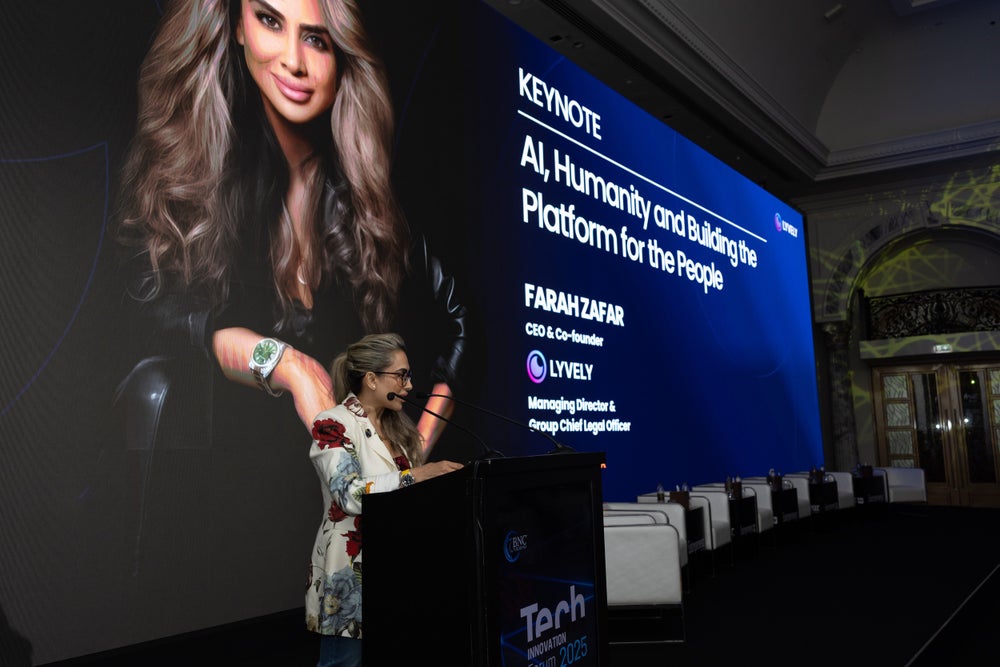
Farah Zafar, co-founder and CEO, Lyvely; Managing Director and Group Chief Legal Officer, Phoenix Group. Source: BNC Publishing
"But here's the line we will never cross: AI will never replace our vision. Lyvely was born to be the platform for the people, not the platform for machines. We use AI only in ways that are authentic, aligned, and true to our DNA. For us, the north star is clear—humanity, authenticity, empowerment, and connection. Because while AI can generate the plan, only people can give it purpose.
"AI only grows on what it is fed. If it is trained on greed, manipulation, and inhumanity, that is what it will amplify. But if we feed it with wisdom, compassion, and humanity, then AI has the potential to become the greatest humanitarian machine ever built. The future of AI will not be written by machines—it will be written by the humanity we choose to put into them."
Panel 2: Building the Future: Policy, Vision, and Innovation Across MENA
Sarah Saddouk, Director of Innovation and Strategy at BNC Publishing - Entrepreneur Middle East, led an engaging session on innovation in the UAE, where speakers reflected on how the nation has become a true hub of excellence.
Asked to summarize innovation in a single word, the panelists - Adel Alfalasi, Partner and Managing Director - Middle East, KEARNEY; Saeed Alnofeli, Vice President, in5 Dubai; Suneel Gokhale, Co- Founder and General Partner, VentureSouq; George Hojeige, Group CEO, Virtugroup; Khulood Alawadhi, Director of Advanced Technology Services, Moro Hub; and Hans Henrik Christensen, Vice President, Dubai Technology Entrepreneur Campus - overwhelmingly chose "excellence." This captured the country's rapid growth, its embrace of emerging technologies, and its determination to set global benchmarks.
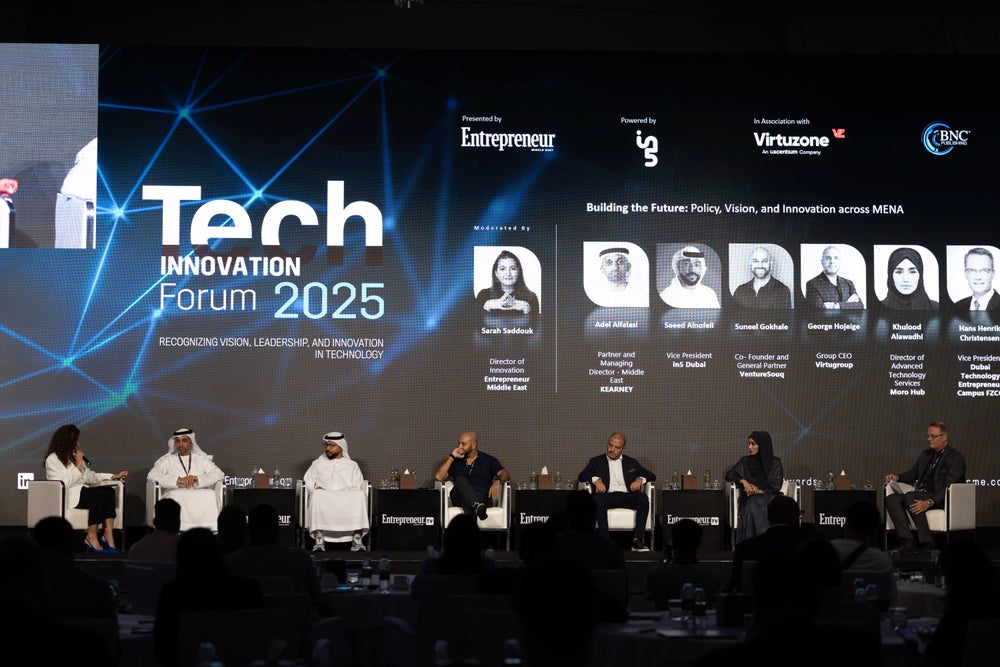
The panelists noted that the UAE government praised for its unusually integrated role in the venture capital and technology ecosystem. Rather than standing back, the UAE government actively contributes by strengthening regulatory frameworks to provide security and stability, and introducing experimental spaces such as fintech sandboxes, enabling startups and corporates to safely test and refine new technologies.
While progress has been strong, Saddouk and the panelists acknowledged the need for more education, investment in research and development (R&D), and resolving funding gaps for startups.
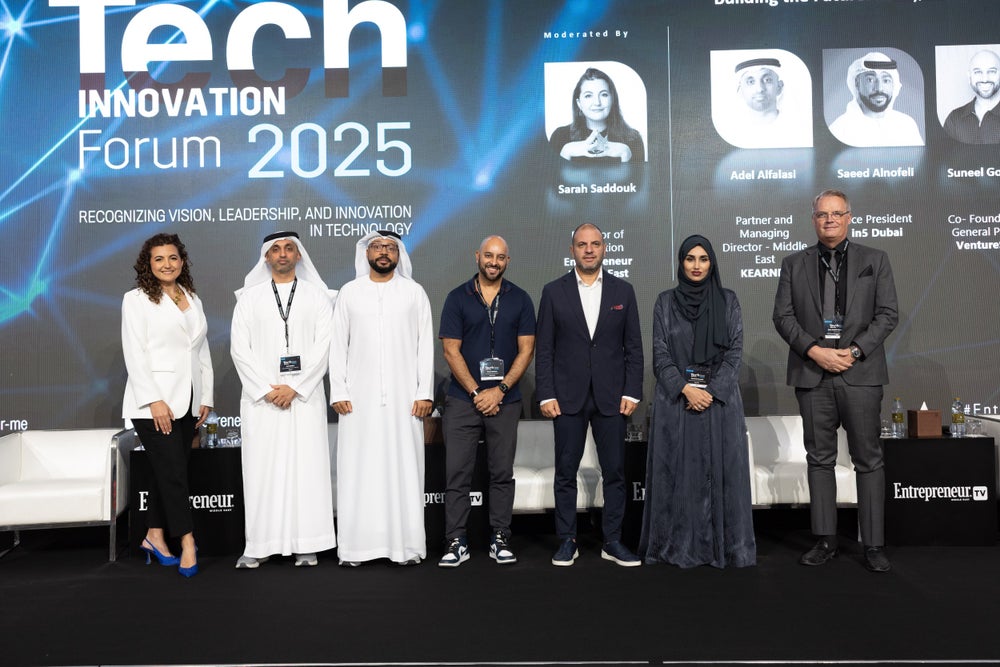
The session closed with the panelists calling for continuous learning, and emphasizing that, while technical skills remain valuable, language proficiency and emotional intelligence (EQ) may prove even more essential for future career success.
Panel 3: Backing the Future: Investors Powering MENA's Tech Revolution
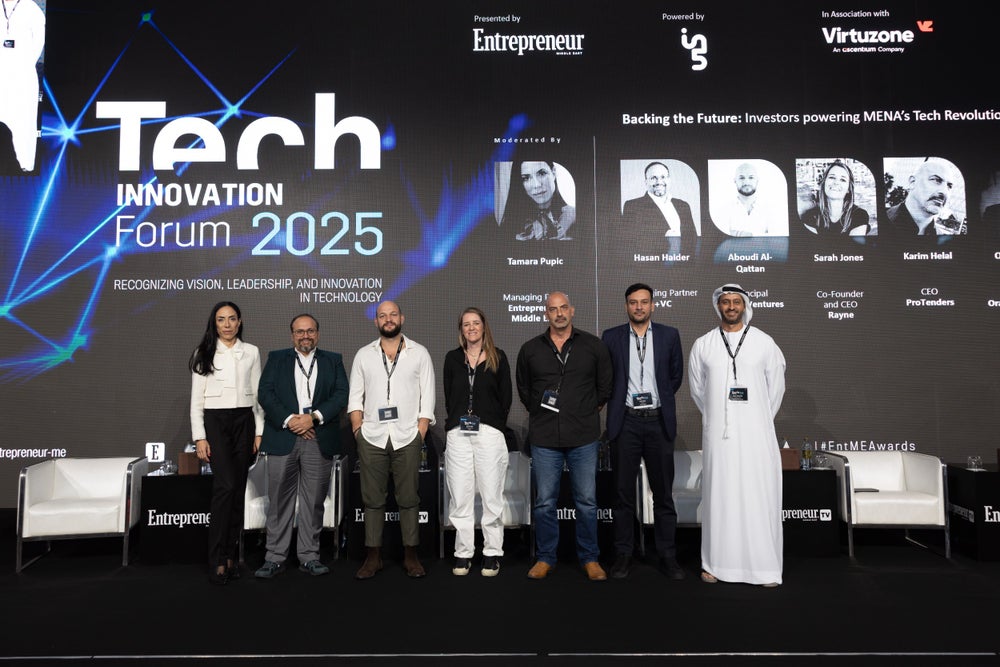
The panel moderated by Tamara Pupic, Managing Editor, Entrepreneur Middle East, which convened leading venture capitalists and entrepreneurs, turned its focus to the realities of the venture ecosystem in the MENA region.
While the conversation spanned a range of themes, a central consensus emerged: the ultimate bet is always on the founder. Investors emphasized that capital flows toward conviction in the entrepreneur's clarity of purpose, resilience, and ability to execute, rather than toward ideas alone.
A recurring theme throughout the discussion with Hasan Haider, Managing Partner, +VC; Aboudi Al-Qattan, Principal, DASH Ventures; Sarah Jones, co-founder and CEO, Rayne; Karim Helal, CEO, ProTenders; Omar Khan, Principal, Oraseya Capital; and Nader AlBastaki, Managing Director, Dubai Future District Fund, was the importance of clarity and authenticity in leadership. Founders were advised to resist the temptation to rush headlong into venture capital opportunities, and instead to apply deliberate discipline in evaluating whether any potential investor can truly advance their long-term vision.
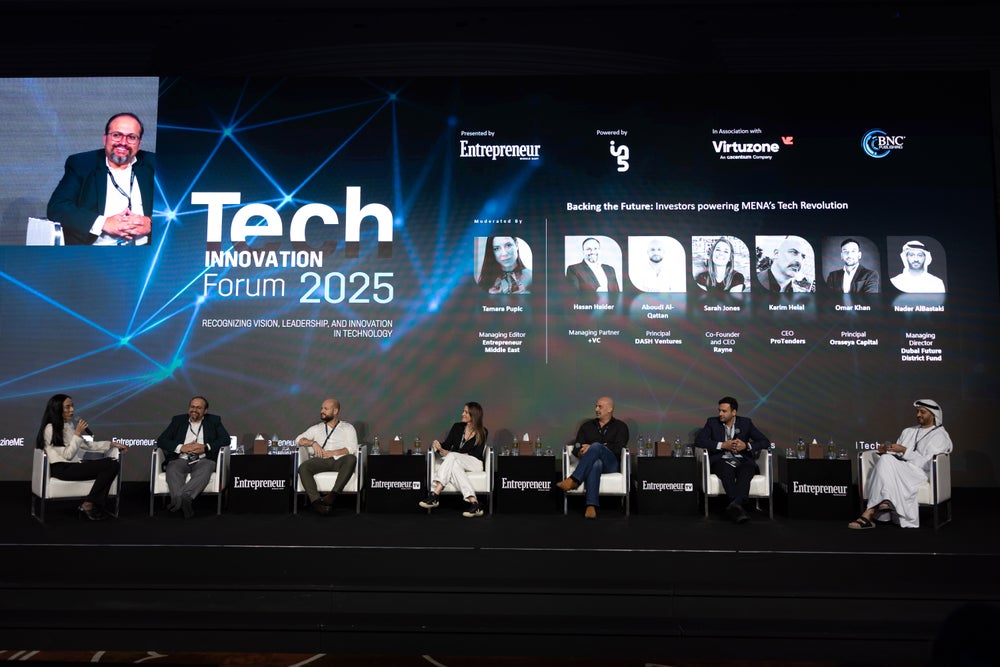
Speakers also cautioned against the growing inclination among some founders to prioritize personal visibility and media presence over the fundamentals of building a sustainable enterprise. While personal branding can serve as an enabler, the panelists argued that it should not eclipse the work of refining a product, winning customers, and scaling operations. The message was clear: enduring companies are built on substance before they can benefit from style.
Perhaps the most pressing piece of advice was directed toward founders in search of investment: be unequivocal about whether genuine product-market fit has been achieved.
For MENA's venture ecosystem to mature, both entrepreneurs and investors agreed that the balance must tilt toward thoughtful execution, transparent communication, and a steadfast focus on the core of the business.
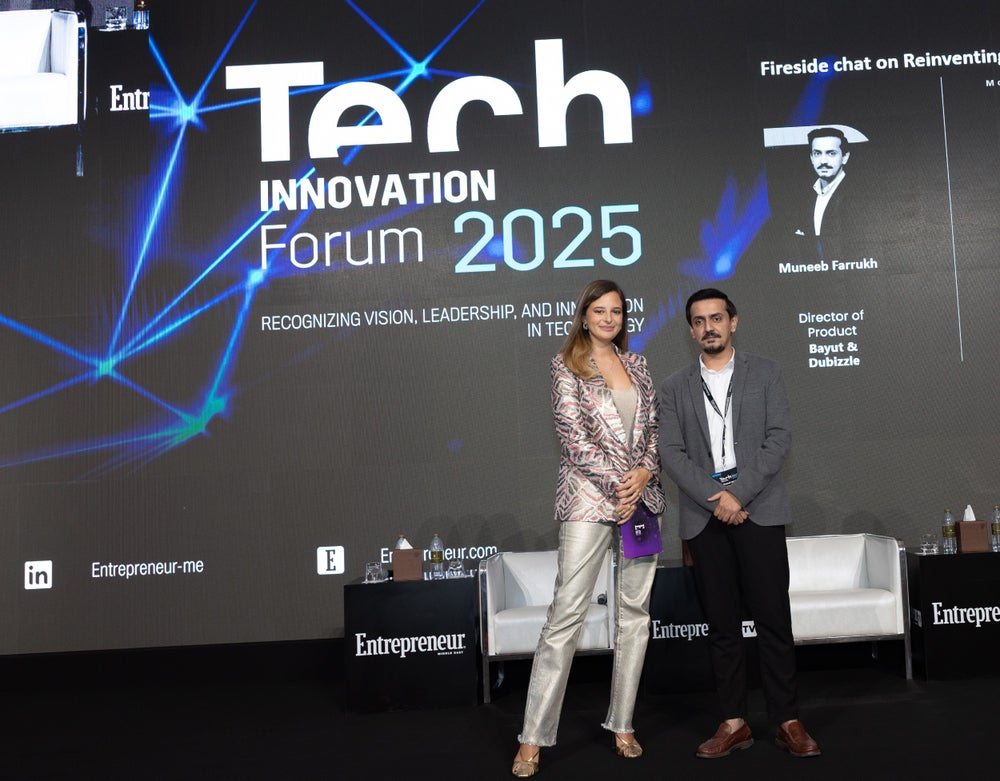
A Fireside Chat with Muneeb Farukh, Director of Product at Bayut and Dubizzle
The very last session of the day was a fireside chat with Muneeb Farrukh, Product Director at Bayut and dubizzle, titled "Reinventing Real Estate: How Bayut & dubizzle Are Changing the Game."
In the discussion moderated by Mina Vucic, Director of Production and Multimedia, BNC Publishing - Entrepreneur TV, Muneeb highlighted how Bayut and dubizzle have grown far beyond simple classifieds platforms to become the digital backbone of real estate and consumer services in the UAE.
According to Muneeb, the platforms' biggest differentiator is their relentless focus on the user. Trust was another key theme in the conversation. Muneeb stressed that in a market as competitive as the UAE, transparency is essential, which is why initiatives like True Broker were launched to raise industry standards and recognize brokers committed to professionalism and ethics.
Looking at the future, Muneeb said one of the most exciting trends is the rise of AI in personalizing real estate journeys — from smarter recommendations to predictive insights. But alongside technological advances, he emphasized that values like transparency and ethical practices will continue to shape the industry.
Closing the conversation, Muneeb shared advice for aspiring product managers: the single most important skill is curiosity. In his view, curiosity helps product teams uncover hidden opportunities, drive innovation, and adapt in fast-moving industries. Combined with staying true to yourself and believing in your ideas, it's what enables people to create products that don't just serve a need but shape entire markets.
Related: The Next Frontier: The Changing Face Of Entrepreneurship In The Arab World